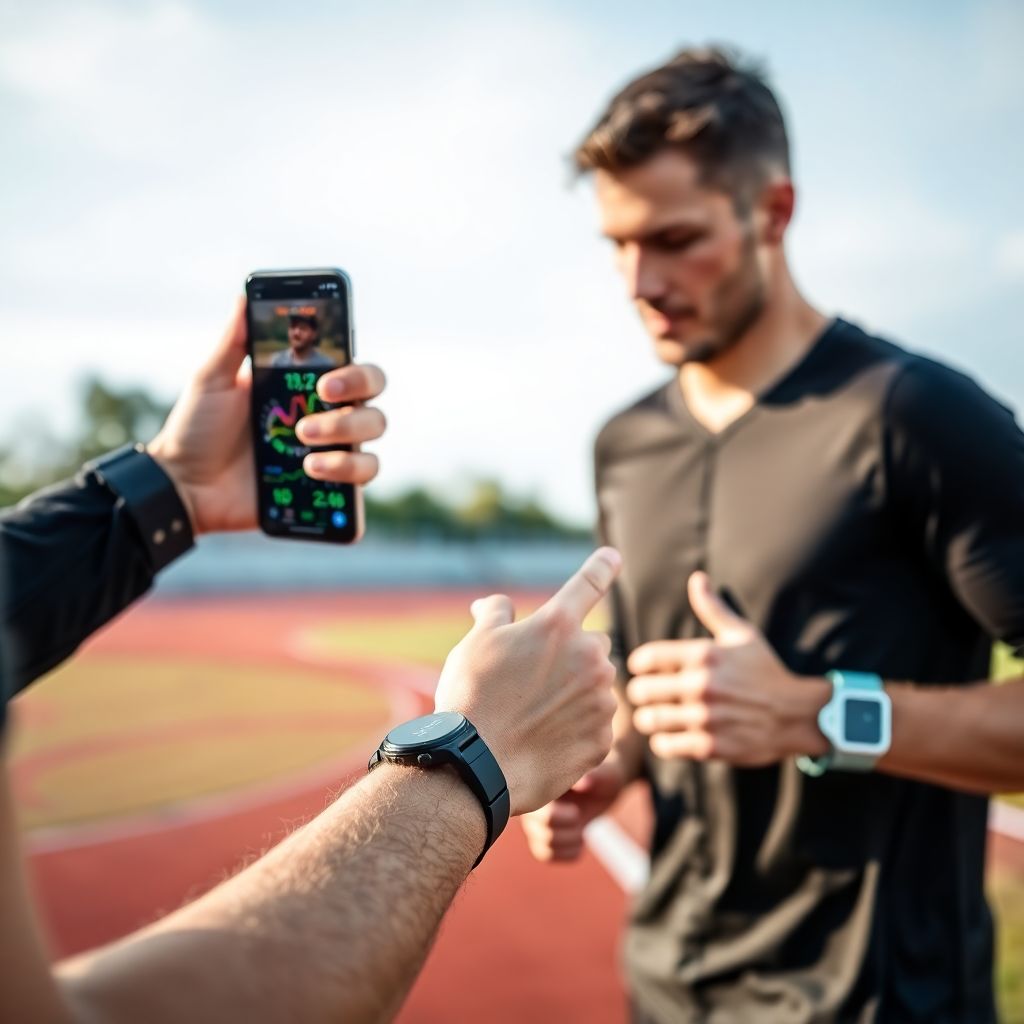
Sports wearables help amateur athletes turn messy training into measurable progress. Smartwatches and external sensors track heart rate, pace, distance, movement quality and recovery, so you can adjust sessions in real time, avoid overload, and plan weeks of training with data instead of guesswork, even without a personal coach.
What wearable metrics matter most for amateurs
- Resting heart rate, heart-rate variability (HRV) and sleep duration to understand recovery status.
- Average pace, pace variability and distance from GPS for running and cycling sessions.
- Heart-rate zones (in BPM) linked to perceived effort for structured intervals.
- Cadence, ground contact time, vertical oscillation and similar running form indicators.
- Longitudinal trends: 7-28 day averages instead of obsessing over a single workout.
- Basic load indexes (time in zone, TRIMP, RPE) to avoid sudden spikes in training volume.
How smartwatches capture and interpret heart-rate variability
Heart-rate variability (HRV) is the variation in time between heartbeats, measured in milliseconds from one beat to the next (RR interval). A sports smartwatch uses a photoplethysmography (PPG) sensor on your wrist to estimate these RR intervals, usually sampling light signals between roughly 25-200 Hz depending on the model.
From these RR intervals the watch calculates HRV metrics such as RMSSD, SDNN or simple stress indexes. For an amateur using a relógio esportivo smartwatch para corrida amadora, the watch then transforms HRV into understandable outputs like “recovery status”, “readiness” or daily training suggestions. These are simplifications of complex autonomic nervous system data.
Wrist PPG is more sensitive to motion than a chest strap, so interval workouts and strength sessions can introduce artifacts. Some watches therefore prioritize HRV measurement during sleep or short morning tests, when you are still. That is why HRV values right after a sprint often look messy or unrealistic for non-elite athletes.
In practice, you care less about the absolute HRV value and more about the trend: is your 7-day rolling average stable, increasing, or dropping compared with the last month? A repeated drop together with poor sleep and higher resting BPM is a strong signal to reduce intensity, even if you feel motivated.
Mini-scenario (Brazilian amateur runner): You wake up for interval training, check your smartwatch, and see HRV clearly lower than your usual range plus higher resting heart rate. You downgrade the session from 6×800 m hard intervals to an easy 30-40 min jog, then HRV normalizes within a few days instead of crashing into a flu.
- Check HRV at consistent times (usually during sleep or first thing after waking) rather than during intense workouts.
- Focus on 7-14 day HRV trends combined with resting BPM and sleep, not one-off numbers.
- Drill: for 3 weeks, decide session intensity each morning using HRV trend + how you feel, and keep a short log of outcomes.
GPS and inertial sensors: real-world accuracy and limitations
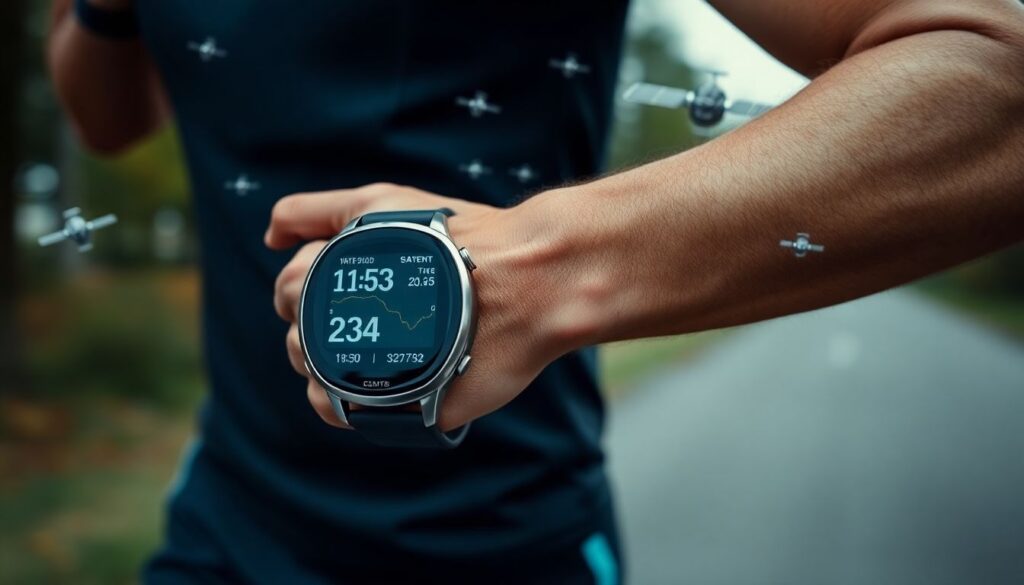
GPS and inertial sensors translate your outdoor movement into pace, distance and route data. A melhor smartwatch com sensores para treino físico typically combines GNSS (GPS, GLONASS, Galileo, etc.) with internal accelerometers and gyroscopes to estimate position and movement continuously.
- Satellite reception and sampling rate: Watches typically log position once per second (1 Hz). Under open sky this is usually precise enough for amateur training, but tall buildings, tunnels and dense trees increase positional error and cause pace spikes on the display.
- Inertial sensors and smoothing: Accelerometers and gyroscopes fill the gaps between GPS points, especially when satellite signal is weak. They model your movement (m/s) to smooth pace and distance, but can misinterpret sudden stops or direction changes in small urban parks.
- Instant pace vs. lap pace: Instant pace jumps around because each new GPS sample can vary a few meters. Lap pace (for example, average over 1 km or 1 minute) is more stable and better for controlling tempo runs for tecnologia vestível esportiva para atletas amadores.
- Elevation and stairs: Unless your watch has a barometric altimeter, elevation gain from GPS alone can be noisy. Even with a barometer, short climbs, bridges or ramps may not be captured accurately, affecting calculated effort for hilly routes.
- Indoor training limitations: On treadmills or indoor tracks, GPS adds almost nothing. The watch relies on wrist movement models, which vary with your running style; expect larger discrepancies in distance unless you calibrate with known laps.
- Battery and mode trade-offs: High-precision multi-band modes track more satellites and give better accuracy in cities but drain the battery faster. For long events, you may switch to “GPS only” or lower sampling rates, accepting a bit less precision.
Mini-scenario (park runner in São Paulo): You buy a smartwatch with monitor cardíaco e GPS para esportes and notice pace jumps when running between buildings. You decide to ignore instant pace and use 1 km auto-laps plus perceived effort, checking only the lap alert vibration to adjust speed.
- Use lap pace instead of instant pace for steady workouts and races.
- Expect errors in urban canyons, tunnels and heavy tree cover; compare using the same route each week.
- Drill: repeat the same 5 km route on 2-3 watches/apps if possible, compare total distance and pace, and learn your typical error range.
Designing training plans from wearable data for non-elite athletes
Wearables transform subjective training into measurable patterns that help non-elite athletes plan, not just record. For most amateurs in Brazil, the goal is to finish events healthy, improve personal bests gradually, and balance sport with work and family rather than train like professionals.
Scenario 1 – 10K first-timer: You use a relógio esportivo smartwatch para corrida amadora to track all runs for 8-12 weeks. You build your plan using three numbers: weekly distance, longest run distance, and time spent in easy heart-rate zones (for example, below 75% of max BPM). Each week, you increase distance slightly while ensuring at least 70-80% of time stays in easy zones so you can recover.
Scenario 2 – Losing weight and improving fitness: Your watch tracks daily steps, active minutes and average heart rate. You design a simple weekly target: three 30-minute brisk walks or easy runs at conversational pace (zone 2), plus a step goal on non-running days. Every Sunday, you compare total active minutes and adjust for the following week.
Scenario 3 – Improving 5K personal best: You already run 3-4 times per week. To go faster, you use pace and cadence from your watch to design intervals, such as 8×400 m at 5:00 min/km pace with 200 m easy jog recovery. The watch guides you through each block, beeping at target pace, while you track average cadence to keep it in a comfortable range (for example, 160-180 steps/min depending on your height).
Scenario 4 – Multi-sport amateur (running + cycling): Your sensores vestíveis para monitorar desempenho esportivo consolidate load from both sports into one app. Instead of counting just kilometers, you combine time in moderate and hard heart-rate zones to calculate weekly training load, preventing you from stacking a hard bike ride on top of an intense running interval session the same day.
- Choose 2-3 core metrics (e.g., weekly distance, time in easy zone, hardest session RPE) and plan around them.
- Review training once per week, not after every workout, to adjust the following microcycle.
- Drill: create a 4-week block in your app with specific distance and zone targets, then compare planned vs. completed time in each zone.
Detecting fatigue and injury risk using longitudinal sensor trends
Fatigue and injury risk rarely appear from one workout. They accumulate through trends: rising resting BPM, falling HRV, decreasing pace at the same effort, reduced sleep, and subtle changes in running mechanics like cadence or ground contact time. Wearables expose these slow shifts that amateurs tend to ignore.
Instead of waiting for pain, you watch weekly graphs. If easy runs become slower at the same BPM, or if HRV is suppressed for several days, it may indicate that your body is struggling to adapt. Combined with subjective ratings (RPE, mood, soreness), this creates an early-warning system.
For injury signals, some advanced devices track asymmetry between left and right leg, or changes in impact metrics. An increasing asymmetry over multiple sessions can reflect compensation patterns that precede pain, especially after returning from a break or changing shoes.
Mini-scenario (amateur half-marathoner in Rio): You plan a 12-week build-up. Around week 7, your watch shows higher resting BPM, HRV down for 4 days, and average pace slowing at your usual easy heart rate. Instead of pushing through, you cut one hard workout, add a rest day, and the metrics normalize before injury appears.
- Track at least three weekly trend lines: resting BPM, HRV, and easy-run pace at similar BPM.
- Treat sudden spikes in load (distance, intensity or both) as higher risk weeks and watch metrics more closely.
- Drill: mark each workout in your app as “easy”, “medium” or “hard” and correlate with HRV and leg soreness for 6-8 weeks.
Integrating wearables with coaching workflows and apps
When used well, wearables help coaches and athletes align expectations and decisions without constant in-person sessions. For many Brazilian amateurs following remote training, the watch becomes the main communication channel: it records what you actually did vs. what the coach prescribed.
A common mistake is to chase every metric and overload the coach with charts. For non-elite athletes, the priority is a small set of signals that fit your goal: for example, weekly distance, long run length, intensity distribution, and how you slept after key sessions. Everything else is optional.
Another myth is that tecnologia vestível esportiva para atletas amadores can replace a coach. Algorithms are generic; they do not fully understand your stress from work, travel or illness. Coaches interpret data inside real life context, adapting your plan when you have a tough week at work or travel between Brazilian cities for competitions.
Integration works best when you connect your watch to a training platform (for example, Garmin Connect, Strava or a coaching app) and agree rules with your coach: comments after key sessions, flags for pain or extreme fatigue, and how quickly the coach responds to abnormal data.
Mini-scenario (remote-coached triathlete): Your coach sees that you always overshoot target heart rate on Tuesday bike intervals and then underperform on Wednesday runs. Together, you adjust Tuesday intensity using real-time BPM alerts on your watch, leading to fresher legs and better run pace a month later.
- Share only the 3-5 metrics that truly drive decisions with your coach; ignore novelty metrics at first.
- Set simple rules: when to message, when to lower intensity, and how to tag problematic sessions.
- Drill: for one month, add a 1-2 sentence comment in your app after every key workout about sleep, mood and pain, and review with your coach.
Privacy, data ownership and ethical considerations for athletes
Sports wearables constantly collect sensitive health and location data. For amateurs in Brazil, this may include running routes around home, heart rhythm variations and even menstrual cycle logs. Understanding who controls this data and how it is shared is as important as choosing the right training metrics.
When you comprar smartwatch com monitor cardíaco e GPS para esportes, you also adopt the manufacturer’s cloud ecosystem. Data is stored on servers, sometimes in other countries, and can be shared with partner apps when you authorize integrations. Reading privacy settings and deciding which connections you really need is a basic security step.
A practical risk is unintended exposure: public routes showing your home address, or automatic posting of every workout to social networks. Another is invisible profiling: apps may infer your routine, health status and habits from longitudinal logs, which could matter for things like insurance or targeted ads in the future.
Mini-case – runner in Porto Alegre: Ana syncs all activities to multiple apps with default public settings. Her usual 6 a.m. loop starts and ends at her building. A friend warns her that anyone can see the route and time. She changes the privacy zone around home, makes past workouts private, and unlinks an old app she no longer uses.
- Review default privacy for routes, heart-rate data and social sharing when you set up a new device or app.
- Periodically remove old app connections you do not actively use, and prefer anonymized or aggregated sharing when possible.
- Drill: once per quarter, spend 15 minutes auditing which services have access to your training data and adjust or revoke permissions.
End-of-article self-check for amateur athletes
- Can you name the 2-3 metrics you actually use to plan and adjust your weekly training?
- Do you regularly review HRV, resting BPM and easy-pace trends over at least 7-14 days?
- Are your GPS, heart-rate and privacy settings configured intentionally instead of left on factory defaults?
- Do your coach and apps see only the data they really need to guide your progress safely?
Practical clarifications and quick solutions
How accurate is wrist-based heart rate compared with a chest strap?
For steady-state running or cycling, modern wrist sensors are usually close enough for amateur training, especially when worn snugly. During short intervals, sprints or strength work with wrist flexion, accuracy drops; if these sessions are critical for you, consider a chest strap paired with your watch.
Which metrics should a beginner focus on first?
Start with total weekly time or distance, time spent in easy heart-rate zones, and how many sessions you complete each week. Only after a month or two, add HRV, cadence or advanced running dynamics if you have a clear question they can answer.
How can I use wearables if I train mostly on a treadmill?
Use pace and distance as rough guides and focus more on heart rate, perceived effort and time. Calibrate the watch against the treadmill display occasionally, and log incline so you and your coach can interpret heart-rate drift across sessions.
Do I need the most expensive watch for good data?
No. For most amateurs, a mid-range device with reliable GPS, heart rate and basic training load metrics is enough. Spend only on features you will actually use in the next year, like multi-sport tracking or advanced running dynamics.
How often should I change my training based on wearable feedback?
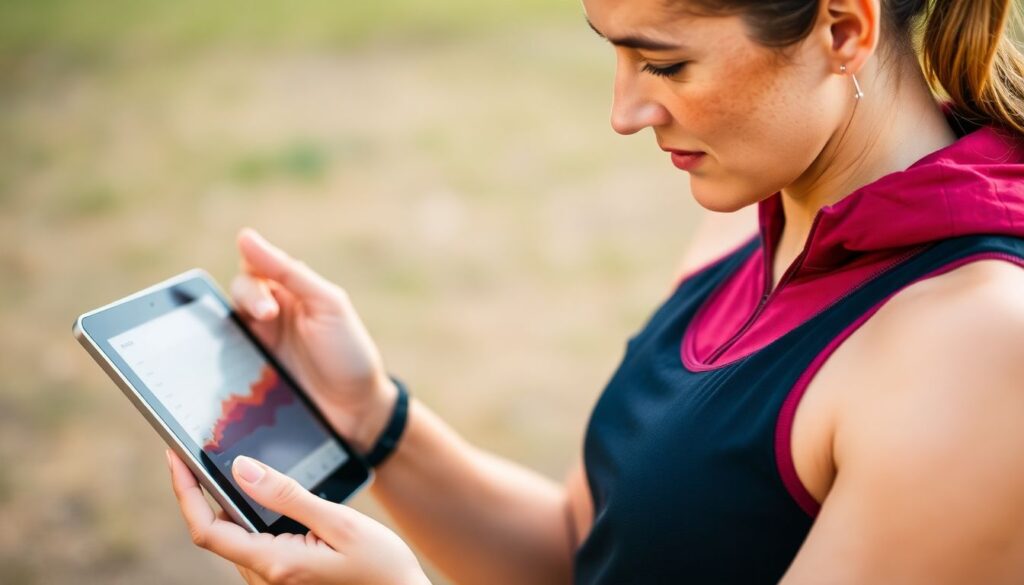
Avoid changing plans after every single workout. Use daily data for small adjustments (for example, slowing down if heart rate is unusually high), and make bigger plan changes weekly or every training block based on trends, not isolated points.
Can I rely on wearable “calories burned” to manage weight?
Calorie numbers are estimates and often imprecise. Use them as a relative indicator (today vs. last week), not an exact budget. Combine them with bodyweight trends, how your clothes fit, and nutrition habits rather than trusting the number alone.
What if my watch and smartphone app show different distances?
Differences usually come from sampling, smoothing and GPS interpretation. Treat one device as your reference, stick with it for comparisons, and ignore small discrepancies. Consistency of measurement over time is more important than absolute precision for progress tracking.