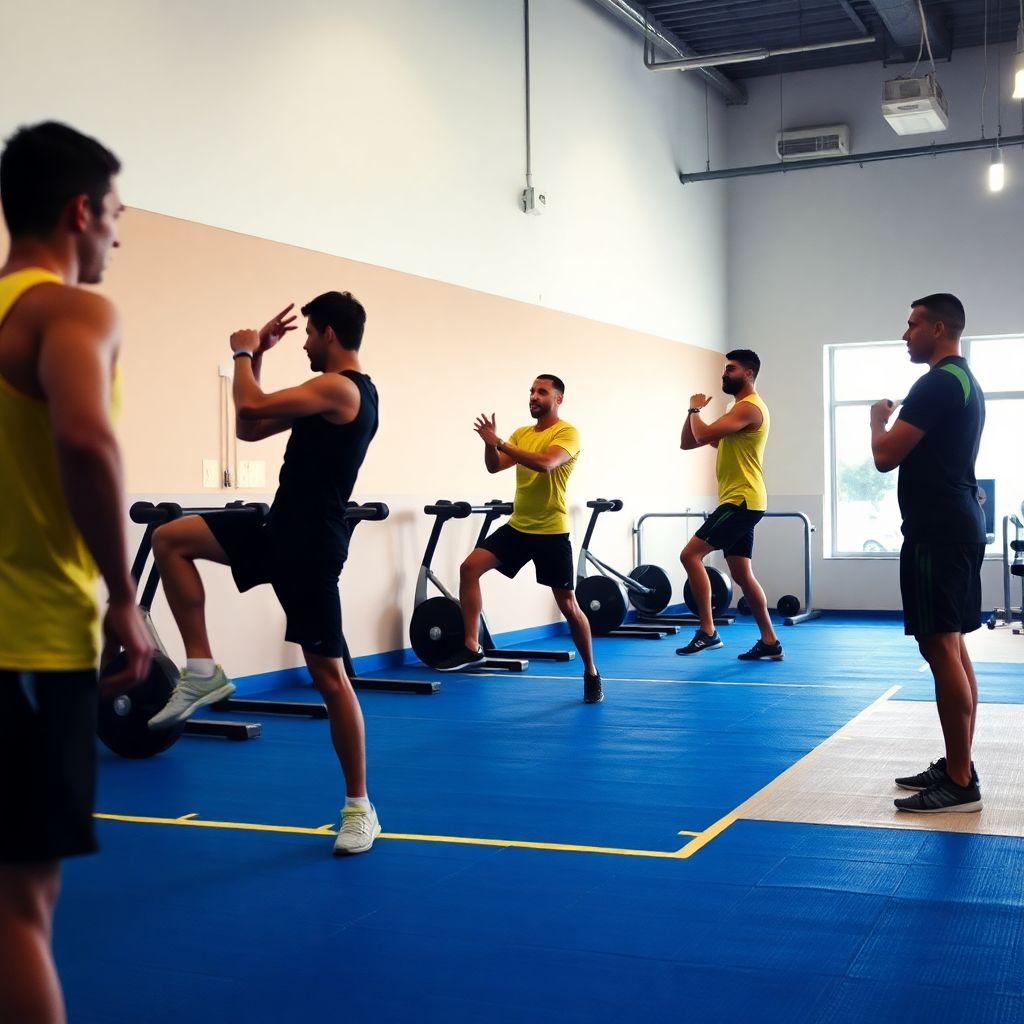
Physical preparation for traditional athletes emphasizes large muscle groups, high cardiovascular load and sport-specific power, while pro players in e-sports need posture endurance, fine-motor control, eye-hand speed and cognitive resilience. The best plan in Brazil is usually hybrid: classic athletic bases adapted for long seated play, high screen time and tournament stress.
Core distinctions at a glance
- Traditional athletes need higher whole-body aerobic and anaerobic capacity; pro players need stable moderate capacity plus high neuromuscular precision.
- Game pros tolerate smaller training volumes but higher frequency micro-sessions around scrims and tournaments.
- Posture, vision, wrist and cervical health are central constraints for preparation of e-sports pro players.
- Cognitive load, tilt control and sleep regularity matter more than peak VO2 for game performance.
- Best results come from integrated programs between coach, physical trainer and e-sports staff.
- For Brazil, access to a personal trainer specialized in e-sports is often the key competitive advantage.
Physiological demands: aerobic, anaerobic and neuromuscular profiles
Use these criteria to decide how close your plan should be to traditional athletic conditioning versus a gamer-centric model.
- Match duration and structure: field and court sports require repeated sprints across the whole body; e-sports sessions demand long seated efforts with short, very intense cognitive bursts.
- Primary energy systems: traditional athletes lean on mixed aerobic and anaerobic metabolism in large muscles; pro players emphasize low-to-moderate aerobic base for fatigue resistance plus neuromuscular efficiency in upper body and eyes.
- Movement amplitude: runners and team athletes use big joint ranges and high impact; pro players use small ranges in fingers, wrists, elbows and cervical spine with static lower body.
- Postural load profile: traditional sports oscillate postures; gamers sustain fixed thoracic flexion and forward head, requiring specific endurance work for scapular stabilizers and deep neck flexors.
- Fine-motor versus gross-motor dominance: athletes prioritise sprinting, jumping and throwing; e-sports preparation must protect and enhance micro-movements for aim, click rate and fast skill execution.
- CNS stress versus muscular stress: field athletes are limited more by peripheral fatigue; gamers are limited by central nervous system fatigue, decision speed and oculomotor strain.
- Injury pattern: traditional sports face ligament, tendon and impact injuries; e-sports face overuse of wrist and fingers, shoulder and neck pain, headaches and visual strain.
- Health baseline: many traditional athletes already have high cardiorespiratory fitness; many pro players start with sedentary patterns, so conditioning must progress carefully to avoid overload.
- Body composition targets: classic sports may aim for specific lean mass and power; e-sports mainly need healthy body fat, stable energy and comfort at the rig without excess muscle bulk that restricts mobility.
If the majority of these criteria look like traditional sport, a classic program makes sense. If most points reflect your current reality as a gamer, favor a specialized preparação física para pro players de e-sports with gradual conditioning.
Training volume, intensity and periodization strategies
Choose a template based on competition level, available time and current health. Compare these options before deciding.
| Variant | Best for | Pros | Cons | When to choose |
|---|---|---|---|---|
| Traditional high volume macrocycle | Field or court athletes who also play games, early off season, amateur gamers with good fitness | Builds strong aerobic base, structural resilience, clear periodization blocks, easy to implement in clubs | Too much fatigue for intense ranked grind, hard to combine with daily scrims, risk of overload for sedentary gamers | Pick when classic sport is your priority and gaming performance is secondary or seasonal |
| Mixed power speed mesocycle | Traditional athletes in pre season, multi sport students, semi pro gamers needing explosiveness | Improves acceleration and change of direction, translates well to some VR and motion based games, moderate volume | Still leg heavy, may not solve posture or wrist issues, scheduling conflicts with long practice blocks | Use when you need to stay competitive in both physical and digital competitions in the same period |
| Hybrid gamer centric program | Competitive rank grinders, aspiring pros, streamers with long daily screen time | Low joint impact, targeted postural endurance, fits around scrims, direct link with como melhorar o desempenho físico em e-sports goals | Needs careful planning and a coach who understands esports, aerobic gains are slower than in classic plans | Choose when gaming is your main performance arena but you still want general health and long career |
| Elite microdosed esports periodization | Tier one pro players, academy rosters, teams with staff and data tracking | Very specific to game calendar, integrates short strength sessions, mobility and nervous system resets between blocks | Complex to manage, depends on collaboration between head coach and physical trainer, hard without structure or budget | Select when you already live as a pro and can access treinamento físico para jogadores profissionais de games with specialist support |
For most Brazilian players, the optimal path is to gradually evolve from a basic hybrid gamer centric plan toward an elite microdosed structure as competitive level and staff support grow.
Skill-specific conditioning: motor patterns, reaction time and precision
Adjust conditioning to concrete gameplay scenarios instead of copying field athletics models.
- If you play high APM titles with intense mouse usage such as MOBAs and RTS, then prioritize forearm strength endurance, finger dexterity drills, ulnar and median nerve glides plus short sprints for mental refresh between queues.
- If you compete in tactical shooters and aim heavy games, then combine neck and upper back stability, shoulder external rotation strength, smooth tracking drills and low load, high repetition upper body work to support steady crosshair control.
- If you swap frequently between console, PC and mobile, then build a neutral movement base: scapular stability, hip mobility for comfortable sitting, core endurance and light grip strength training to tolerate different controller sizes.
- If posture crashes after two hours and your aim quality drops, then add micro-blocks of anti flexion work: reversed rows, band pull aparts, chin tucks and hip extension bridges every 60 to 90 minutes during practice days.
- If you already follow a curso de preparação física para atletas de e-sports with strength blocks, then insert short, precise coordination drills at the end of sessions: juggling, laser pointer tracking, rhythm changes and contrast drills that bridge gym and gameplay.
- If you come from a strong traditional sport background, then reduce leg volume, keep two weekly full body sessions and add specific hand eye, oculomotor and reaction training blocks linked to your main title.
The guideline is clear: the more hours you spend in your main game, the more your conditioning must mirror its motor and reaction demands rather than generic sports exercises.
Cognitive training, perceptual load and decision-making drills
Follow this quick checklist to decide how much cognitive work to add on top of physical training and scrims.
- Map your current weekly load: scrim hours, ranked play, VOD review, gym and life stress. If daily mental fatigue is already high, favor lighter cognitive drills inside warmups instead of extra standalone sessions.
- Define your performance bottleneck: slow target acquisition, panic in team fights, poor rotations or inconsistent clutch performance. Choose drills that directly stress that weakness rather than random brain games.
- Start with low perceptual load: single target, clean audio and visual environment, short series. Progress gradually to multi target, high clutter, realistic in game noise and pressure simulations.
- Integrate physical and cognitive stress only once basic skills are stable. Examples include balance tasks with tracking, light aerobic intervals with decision prompts and reaction lights after simple strength sets.
- Use objective markers: hit rate in aim trainers, time to decision in custom scenarios, error count in pattern drills. Adjust difficulty when you maintain quality under mild fatigue without tilt.
- Align with your staff: if a personal trainer specialized in e-sports is already planning conditioning, share your cognitive plan so physical and mental workloads do not peak on the same days.
- Keep transfer high: de prioritize generic apps that do not resemble your game and prioritize in game custom maps, scenario drills and review based decision games with your coach.
This way your cognitive training supports, instead of competes with, treinamento físico para jogadores profissionais de games and scrim schedules.
Recovery, sleep, nutrition and injury prevention protocols
Most players and even coaches make similar mistakes when choosing recovery strategies for gamers compared to traditional athletes.
- Copying endurance athlete carbohydrate and caffeine habits without considering long seated sessions and late night scrims, which worsens sleep and long term health.
- Focusing only on wrist stretches and ignoring global postural chains like hips, thoracic spine and breathing mechanics that influence both comfort and aim stability.
- Using high intensity conditioning too close to ranked or scrim blocks, leading to residual fatigue and slower reaction times when mechanical precision matters most.
- Neglecting light daily movement for circulation and joint health because training is scheduled only as two or three heavy gym days per week.
- Assuming that young age protects against overuse injuries, which delays early screening and basic ergonomic adjustments in chairs, desks, monitors and peripherals.
- Confusing entertainment gaming marathons with structured practice, which hides early warning signs like numbness, tingling, recurrent headaches and blurred vision.
- Underestimating the role of consistent sleep windows in tilt control, decision making and hormonal balance, especially across travel and bootcamps.
- Skipping collaboration between nutritionist, psychologist and physical coach, leaving gaps in hydration, stress management and emotional regulation under pressure.
- Not using simple, low cost tools that fit the Brazilian context, such as daily walks, elastic bands, floor mobility and homemade ergonomic adjustments.
- Ignoring professional help and continuing self managed routines instead of at least one consultation with a personal trainer specialized in e-sports for baseline orientation.
A good preparação física для pro players de e-sports integrates simple but consistent recovery and prevention tools that you can realistically apply in your own environment.
Performance metrics, monitoring tools and evaluation workflows
Before choosing the final model, use a simple decision tree to align goals, constraints and support.
- If you compete mostly in offline traditional sports and games are casual, adopt a traditional high volume macrocycle with minor posture and vision add ons.
- If you are a student athlete who also pushes ranked seriously, pick a mixed power speed mesocycle and add one or two weekly gamer specific micro sessions.
- If you are an aspiring or semi pro player in Brazil with limited staff, start with a hybrid gamer centric program and basic tracking of sleep, pain and performance.
- If you are already in a structured team with staff, aim for an elite microdosed esports periodization, with shared data between coach, analyst and physical trainer.
For pure traditional athletes, the best choice is still the traditional high volume macrocycle or a mixed power speed mesocycle adapted to their sport. For committed pro players, the best long term option is a hybrid gamer centric program progressively upgraded to elite microdosed esports periodization as scheduling, staff and budget allow.
Typical practical decision points for coaches and players
How many days per week should a pro gamer train physically without harming aim and mechanics
Most intermediate and advanced players respond well to two or three short strength and mobility sessions per week plus daily micro breaks. Keep the most demanding gym day away from scrim or tournament peak days when possible.
Is running or cycling necessary for e-sports performance
Moderate aerobic work helps health, recovery and stress tolerance but does not need to be long distance. Short sessions of low impact cardio two or three times a week are usually enough when combined with movement breaks during gaming days.
Can I follow the same program as a football or basketball player friend
You can reuse some basic strength exercises, but total volume, leg load and scheduling must be different. Adapt posture, neck, wrist and vision priorities or you risk overuse issues and performance drops in ranked games.
What is the fastest way to start if I have zero training experience but play ranked every day
Begin with short daily mobility, posture and breathing routines and one or two weekly strength sessions of 20 to 30 minutes. Once this is stable, add more specific drills that directly support your main game mechanics.
Do I really need an e-sports specific physical coach or any trainer is fine
Any competent trainer can improve your general health and strength, but someone with clear experience in e-sports will better manage vision strain, schedule constraints, wrist health and match calendar. This becomes more important as your level and earnings grow.
How should I adapt before and during long LAN events
Lower heavy gym work in the week before travel, focus on mobility, light activation and sleep. During the event, prioritize walks, simple stretches, hydration and regular meals over hard training loads.
Is a curso de preparação física para atletas de e-sports useful for casual players
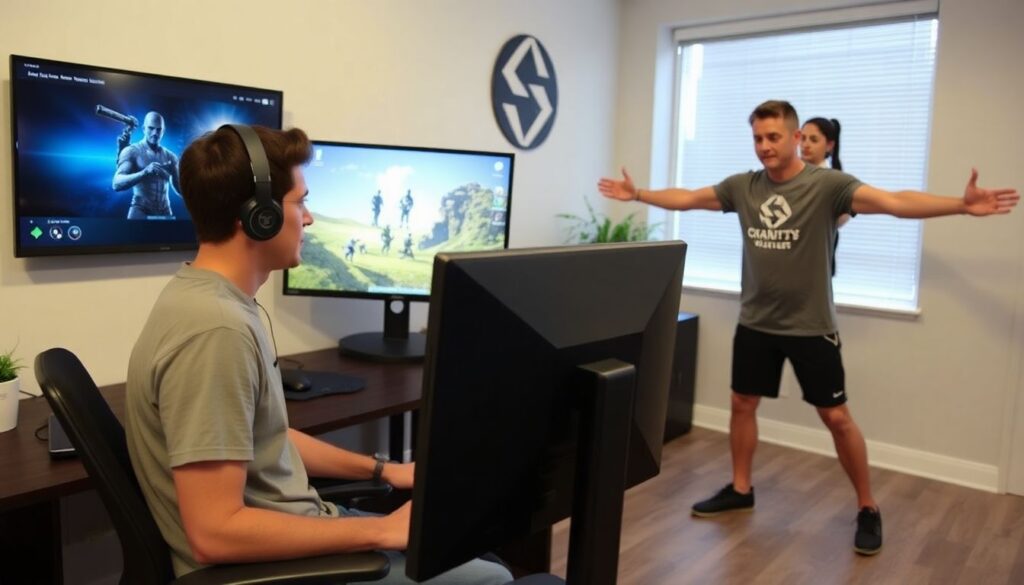
It can still help, especially by teaching posture, ergonomics and basic conditioning, but full protocols are more relevant for competitive or aspiring pro players. Casuals can apply simplified versions adapted to their weekly schedule.