
A practical mental health routine for professional e-sports players combines short pre-match focus rituals, simple in-game anxiety control, and structured post-match emotional recovery. You track it using minutes, breaths, and short self-ratings. It is not a substitute for medical care; escalate to specialized professional help whenever symptoms are intense, persistent, or impair daily life.
Primary Mental Objectives for Pro Players
- Enter every match with a repeatable focus ritual lasting 5-10 minutes.
- Keep in-game anxiety within a manageable range using fast breathing tools and mental cues.
- Recover emotionally within 24 hours after stressful matches or tournaments.
- Protect sleep, attention and motivation across long training blocks.
- Detect early when you need a psicólogo para jogadores profissionais de e-sports or medical support.
Pre-match Focus Rituals: quick setup for peak concentration
This section is for professional and aspiring pro players in structured teams, high-ELO ranked ladders and tournaments who need a stable pre-match routine. Skip or adapt these rituals if you are exhausted, injured, under the effect of substances, or when a health professional recommended another specific protocolo or rest.
- 3-minute body scan reset – Sit upright, feet on the floor. Spend about 1 minute each on legs, torso, and face/neck, noticing tension and releasing it on the exhale. Use 6-8 slow breaths per minute.
- 2-minute intention setting – Speak or write 1-3 concrete goals for the match, such as macro priorities or communication standards. Keep them controllable (“track minimap every 5 seconds”) instead of outcome-based (“win”).
- 2-3-minute focus cue playlist – Choose one short song or sound that you only use before competitive play. Every time it plays, keep your eyes on one fixed point near the monitor and breathe slowly, training your brain to associate that sound with “game focus mode”.
- 1-2-minute hardware and posture check – Confirm DPI, sensitivity, keybinds, audio, chair height and monitor distance. Finish by placing both feet flat, shoulders relaxed, wrists neutral. Say out loud a simple trigger phrase like “settings locked, focus on decisions”.
Use a 0-10 scale to rate focus right before the match (0 = scattered, 10 = razor sharp). Track this in a small notebook or spreadsheet during your programa de saúde mental para atletas de alto rendimento.
In-game Anxiety Control: breathwork, cues and micro-routines
You need only basic tools to implement safe in-game anxiety control: a timer or on-screen clock, a short list of personal cues, and a willingness to pause for 5-20 seconds during low-risk game moments. No special apps are required and all steps are compatible with online or LAN environments.
- Physiological sigh (5-10 seconds) – When anxiety spikes, inhale through the nose, take a second quick sip of air, then exhale slowly through the mouth. Repeat 1-3 times during a safe moment in-game (death timer, buy phase, loading).
- 3-breath micro-pause – Before critical rounds, objectives or teamfights, take three deliberate slow breaths while silently repeating a short cue like “aim – comms – plan”. This works well for tratamento de ansiedade для jogadores competitivos online that need quick resets.
- Anchor objects – Choose one visual anchor near your screen (corner of monitor, logo, webcam light). Glance at it for half a second whenever you feel tunnel vision, using it as a reminder to relax shoulders and widen awareness.
- Between-rounds script (15-30 seconds) – After every round or wave, follow a tiny checklist: (1) single breath, (2) one thing that went well, (3) one adjustment. Keep voice calm and neutral to reduce emotional spikes in comms.
Share these tools with your coach or staff offering coaching de performance mental para gamers profissionais, so they can help reinforce them in scrims.
Tactical Emotional Regulation: staying adaptive under pressure
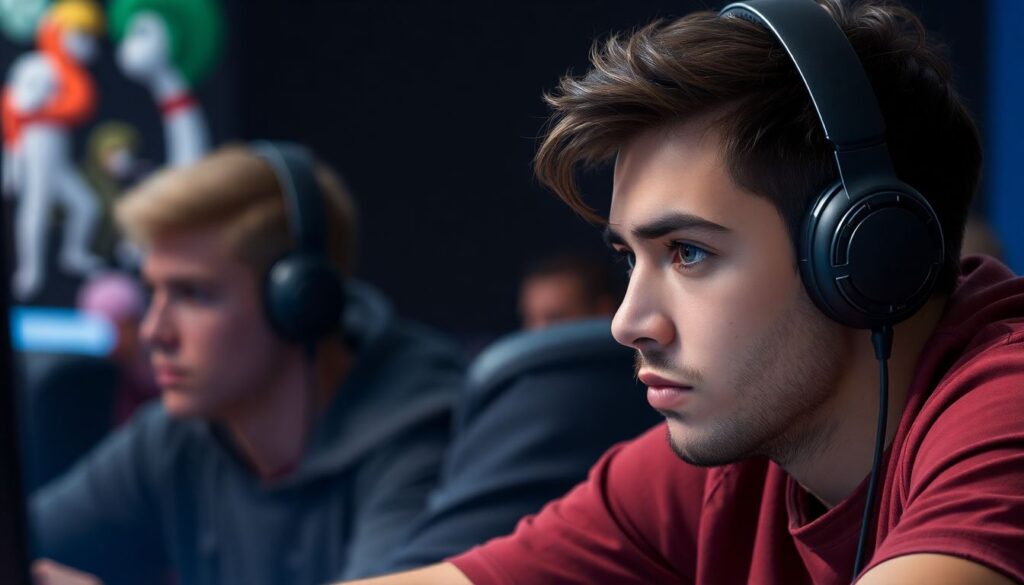
- Label your current state – Quietly name what you feel: “nervous”, “tilted”, “frustrated”, “afraid to lose”. Simple labeling reduces intensity and helps you choose a response instead of reacting automatically.
- Rate intensity quickly – Use a 0-10 scale for your emotion (for example, tilt 0-10). Anything above 6 means you pause at next safe window to run a reset micro-routine instead of auto-queueing or forcing plays.
- Use a 30-60 second reset window – At next death timer, timeout or break:
- Do 3-5 physiological sighs or slow breaths.
- Relax jaw, shoulders, hands; unclench fingers.
- Look briefly away from the minimap to a distant point to reduce tunnel vision.
- Switch to process goals mid-match – Choose one process focus for the next 3-5 minutes (for example, “play around vision”, “call cooldowns”, “trade only with cover”). This keeps your brain task-oriented instead of result-obsessed.
- Install a “one-mistake rule” – After a misplay, say a consistent phrase like “one mistake, next play” and immediately name the next best action. This separates learning (review later) from performance (play now).
- Use the bench or pause when needed – In team environments, agree in advance that any player can request a short pause or substitution when emotional intensity is too high. This is part of a healthy programa de saúde mental para atletas de alto rendimento, not a weakness.
Fast-track tactical routine for busy tournament days
- Notice and name – “I am anxious/tilted right now.”
- 3-breath reset – Three slow breaths plus one physiological sigh.
- Pick one process cue – For example, “positioning first” for the next 3-5 minutes.
- Short debrief phrase – After the match: “What worked, what to fix, what to drop.” Maximum 2 minutes.
Post-match Emotional Recovery: immediate and 24-hour actions
Use this simple checklist to verify if your post-match recovery is on track:
- Within 5-10 minutes after intense matches, you step away from the setup (stand, walk, hydrate) instead of instantly re-queueing.
- You take at least 3-5 minutes to slow breathing and stretch neck, shoulders and wrists.
- You write or voice-note 3 bullets: one positive, one lesson, one adjustment for practice.
- In the first hour, you avoid watching replays obsessively; you schedule them for a calmer time.
- On tilt-heavy days, you cap extra queues at a pre-agreed number rather than chasing a “fix” of your rank.
- Within 24 hours, you sleep at your usual time, without extending screen exposure deep into the night.
- You can talk about the match without reliving intense anger or shame after that 24-hour window.
- If strong emotions stay above 6/10 after 24 hours, you log it and consider sharing with staff or a psicólogo para jogadores profissionais de e-sports.
Weekly Maintenance: sleep, stimulation management and deliberate rest
Common mistakes that weaken emotional stability across the week:
- Sleeping irregular hours, changing schedule drastically between training days and off-days.
- Using caffeine or energy drinks late in the day, then struggling to fall asleep before early scrims.
- Playing or scrolling on bright screens in bed instead of using a short wind-down routine.
- Packing every break with more stimulation (ranked, social media, streams) instead of deliberate quiet time.
- Skipping physical movement (walking, stretching, light training), which helps regulate mood and focus.
- Never scheduling full mental rest blocks, even in heavy competition periods.
- Not reviewing tilt triggers during calm moments, so the same patterns repeat every week.
- Ignoring persistent anxiety or low mood because “everyone in high elo feels this”, instead of considering tratamento de ansiedade for jogadores competitivos online with a specialist.
When to Escalate: integrating coaches, psychologists and medical support
Several complementary support options can be combined with this routine:
- Performance-oriented support – Work with a specialist in coaching de performance mental para gamers profissionais or a sports psychologist to refine routines, communication, and tournament preparation. This is ideal when you are generally well but underperforming under pressure.
- Clinical psychological care – Seek a psicólogo para jogadores profissionais de e-sports when you have persistent anxiety, sadness, loss of motivation, or problems outside the game (relationships, study, work). Ask specifically whether they have experience with a structured programa de saúde mental para atletas de alto rendimento.
- Medical evaluation – Consult a physician or psychiatrist when symptoms are intense (panic attacks, self-harm thoughts, extreme insomnia, strong physical symptoms). Mental routines are supportive, but they do not replace professional tratamento de ansiedade or other evidence-based care.
- Education and courses – Use a targeted curso de controle emocional e foco para e-sports to build basic skills (breathing, focus, routines) if you do not yet have access to individual professionals, then add personalized support when possible.
Practical Concerns and Short Solutions
How many minutes per day should this routine take?
The core version fits into 5-10 minutes pre-match, a few short in-game resets, and 5-10 minutes post-match. Weekly maintenance (sleep, movement, review) uses time you already spend, but in a more structured way.
Can I use these tools if I already see a therapist or psychiatrist?

Yes, as long as you share the routine with them and follow their guidance first. These are general, non-invasive strategies and are usually safe to combine with professional treatment plans.
What if I forget the steps during a tense match?
Start with the fast-track version: name your state, take three slow breaths, choose one process cue. Write this on a small note near your monitor or on your phone background until it becomes automatic.
How do I adapt the routine for LAN tournaments?
Keep the same structure but shorten it: a 1-2-minute focus ritual, one breathing tool you can do at the desk, and a quick post-match walk away from the stage area. Coordinate with staff so pauses and breaks are planned.
Is this routine useful for semi-pro or high-elo ranked players?
Yes, the steps are designed for any competitive level that involves pressure, long sessions and emotional swings. Adjust volume (number of matches, duration of rituals) to your schedule and commitments.
What if I feel worse when I pay attention to my emotions?
Reduce the detail: simply rate intensity from 0-10 and focus on breaths and body tension. If discomfort continues or increases, stop the exercise and seek advice from a mental health professional.
How can teams integrate this into daily practice without losing scrim time?
Attach the routine to existing blocks: 5 minutes before first scrim, 30-60-second resets during tactical pauses, and a 5-minute post-block recovery. This usually improves scrim quality enough to compensate for the small time cost.