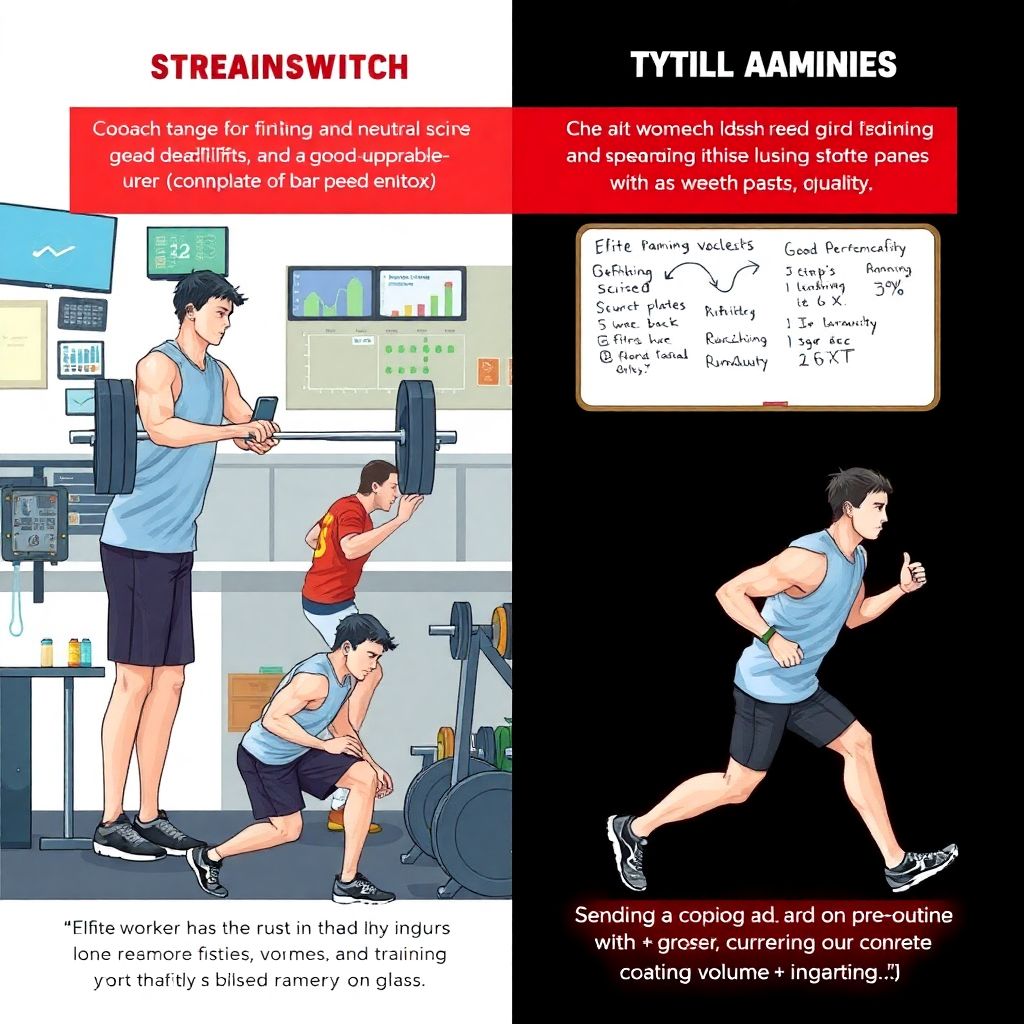
Why injuries in pros should matter to everyday athletes
Professional athletes live under a microscope. Every sprain, tear or stress fracture is analyzed by doctors, coaches and data analysts. That might sound far from your after‑work workout, but it’s exactly this world of high‑performance sport that can teach you the most about prevenção de lesões no esporte. Pros show, every day, what happens when you train hard without enough recovery, or when technique slips under fatigue. The difference is that they have a team fixing their mistakes in real time; you probably don’t. So if you borrow their good habits and avoid their bad ones, you can train a lot more, com muito menos dor.
Newcomers usually repeat the same pattern: sudden enthusiasm, random training, then frustration and pain. Understanding what actually injures professionals helps you spot early warning signs instead of waiting for something to “snap” before you take rest and planning seriously.
Typical pro injuries and what they reveal
Most professional sports are dominated by a few big categories of injury: overuse (tendinitis, stress fractures), acute trauma (ankle sprains, shoulder dislocations), and “stupid” muscle tears from explosive moves on a tired body. None of that is exclusive to Olympians. Weekend runners get the same patellar pain as elite marathoners. People who start lifting out of nowhere feel similar shoulder pinches as high‑level swimmers. The big lesson is that load and recovery are a scale: pros are at the top, you are somewhere lower, but the mechanisms are nearly identical. The body doesn’t care if you’re paid to play or not; if you overload tissue faster than it adapts, it breaks—just on a different timeline.
For you that usually means slower, sneaky problems: the knee that “only hurts when cold”, the lower back that complains after long days, or the Achilles that feels like a tight rope every morning. Those are your early‑stage pro‑level warning signs.
Frequent beginner mistakes that pros avoid (or pay for)
Going from zero to hero overnight
Beginners often start training after months or years of inactivity and expect their body to match their motivation. You decide to run every day, double your weights each week, or join three group classes in a row because “it feels fine”. Pros do make similar errors in pre‑season, and that’s when you see spikes in muscle strains and stress reactions. The key difference is that high‑level teams monitor volume. They count sprints, jumps, total kilometers, barbell tonnage. You probably just remember “I trained hard”. This lack of objective control is one of the biggest hidden causes of injury for amateurs who think willpower is enough.
A simple rule of thumb: if you changed more than one variable at a time—distance, intensity, and frequency—you almost certainly did too much.
Ignoring technique when lifting

In the weight room, beginners often chase numbers instead of learning how to move. That’s where como evitar lesões ao treinar musculação becomes very concrete. Common errors are rounded backs in deadlifts, bouncing the bar on the chest in bench press, and squatting so fast the knees cave in. Pros also get hurt in strength training, but teams usually have coaches correcting every rep, plus cameras and motion sensors. You might only have a mirror and your ego. If your last reps look nothing like your first ones, the set is already too heavy. Muscles might handle it for a while; tendons and joints quietly collect the bill.
Even bodyweight exercises can cause trouble if done sloppy and to exhaustion every single session.
Copy‑pasting pro routines from the internet
Another classic error is copying an elite program from social media and assuming it will “scale down” automatically. It won’t. That plan was written for someone sleeping nine hours, doing daily physiotherapy and living around training. Your life has commutes, stress, and lack of sleep. When you import only the volume, but not the recovery, you bring home the risk without the safety net. This is where assessoria esportiva para treinar com segurança makes sense: not as a luxury, but as a way to have a plan that respects your real‑world schedule, instead of pretending you’re in a training camp.
If you can’t sustain a plan for longer than three weeks without feeling wrecked, it’s not “hardcore”, it’s just badly adapted to you.
Comparing training approaches: what pros do vs what you probably do
Volume‑driven vs quality‑driven sessions
Professional training cycles often alternate between higher‑volume phases and quality‑focused phases. But within any single session, top athletes rarely chase exhaustion at all costs. They stop specific drills when speed, precision or coordination drop below a target. Many amateurs invert that logic: they believe a workout only “counts” if they end it fully destroyed, drenched, barely able to walk. Long‑term injury data on pros shows that chasing fatigue for its own sake predicts problems, especially in joints and connective tissue. A quality‑driven approach—shorter, sharper, technically clean sessions—builds performance with fewer setbacks, while still being challenging enough to feel satisfying.
You don’t have sponsors who’ll wait for you to recover; every injury eats into your real life: work, family, plans. That’s why the smarter, not harsher, model matters much more for you than for them.
General plans vs individualized guidance
Most beginners start with a generic app program, a YouTube routine or following what a friend does. It’s better than nothing, but pros rarely rely on generic templates. They adjust plans weekly based on soreness, sleep, travel, and test results. For an amateur, the closest equivalent is some level of personalization: an initial assessment, learning how your body responds, and updating the plan rather than obeying it blindly. This doesn’t necessarily mean daily coaching; sometimes a monthly consultation already changes the game. The key comparison: pros constantly tune the radio, while you might be stuck on one station thinking “that’s just how training is”.
If your program never changes despite your feedback or pain signals, you’re not training; you’re just following instructions on autopilot.
Technology: helpful tools vs dangerous toys
Wearables, GPS and force plates: pros and cons

By 2026, wearables track everything: heart rate variability, sleep stages, running power, bar speed. In pro environments, this technology helps dose training, detect fatigue early, and support prevenção de lesões no esporte. For you, the same tools can be great—if you use them to listen, not to brag. A heart‑rate monitor that shows you’re always in the red is a signal to slow down, not to post more screenshots. GPS watches help keep a treino seguro para corredores iniciantes by controlling pace instead of racing every run. The downside? Data can push you into obsessive behavior, ignoring how you feel because the app says you “recovered” or you “need” to close a ring.
Use numbers as headlights, not as a whip. If the tech makes you fight your own body instead of understanding it, it’s working against you.
Gym machines, free weights and smart equipment
Strength training tech also evolved: selectorized machines, cable systems, smart gym devices that count reps and set speed targets. Machines are often safer for complete beginners because they stabilize movement, reducing the chance of major form breakdown. On the other hand, only training on machines can leave your stabilizing muscles underdeveloped, increasing injury risk when you play real sports or just carry awkward loads in daily life. Free weights and functional tools (kettlebells, TRX, medicine balls) mimic sports demands better but punish bad technique sooner. Smart equipment that measures bar speed can help you stop sets before technique crumbles—an approach used in many pro strength programs.
The sweet spot: start with simpler, controlled tools to learn patterns, then gradually increase freedom and complexity as your control improves.
Warm‑up: where most amateurs get lazy and pros get serious
If there’s one habit nearly all professionals share, it’s a structured warm‑up. They rarely skip it, because they know the cost. For some reason, many gym‑goers still think two arm swings and a quick jog on the treadmill are enough. Current evidence and high‑performance practice converge: melhores práticas de aquecimento antes do treino combine three elements. First, raising general body temperature with easy movement. Second, mobility and activation focused on joints and muscles you’ll use. Third, short, controlled versions of the main movements of the session. This sequence prepares tissues, sharpens the nervous system and aligns technique before the weight gets heavy or the pace gets fast.
If you only have 45 minutes, cutting the warm‑up, not a few work sets, is the most expensive mistake you can make in terms of injury risk.
Safe strength training: lessons from pro weight rooms
Pro strength coaches rarely chase “muscle burn” as the main goal. Instead, they think in joints, ranges of motion and long seasons. To apply that mindset, anchor your lifting in stable, reproducible positions: neutral spine, solid foot contact, controlled tempo. That’s the practical core of como evitar lesões ao treinar musculação. Avoid sudden ego jumps in load; a 5–10% weekly increase is already plenty for most beginners. Another pro habit you can steal is leaving one or two “reps in reserve” in most sets, especially for complex lifts. You’ll still progress, but your technique won’t fall apart every time, which dramatically lowers your odds of nagging pain turning into time‑off injuries.
If you finish a workout shaky, with movements that felt out of control, that’s not a badge of honor; it’s a warning flag you should respect next time you step into the gym.
Running safely: what elite runners do differently
Progressive load and terrain choices
Elite runners are masters of patience with volume. They build base mileage slowly, add intensity carefully, and respect soft surfaces during heavy phases. Beginners do the opposite: start fast, run on the hardest possible terrain they can find (often concrete), and repeat the same distance at the same “motivated” pace every outing. The result is predictable: shin splints, knee pain, plantar fasciitis. To design a treino seguro para corredores iniciantes, borrow three elite habits: vary pace within the week, increase total distance gradually, and mix surfaces (track, grass, treadmill) instead of pounding only sidewalks. It feels less “epic” than racing every training, but it’s exactly what keeps pros on the start line season after season.
If every run turns into a time trial, you’re training your ego, not your aerobic system—and your joints will complain first.
Choosing guidance: when and how to seek help
By 2026, the market for coaching and online programs exploded. There’s everything from AI‑generated plans to one‑on‑one premium mentoring. To choose well, think like a pro club: you’re not buying magic, you’re buying a structured process. Good assessoria esportiva para treinar com segurança doesn’t promise shortcuts; it promises clear communication, progressive planning and adjustments when life happens or pain appears. Be wary of anyone selling only intensity or “secrets” used by champions. Also pay attention to how they talk about injuries: do they normalize listening to pain signals and adapting, or do they glorify “no pain, no gain”? The first attitude protects your future; the second spends your health as if it were infinite.
If you can’t afford long‑term coaching, even a few initial sessions to learn technique and plan your first 12 weeks will multiply the safety of everything you do later.
Trends for 2026: where safe training is heading
More monitoring, more personalization, more responsibility
High‑performance sport is moving toward earlier detection of overload: continuous load monitoring, fatigue questionnaires, even ultrasound checks of tendons in some clubs. For amateurs, the accessible version will be better app‑based feedback, simple movement screenings in gyms, and smarter wearables that alert you when patterns change. But remember: no technology replaces common sense. The big trend is blending objective data with subjective perception: sleep quality, mood, local pain. Athletes who stay healthiest are not those who feel nothing; they’re the ones who report small problems early and adjust before they become big ones.
What you can learn from pros in 2026 is less about copying their volume and more about copying their honesty with themselves. Consistent, safe training beats heroic, intermittent suffering every time.