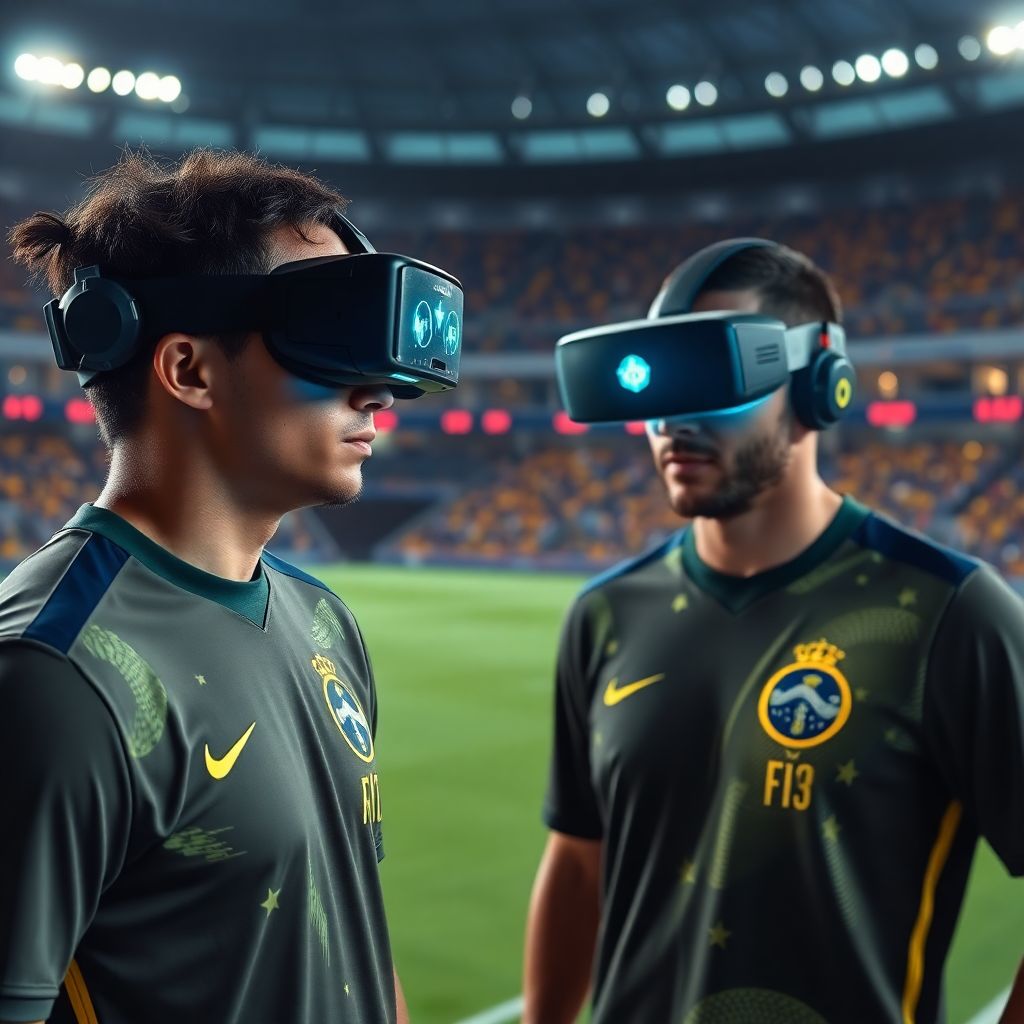
Augmented reality and virtual reality in sports training are tools to simulate game situations, control training load and standardize coaching, while opening new revenue streams. Use AR for on-field decision-making and technique cues, VR for tactical and cognitive work, and hybrid setups for data-driven, commercially viable offerings in Brazil.
Practical summary for implementation
- Start with one well-defined use-case (e.g., penalty decision-making, defensive rotations, running technique) instead of trying to digitize all training at once.
- Match technology to context: AR for field-based drills, VR for game simulation in limited space, hybrid for analytics-heavy setups.
- Involve coaches, physiotherapists and IT early to define safe workloads, session duration and data privacy rules.
- Test minimal hardware first (smartphones + simple headsets or markers) before investing in expensive equipamentos de realidade aumentada para treino físico.
- Pilot with a small athlete group, collect feedback, compare performance metrics, then scale to the wider academy or club.
- Plan business models alongside training design: sponsorship, B2B licensing, and white-label solutions for clubs and academies.
How AR and VR shift athletic skill acquisition
AR and VR change how athletes perceive information, make decisions and repeat motor patterns. Instead of only reacting to real opponents, they interact with digital overlays, simulated defenders and controlled tactical scenarios, while coaches log and replay situations with consistent conditions.
Who benefits most in the Brazilian context
- Professional clubs and academies: High tactical complexity, dense competition schedule, and demand for standardized decision-making work well with software de realidade virtual para clubes de futebol.
- Fitness and boutique gyms: plataformas de realidade aumentada para academias can create gamified sessions, boosting engagement and retention without needing extra physical space.
- Talent development centers: VR and AR help repeat rare game situations (e.g., high-pressure finishes) safely and with precise feedback.
- Rehabilitation and return-to-play: Motor and cognitive re-education under controlled, progressive environments, with clear logs and objective progression criteria.
When AR and VR are not the right choice
- When basic coaching structure is missing: if there is no periodization, testing protocol or injury monitoring, adding immersive tech creates noise, not value.
- When budget is tight and there is no clear ROI plan: evaluate realidade virtual para treinamento esportivo preço only after mapping specific performance or commercial goals.
- When athletes have unmanaged vestibular issues, severe motion sickness or uncontrolled epilepsy; prioritize medical clearance and low-intensity trials.
- When coaching staff is resistant to technology and no internal champion exists; start with education and small demos first.
AR vs VR vs hybrid for coaches
Choosing between AR, VR and hybrid approaches depends on training goals, available space and budget. The table below compares typical use-cases and metrics.
| Modality | Main context | Typical use-cases | Core metrics | Pros | Limitations |
|---|---|---|---|---|---|
| AR (Augmented Reality) | On-field / gym with real equipment | Technique cues, target visualization, rep counting, positional zones for team sports | Reps, spatial accuracy, reaction time, positional heatmaps | Uses existing space, more natural movement, easier coach buy-in | Requires line-of-sight, can be visually cluttered outdoors, hardware fragility |
| VR (Virtual Reality) | Indoor, small controlled area | Tactical scenarios, cognitive load, pattern recognition, pre-game preparation | Decision time, choice accuracy, scenario completion, gaze behavior | Full control of environment, easy repetition of rare events, strong immersion | Motion sickness risk, limited real locomotion, higher initial setup effort |
| Hybrid (AR+VR+Sensors) | High-performance centers and innovation labs | Data-rich drills, integrated GPS and inertial sensors, advanced analytics and content licensing | Load metrics, technical KPIs, tactical maps, commercial usage stats | Maximum insight and monetization potential, scalable content products | Complex integration, dependence on an empresa de desenvolvimento de realidade virtual para esportes, higher staff training needs |
Designing immersive training protocols and session plans
A structured approach keeps athletes safe and focuses on clear outcomes instead of gadget use. Treat AR and VR sessions like you would any specialized training block: define goals, duration, progression, and integration with overall load.
Preparation checklist before designing protocols
- Define one primary goal per protocol (e.g., scanning before receiving, depth perception on long passes, fatigue-resistant decision-making).
- Map weekly training schedule to decide where AR/VR fits without overloading athletes.
- List available devices, sensors and spaces (gym, small room, full pitch) and who can operate them.
- Secure data policies: who owns, views and exports performance data and video.
Core tools and access requirements
- Hardware needs
- VR headsets with controllers and safe play area markings for scenario-based training.
- AR-capable smartphones or glasses, plus markers or beacons for spatial anchoring.
- Optional sensors: GPS, IMUs, heart-rate monitors to correlate immersive load with physical load.
- Software and platforms
- Scenario creation tools or ready-made software de realidade virtual para clubes de futebol for tactical and set-play simulations.
- plataformas de realidade aumentada para academias for gamified conditioning, leaderboards and remote coaching.
- Analytics dashboards with export functions to integrate into existing monitoring tools.
- People and workflows
- One internal coordinator responsible for content selection, scheduling and troubleshooting.
- Coaches trained to translate tactical plans and physical goals into immersive drill design.
- Clear emergency protocol: stop criteria, supervision ratios, safe zoning of the training space.
Template for an immersive training session
Use this simple template to standardize AR/VR sessions:
- Goal definition: Single measurable objective (e.g., reduce average decision time in 3v2 situations).
- Structure: Warm-up (adaptation to headset or AR cues), main sets (3-5 blocks), cool-down and debrief.
- Load control: Define maximum total time in headset or under AR stimuli, with additional rest during first weeks.
- Feedback: Immediate in-drill cues plus post-session review with video or dashboards.
- Progression: Weekly adjustment in scenario complexity, speed or decision constraints, not only volume.
Quantifying outcomes: sensors, metrics and validation methods
Measurement validates that AR and VR sessions actually improve performance instead of just entertaining athletes. The steps below help build a safe, evidence-oriented monitoring process.
Pre-implementation readiness mini-checklist
- Confirm medical screening procedures are in place, including history of motion sickness and neurological conditions.
- Ensure at least one staff member can reliably operate hardware, update software and manage data backups.
- Choose 3-5 key metrics aligned with sporting goals (e.g., decision time, technical error rate, adherence).
- Plan simple baseline tests before adding AR/VR, using current training or low-tech drills.
- Define performance hypotheses
State exactly what you expect to change with immersive training, within a realistic time frame. Align coaches, athletes and management so everyone is looking at the same outcomes.- Example: after six weeks of VR tactical sessions, defenders should recognize pressing triggers faster.
- Example: AR sprint lines help maintain running mechanics under fatigue, reducing technical breakdowns.
- Select safe and relevant metrics
Combine technical, tactical, physical and perceptual indicators, but keep the list short enough to track consistently.- Technical: error counts, spatial deviation, contact quality, timing of movement execution.
- Tactical/cognitive: decision accuracy, reaction time, correct option selection in scenarios.
- Physical: heart rate response, perceived exertion, session duration under headset.
- Perceptual: motion sickness reports, eye strain, discomfort ratings.
- Establish baseline tests
Run the same or similar drills without AR/VR to capture pre-intervention values. Use simple and safe tasks first and repeat them at consistent intervals.- Keep environment stable: same surface, time of day and warm-up protocol.
- Record both numbers and subjective coach ratings for later comparison.
- Instrument AR and VR sessions
Attach sensors only when they do not compromise safety or natural movement. Configure devices to log the chosen metrics automatically wherever possible.- Use heart rate and perceived exertion to ensure immersive load does not unexpectedly spike training stress.
- Avoid complex sensor combinations in early pilots; add layers gradually.
- Compare and validate over time
At pre-defined checkpoints, compare AR/VR session data with baseline and real game or competition performance.- Look for consistent patterns, not single-session fluctuations.
- If immersive improvements do not translate to the field, adjust drill design rather than increasing volume.
- Communicate results safely
Share clear, athlete-friendly reports that highlight progress and caution flags, respecting privacy regulations and club policies.- Avoid ranking athletes publicly based only on immersive metrics.
- Use aggregated data for sponsorship pitches and internal business cases.
Technical, physiological and ethical limitations to monitor
The checklist below helps keep immersive training within safe, responsible boundaries while you experiment and scale.
- Check for dizziness, nausea, disorientation or headaches during and after sessions; stop immediately and adjust intensity if symptoms appear.
- Limit continuous headset time, especially in early weeks, and schedule extra rest between immersive and high-impact physical drills.
- Inspect all VR gear and equipamentos de realidade aumentada para treino físico before each use to avoid falls, cable trips or impact injuries.
- Ensure training areas are free from obstacles and clearly marked so athletes cannot collide with walls, equipment or other athletes.
- Protect personal and performance data: define who can access raw data, exports and video, and for what purposes.
- Get informed consent from athletes, especially for minors, explaining goals, risks and how data might support commercial projects.
- Avoid using AR/VR as punishment or compulsory replacement for field training; maintain athlete autonomy to report discomfort.
- Review content for psychological impact: avoid overly aggressive or traumatic simulations that could trigger anxiety.
- Periodically audit software updates and third-party integrations for security vulnerabilities and changes in data handling policies.
Commercial pathways: business models, pricing and partnerships
Beyond performance, immersive sports training can become a revenue stream. The points below highlight common mistakes to avoid when exploring negócio models in Brazil.
- Relying only on hardware sales margins and ignoring ongoing service revenue; recurring content, analytics and support usually matter more for sustainability.
- Neglecting local purchasing power when evaluating realidade virtual para treinamento esportivo preço and copying foreign pricing tiers without adaptation.
- Underestimating implementation services: clubs and academies often need onboarding, integration and content customization, which should be priced and resourced.
- Failing to define target customer segments (elite clubs, community academies, gyms, schools) and offering the same bundle to everyone.
- Building custom solutions from scratch for every client instead of productizing core modules that can be reused.
- Ignoring strategic alliances with an empresa de desenvolvimento de realidade virtual para esportes that already owns technology or content libraries.
- Promising unrealistic performance gains without proper validation, which undermines trust and blocks long-term contracts.
- Skipping legal review of data ownership and image rights when using VR recordings for marketing or sponsorship activations.
- Not tracking engagement metrics (session usage, active users, churn) that are essential for sponsors and investors.
Deployment checklist from pilot to full-scale rollout
Scaling from a small pilot to full deployment requires both technical and organizational readiness. Consider alternative paths if conditions are not yet favorable.
- Pilot with focused scope: One team or class, one primary goal and clear success metrics. Use off-the-shelf software and limited customization.
- Progressive scale-up: Expand to multiple teams, add hybrid setups and integrate with existing athlete management systems after initial success.
- Outsourced model: When internal resources are limited, partner with a specialized empresa de desenvolvimento de realidade virtual para esportes to deliver turn-key services on-site or as a subscription.
- Content licensing only: If hardware is already in place at clubs or academies, focus on selling curated scenarios, analytics and support instead of full installations.
Practitioner questions addressed
How do I start if my budget is small but I want to test AR or VR?
Begin with consumer-grade devices and free or low-cost apps, designing short, low-risk drills that complement existing training. Focus on one clear goal and measure simple outcomes before considering larger investments.
How long should an immersive training session last for safety?
Keep initial sessions short, with generous breaks and active symptom monitoring. As athletes adapt and you see no adverse effects, you can gradually increase exposure while tracking perceived exertion and recovery.
Can AR and VR replace traditional field training?
No, they should complement, not replace, field work. Use them for tactical scenarios, cognitive load and precise feedback, while preserving real game context and full-body movement in regular sessions.
What skills benefit most from VR simulations in team sports?
Pattern recognition, scanning behavior, decision-making under pressure and positioning in set plays are well-suited to VR. Physical contact, sprint mechanics and complex multidirectional movements remain better trained on the field.
How do I convince coaches who are skeptical about immersive tech?
Involve them in defining the problem, run a small pilot linked to current tactical objectives and show clear, easy-to-read metrics. Emphasize that technology supports, not replaces, their expertise.
What if athletes experience motion sickness during VR sessions?
Stop the session immediately, document symptoms and reduce intensity, movement speed and exposure time next time. Consider focusing on AR, seated VR experiences or non-immersive video-based tools for sensitive athletes.
How can I turn AR/VR training into a business opportunity?
Package your best protocols and content as a service for other clubs, academies or gyms, with clear pricing, support and analytics. Explore sponsorship and licensing to scale beyond your own facility.