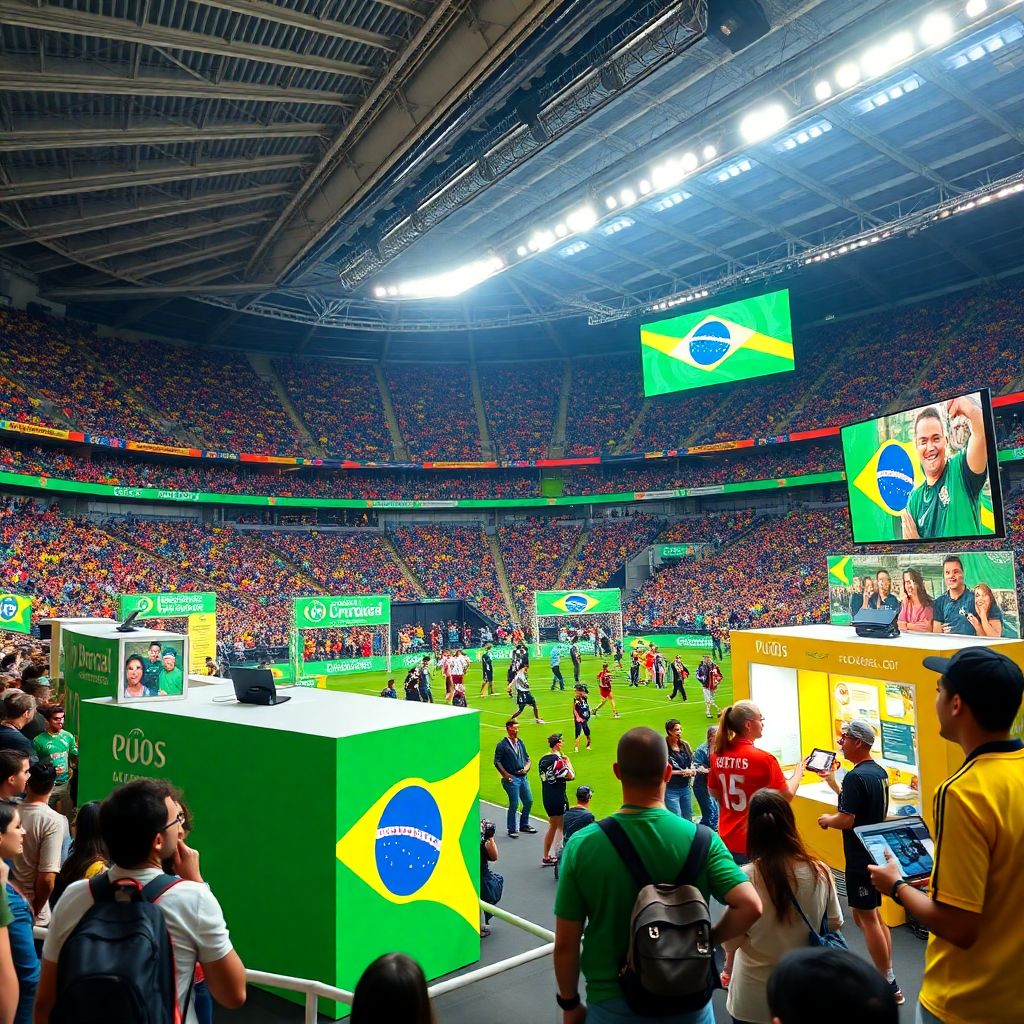
Effective promotions at global sporting events start from clear objectives, segmented audiences, and realistic budgets, then layer sponsorship, paid media, and on-the-ground activations. For brands in Brazil, focus on compliant use of event assets, strong local storytelling, and measurable funnels. Avoid ambush tactics, overpromising prizes, and opaque data practices.
Strategic essentials for promoting at global sporting events
- Define narrow, numeric objectives before negotiating any patrocínio e ativação de marca em eventos esportivos.
- Segment fans by behavior and device, not only by country or team preference.
- Balance reach channels with performance channels using transparent cost and risk assumptions.
- Localize creative for pt_BR while respecting global brand and legal constraints.
- Set event-specific analytics, including uplift tests and short measurement windows.
- Prepare crisis, legal, and media-contingency playbooks weeks before kick-off.
Audience architecture: segmenting fans and prioritizing touchpoints
Using structured audience architecture is essential for marketing esportivo grandes eventos globais because it lets you invest where fan attention is highest and safest. It does not fit brands with no tracking infrastructure, unclear consent flows, or extremely small budgets that cannot be split across segments.
Start by mapping three layers of fans:
- Core fans: existing customers who already buy your category regularly and follow the sport weekly.
- Event-driven fans: people who mainly engage during campanhas de marketing para Copa do Mundo e Olimpíadas or similar tournaments.
- Casual audience: broad reach needed for awareness, often reached via TV, open web, and social video.
For each layer, prioritize touchpoints in this order:
- Owned: CRM, app, site, WhatsApp lists, loyalty programs.
- Earned: PR, influencers, user-generated content tied to matches and key moments.
- Paid: programmatic, paid social, search, outdoor, and broadcast.
Case vignette (trade-off): A Brazilian beverage brand shifted part of its TV budget into high-frequency CRM pushes during match days. Reach decreased in the casual layer, but conversion among core fans rose, with much lower media waste and less exposure to controversial live commentary risks.
When not to invest heavily in segmenting: if you cannot technically act on the segments (no dynamic creatives, no separate bidding, no tailored journeys), keep segmentation simple and invest in brand safety and operational excellence instead.
Sponsorship design: aligning brand assets with event narratives
Well-designed sponsorships for estratégias de marketing em eventos esportivos internacionais connect brand assets to authentic, on-field or fan narratives, rather than generic logos. Before committing, ensure you have:
- Clear rights documentation describing what you can and cannot say or show.
- Legal review aligned with Brazilian consumer promotion rules and global IP rules.
- Activation budget at least comparable to the sponsorship fee, otherwise your assets stay invisible.
- Creative resources to adapt messaging across languages and channels, including pt_BR.
- Measurement access: tracking links, pixel placements, and permission to integrate with event apps or partner data.
Map your potential assets:
- Visibility assets: perimeter boards, on-screen graphics, branded content slots.
- Engagement assets: fan zones, second-screen experiences, interactive games, social takeovers.
- Value assets: exclusive offers, priority access, upgraded experiences for customers.
For each planned asset, add a small risk assessment:
- Legal risk: Does the copy imply you are an official partner if you are not?
- Reputation risk: Could the placement appear next to crowd issues, injuries, or political symbols?
- Operational risk: Can you reliably deliver prizes, tickets, or experiences you promote?
Case vignette (trade-off): A fintech opted for digital content rights instead of in-stadium branding. It lost raw in-venue visibility but gained flexible storytelling and avoided exposure to any safety incidents in the stadium itself.
Paid media playbook: timing, channel mix, and bidding strategies
Paid media is where most budgets for como fazer promoções em grandes eventos esportivos are deployed, and also where mistakes scale quickly. Before following the step-by-step plan below, consider these key risks and constraints:
- Overconcentration in a single platform increases dependency on its moderation and outage risks.
- Aggressive frequency caps may limit reach, but weak caps can create ad fatigue and brand irritation.
- Too-short approvals in regulated categories (finance, alcohol, betting) can lead to rejected campaigns close to kick-off.
- Lack of negative keywords or exclusion lists can place your brand next to sensitive or illegal content.
- Weak data governance can breach consent rules for Brazilian users and international visitors.
Use the following safe, structured sequence to plan your media for patrocínio e ativação de marca em eventos esportivos and broader campaigns:
-
Define event-specific objectives and budgets.
Determine if the objective is awareness, lead generation, app installs, or sales uplift tied to the event window. Set clear budget ranges for pre-event, in-event, and post-event stages.- Risk mitigation: Document numeric targets and guardrails in a one-page brief to avoid last-minute scope creep.
-
Select channels with a balanced effectiveness and cost profile.
Combine broad-reach inventory (TV, YouTube, large publishers) with performance channels (search, social, programmatic). Align each channel with a stage of the funnel.- Risk mitigation: Avoid channels where you cannot apply brand safety controls, frequency caps, or geo-targeting to Brazilian audiences.
-
Schedule campaigns around key event moments.
Plan flighting for the draw, opening ceremony, group stages, knockouts, and finals. Use shorter bursts during peak days and stronger retargeting between games.- Risk mitigation: Keep contingency creative ready in case of team elimination or sensitive real-world events that demand tone changes.
-
Set conservative bidding and pacing strategies.
Begin with moderate bids and automatic strategies (e.g., target CPA or ROAS) using historical data, then cautiously increase as you observe stable performance.- Risk mitigation: Cap daily spend per campaign and enable alerts so a tracking or creative error does not burn the full budget in hours.
-
Structure campaigns for clear measurement.
Separate brand vs. event-specific campaigns, and segment ad groups by key audiences and creative concepts. Use consistent UTM tagging across all channels.- Risk mitigation: Keep experiments simple; too many variants make it impossible to diagnose which element failed under event pressure.
-
Monitor, optimize, and enforce brand safety in real time.
During live matches, assign a monitoring team to watch performance dashboards and brand safety alerts. Pause or adjust placements that underperform or appear next to controversial content.- Risk mitigation: Prepare escalation rules and out-of-hours contact lists so any major issue can be resolved within minutes, not days.
To support channel selection decisions, use a comparative view like the table below (adapt with your own benchmarks and local data for Brazil):
| Channel type | Typical role in event campaigns | Relative cost level | Brand safety control | Measurement clarity |
|---|---|---|---|---|
| Broadcast TV | Mass awareness, association with live games and ceremony moments | High | Medium (depends on broadcaster content) | Low to medium (modeled reach and impact) |
| YouTube and premium video | High-impact video, custom shows around matches | Medium to high | High (allow lists, content categories) | Medium to high (view-based and click-based) |
| Social feeds and stories | Engagement, conversation, quick testing of creative | Medium | Medium (blocked topics, but user-generated unpredictability) | High (rich event and audience analytics) |
| Search ads | Capture intent around tickets, jerseys, betting, and promotions | Medium | High (keywords and negative lists) | High (direct response and clear attribution) |
| Programmatic display | Retargeting, incremental reach, dynamic offers | Low to medium | Variable (depends on SSPs, domains, and filters) | Medium (multi-touch, requires careful setup) |
Case vignette (trade-off): An electronics brand cut some expensive in-broadcast spots and reinvested into search plus retargeting. It reached fewer casual viewers live but significantly increased conversion among those already researching TVs during the event.
Creative localization: messaging, compliance, and cultural calibration
Strong creative localization is the main visible difference between global templates and locally effective campanhas de marketing para Copa do Mundo e Olimpíadas. Use this checklist to audit your materials for Brazil and other target markets:
- Message is clearly adapted to pt_BR, including slang, number formats, and time zones.
- Visuals reflect diverse, inclusive representations of Brazilian fans without stereotypes or sensitive gestures.
- Copy does not imply official tournament partnership if you are running generic marketing esportivo grandes eventos globais.
- Disclaimers for promotions, raffles, and prizes respect Brazilian legal standards and platform ad policies.
- All claims about performance, discounts, and availability can be supported with evidence and stock.
- Creative variants exist for different segments (core fans vs. casual audience, families vs. young adults).
- Assets are tested on different devices, bandwidth conditions, and accessibility needs (subtitles, contrast, font size).
- Backup creatives are ready for quick activation if a star player is injured, a team is eliminated, or a sensitive news event happens.
- Internal review includes at least one native pt_BR speaker and one legal or compliance reviewer.
- Each creative concept has a clear stop condition, for example, last game date or stock thresholds.
Case vignette (trade-off): A food-delivery brand replaced global celebrity footage with local comedian content tailored to Brazilian match rituals. It required extra production but drove stronger engagement and reduced backlash risk around polarizing global figures.
Analytics and attribution: KPIs, measurement windows, and ROI models
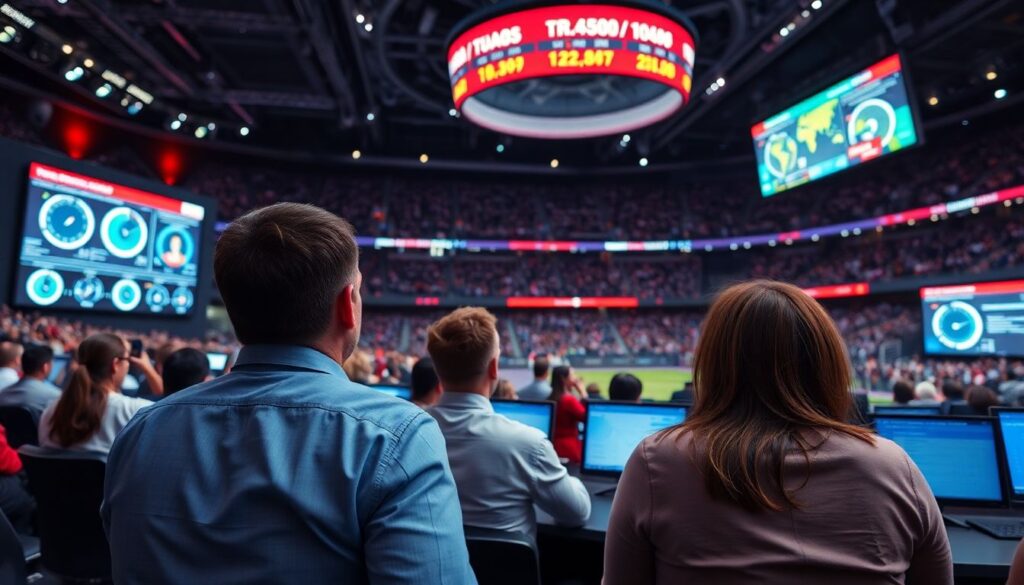
Analytics for estratégias de marketing em eventos esportivos internacionais often fail not because of tools, but because of unrealistic expectations and rushed setups. Avoid these common pitfalls:
- Measuring long-lifecycle KPIs (for example, annual brand equity) in a very short event window without baseline data.
- Using last-click attribution only, which overvalues performance channels and undervalues broadcast and upper-funnel media.
- Changing tracking links or pixel configurations during the event, breaking continuity in your data.
- Ignoring organic and word-of-mouth impact, which can make paid media look less efficient than it really is.
- Overcomplicating dashboards with too many metrics, making it hard for teams to act in real time.
- Failing to separate incremental event impact from usual seasonality in your category.
- Not running simple experiments, such as geo holdouts, where your brand stays dark in comparable regions.
- Reporting success only in vanity metrics (views, likes) without connecting to business outcomes.
- Not backing up and documenting your data so that future events cannot reuse learnings.
- Leaving data access tied to individuals instead of teams, making campaigns vulnerable to staff changes.
Case vignette (trade-off): A telco focused on a small set of event KPIs (new SIM activations, app logins, churn) instead of tracking everything. Reporting was simpler, and while some nuance was lost, the team acted faster on clear signals.
Operational resilience: brand safety, legal constraints, and contingency planning
Even the best media and creative plans can be derailed during global tournaments. Prepare alternative approaches that keep you safely in the game while respecting legal and operational limits:
-
Alternative 1: Focus on evergreen brand platforms.
Instead of building complex tactical promotions, invest in strengthening your brand platform and product value, with only light event-themed overlays.- Use case: Suitable if your legal team is risk-averse or your product has strict compliance rules.
- Risk mitigation: Lower exposure to regulatory issues and reputation crises tied to specific matches or players.
-
Alternative 2: Prioritize owned and CRM-driven campaigns.
Run simple, clearly worded offers to your database before and after key games, rather than high-stakes public promotions.- Use case: Works for brands with strong CRM capabilities but limited media budgets.
- Risk mitigation: More control over message, audience, and timing, with reduced reliance on external inventory.
-
Alternative 3: Collaborate with safer, pre-vetted partners.
Instead of running your own large-scale promotion, sponsor or co-create content with established media outlets or sports creators who already manage compliance.- Use case: Ideal if your internal team lacks experience with eventos esportivos internacionais.
- Risk mitigation: Shared responsibility for brand safety and operational delivery, plus tested workflows.
-
Alternative 4: Run post-event halo campaigns.
Skip the intense competition during the event and run campaigns built on tournament memories, recaps, and highlights after the peak noise.- Use case: Good for brands with flexible timing that want better media prices and lower attention risk.
- Risk mitigation: Lower emotional volatility and reduced pressure from live incidents and results.
Case vignette (trade-off): A financial-services brand chose a post-event recap series with practical financial tips for fans instead of risky in-game betting-style promotions. It forfeited some live hype but improved trust and long-term customer value.
Practical answers to recurring tactical questions
How early should I start planning campaigns for global sporting events?
Begin strategic planning six to twelve months before the event, at least for sponsorship and rights discussions. Paid media and creative localization can start later, but leave enough time for legal review, testing, and integration with your analytics stack.
Can small and mid-sized brands benefit without official sponsorship rights?
Yes, by focusing on fan needs, contextual content, and precise targeting rather than using protected logos or names. Build your narrative around fan rituals and product relevance, and always avoid implying official association when you do not have those rights.
Which KPIs are most realistic for short tournament windows?

Focus on metrics that can move quickly, such as incremental sales, sign-ups, app activity, and short-term brand lift. Long-term equity and loyalty effects are important but should be modeled over a longer horizon using separate studies.
How can I protect my brand from appearing next to harmful content?
Use allow lists of trusted publishers, blocklists for sensitive topics, and built-in brand safety tools from platforms. Combine these with manual monitoring during live games and clear escalation rules to pause campaigns if incidents occur.
Is it worth investing in offline activations for international events watched from Brazil?
Offline activations can be valuable when tied to clear conversion paths, such as QR codes, app downloads, or store visits. Prioritize locations where fans naturally gather during matches and ensure you can operate safely and comply with local regulations.
How do I adjust campaigns if the home team is eliminated early?
Prepare neutral, competition-wide creative variants before the event that can run regardless of which team advances. Shift messaging toward broader themes like celebration of sport, community, or value, and rebalance media to less emotionally charged environments.
What is the safest way to run prize promotions tied to match results?
Keep mechanics simple, cap your maximum liability, and get legal review for the rules under Brazilian law. Avoid promising rewards dependent on highly uncertain or controversial outcomes, and ensure fulfillment processes and communication plans are tested in advance.