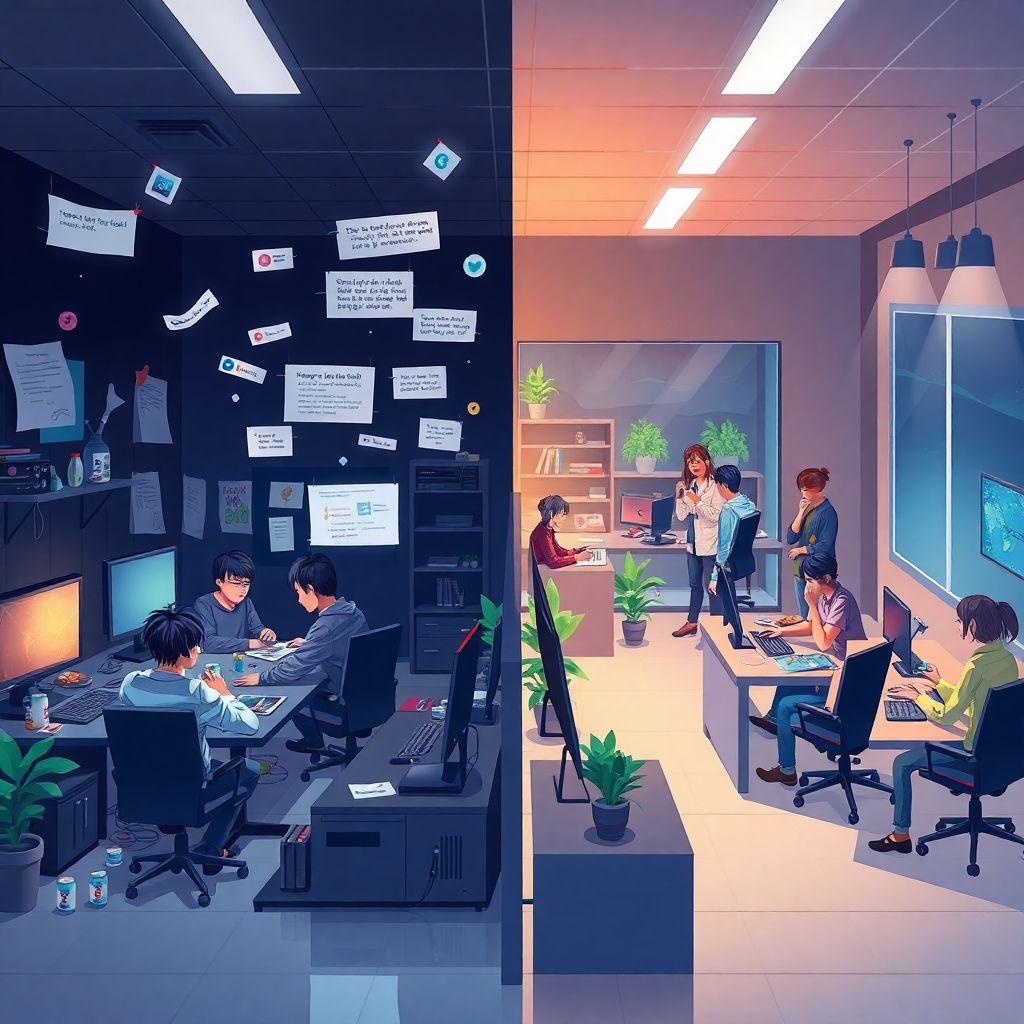
Why mental health finally became a core topic in E‑Sports
If you’d asked most fans ten years ago about saúde mental nos e-sports, many would have shrugged it off with a joke about “just playing games for a living”. In 2026, this attitude feels outdated. Top teams now travel with sports psychologists, performance coaches and even sleep specialists. Tournaments include quiet rooms, and it’s no longer shocking when a star announces a competitive break to protect their mental health. This shift didn’t happen overnight: it came after a decade of public breakdowns, abrupt retirements and very public talks from ex‑pros about depression, anxiety and loss of purpose once the camera lights go off. What once was dismissed as “weakness” started to look more like occupational hazard in a ruthless high‑performance ecosystem.
From basement tournaments to global pressure cooker
Back in the early 2010s, the scene was small and fairly improvised. Players competed from gaming cafés or cramped team houses, with almost no structure. Practice meant playing “until you drop”, coaches were rare, and nobody talked about psychologists unless something had gone seriously wrong. As prize pools exploded and franchised leagues appeared in the late 2010s and early 2020s, expectations shifted dramatically. Suddenly, teenagers were signing multi‑year contracts, moving to other continents, and being watched by millions. The old “grind all day” culture clashed with the realities of jet lag, media obligations and long competitive seasons. The first wave of public retirements at 22–24 years old, often due to burnout, forced organizations to admit that pure talent and endless practice were not enough to sustain performance.
Turning points that put mental health on the radar
What really changed the conversation were several highly visible crises. A few star players spoke openly about panic attacks before finals, insomnia during bootcamps, and self‑medication with stimulants or sedatives. Documentaries on streaming platforms followed teams through entire seasons, revealing arguments, tears and the toll of constant scrutiny. Sponsors, worried about reputation and lost investments, began to back structured support programs. By the mid‑2020s, major leagues started to require basic well‑being protocols: session limits, access to counseling, concussion‑style checks for extreme fatigue. This institutional push helped reframe the narrative from “emotional fragility” to “professional risk management” in a high‑stress industry.
Core principles of mental health in high‑level E‑Sports
Underneath the buzzwords, there are a few solid principles that now guide how teams think about mental health. First, the brain is treated as a performance organ, just like the hands or eyes. If you overload it with endless scrims, poor sleep and constant criticism, it will fail under pressure. Second, consistency beats intensity: rather than practicing 14 hours a day before a big tournament and then crashing, top rosters plan energy in multi‑week cycles, with built‑in recovery. Third, emotional regulation is trained, not assumed; most teenagers are not naturally prepared to handle thousands of toxic comments after a bad match. Finally, personal identity has to extend beyond the player nickname; pros who see themselves only as “the game” tend to collapse harder when results drop or retirement looms.
What “mental training” really looks like day to day
When people picture treinamento mental para jogadores profissionais de e-sports, they often imagine vague “motivational talks”. In reality, the modern toolbox looks much more concrete. Players work on pre‑match routines that stabilize heart rate and attention, such as short breathing sequences combined with visualization of key plays. They use cognitive‑behavioral techniques to spot unhelpful thoughts (“I always choke on stage”) and replace them with specific, testable focuses (“I’ll call my timings clearly and trust my crosshair”). Many teams track sleep and mood with apps, then adapt practice intensity. In‑game, pros rehearse “tilt‑proof” communication: concise, neutral callouts even after big mistakes. Over time, these habits create a mental baseline that doesn’t swing wildly after each win or loss.
Pressure, expectations and social media: the new “stage fright”
For a generation that grew up online, the stage is no longer just an arena – it’s a permanent, global audience watching every move. Knowing como lidar com pressão psicológica nos e-sports has become almost as important as raw mechanics. A rookie can go from anonymous ladder player to trending topic overnight, with every misplay clipped, memed and dissected. This level of exposure activates a very primal fear of public humiliation, which the brain interprets as a threat to survival, not just to a career. The result is classic performance anxiety symptoms: sweating, heart racing, tunnel vision, overthinking simple actions. Experienced pros learn to narrow their attention to controllable elements – crosshair, cooldowns, team calls – and consciously block out thoughts about narrative, legacy or social media reactions until after the match.
When high performance slides into burnout
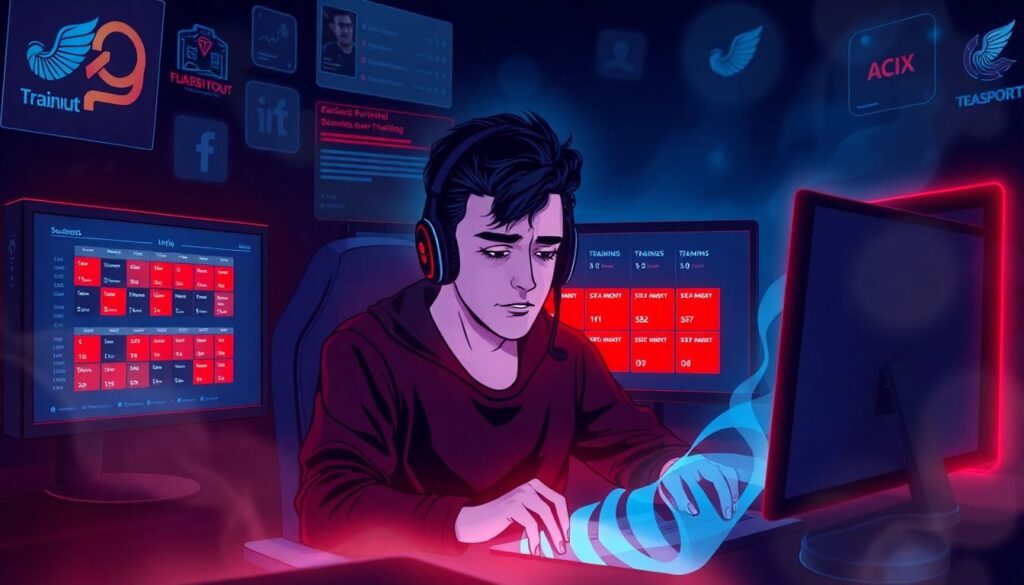
By now, even casual fans have heard stories of burnout em jogadores profissionais de e-sports. Burnout in this context usually comes from a mix of three ingredients: chronic overtraining, lack of control, and identity pressure. Overtraining is obvious when you see schedules with ten scrim blocks, solo queue before and after, plus content obligations. Lack of control appears when players feel they can never say “I need rest” without risking their spot. Identity pressure appears when losing a starting place feels like losing one’s entire sense of worth. Together, these factors lead to classic burnout symptoms: emotional numbness, cynicism about teammates and fans, and a drop in reaction time and decision‑making that no amount of extra practice fixes. Rest alone often isn’t enough; what’s needed is a redesign of the environment and expectations.
Concrete strategies top players use to stay sane
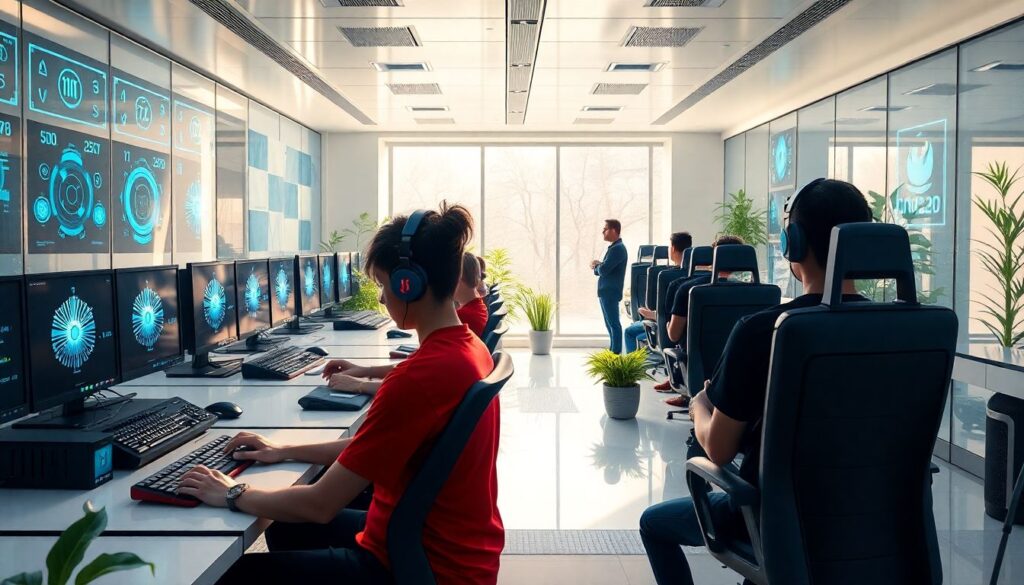
Most elite pros in 2026 won’t call what they do “self‑care”, but they are surprisingly methodical about protecting their mental resources. Many of them treat their days like athletes in traditional sports: fixed wake times, meal plans, scheduled breaks away from screens. Before important matches, some redo the same music playlist, hand warm‑up and breathing sequence to give the brain the message “we’ve been here before, and we know what to do”. Between tournaments, the focus often shifts from raw hours to specific goals: mastering two new setups, refining one macro strategy, or sanding down a personal habit like over‑talking in tense moments. The idea is to keep a sense of progress without living in a permanent state of emergency.
Example: a rookie learning to handle the first big split
Imagine an 18‑year‑old who just got signed to a major team. At first, they’re thrilled; everything is new, from the gaming house to the jersey with their name. After a few weeks, though, nerves kick in: scrims feel chaotic, coaches are demanding, and social media expectations spike. Here’s how a structured approach might look: (1) together with the psychologist, they define three specific, realistic goals for the split (communication clarity, laning phase consistency, post‑loss recovery time); (2) they schedule two weekly check‑ins: one tactical with coaches, one mental with staff; (3) they create a “post‑game protocol” – 10 minutes of cooldown, short debrief, then a hard stop on reading comments for the first hour. This kind of setup doesn’t remove the pressure, but it creates rails that keep it from becoming overwhelming.
Example: a veteran navigating the late‑career phase
Now picture a 26‑year‑old veteran whose reflexes are starting to slow down just enough that younger talent is catching up. The stress here is less about pure competition and more about relevance and future security. Many veterans in 2026 work on expanding their identity beyond being a starter: they start streaming, casting, or mentoring academy players. Mentally, the key is shifting from “I must be mechanically perfect” to “I provide strategic depth and leadership”. They might work with staff on accepting that they will occasionally sit out maps without interpreting it as a personal failure. This transition reduces anxiety and, ironically, often leads to better in‑game decisions, because they are less desperate to prove themselves in every micro‑duel.
Psychological support: from taboo to normal resource
The phrase tratamento psicológico para atletas de e-sports would have sounded strange not long ago; in 2026, it appears in contracts and sponsor decks. Top organizations now see psychological care as a competitive advantage rather than a PR patch. The most effective setups don’t wait for crises. Instead, they integrate mental health professionals from day one: attending scrims to understand roles and communication patterns, joining draft meetings, and offering short individual sessions after tough series. Importantly, pros are not forced into therapy, which would only increase resistance; they are invited, educated about benefits, and often won over when they see performance gains such as better focus and faster recovery after mistakes. Over time, using psychological support becomes as routine as visiting the physiotherapist.
Common tools used in treatment and coaching
Behind the scenes, practitioners mix several approaches. Cognitive‑behavioral therapy helps players recognize catastrophic thinking, such as “if I lose this map my career is over”, and replace it with more accurate appraisals. Mindfulness‑based techniques train attention control so the mind doesn’t wander to past errors mid‑round. Some staff deploy biofeedback devices to teach players to consciously modulate heart rate variability before pistol rounds. At team level, psychologists facilitate conflict resolution, making sure disagreements about strategy don’t rot into personal resentment. Even short interventions, like reshaping how feedback is given (from personal blame to solution‑oriented language), can vastly reduce chronic stress in the gaming house.
Frequent misconceptions about mental health in E‑Sports
Despite progress, misconceptions remain stubborn. One of the loudest myths says that talking about stress will “weaken” a player. In practice, ignoring issues tends to lead to emotional blow‑ups at the worst possible time, like mid‑series. Another popular belief is that only “fragile” individuals struggle mentally, while “true competitors” thrive in chaos. The research we have – and the lived experience of countless pros – points in the opposite direction: everyone has limits, and people who look ice‑cold on stage may pay a high price off camera. There’s also the idea that rest is “lost time” in a short career; teams that embraced structured rest actually saw more stable results across long seasons. Separating hype narratives from what actually supports long‑term performance remains an ongoing cultural battle.
Why “just play less” isn’t a real solution
Another simplistic take is that players could avoid issues by “just playing fewer hours”. This ignores the realities of how competition, contracts and ranking systems work. Cutting practice randomly, without changing expectations, only adds guilt: the player feels they are “slacking” and worries about being replaced. Effective change requires adjusting the whole ecosystem: scrim structures, content demands, travel schedules and even how success is defined internally. A team that publicly values sustainable careers will handle a dip in form as a shared problem to solve, not a moral failing. Until these structures align, individual advice to “chill more” tends to be both unrealistic and unfair.
The most common myths, in a nutshell
To pull some of this together, here are a few recurring misconceptions players and fans often hold about mental health in the scene:
1. “Mental coaching is only for players who are already in crisis.”
2. “If I admit I’m stressed, I’ll look weak and lose my spot.”
3. “More practice hours always equal better performance.”
4. “Social media hate doesn’t affect real competitors.”
5. “Good results mean my mental health is fine.”
Each of these claims sounds plausible at first, but they fall apart when confronted with the data and with what major organizations are seeing in daily practice. The last one is especially treacherous: temporary success can mask underlying exhaustion, which later erupts as abrupt performance drops or early retirements.
Looking ahead: where mental health in E‑Sports is going (2026–2030)
Standing in 2026, the direction of travel is clear: mental health is becoming built‑in infrastructure rather than an optional add‑on. Big publishers are experimenting with season formats that include protected rest windows and limits on match density to reduce cumulative strain. Insurers, increasingly involved in big contracts, are quietly pushing for standardized assessments of cognitive load and stress risk. We can expect more cross‑pollination with traditional sports science, especially in measuring decision fatigue and its impact on clutch performance. At the same time, AI tools are being tested to flag patterns of overtraining – for example, sudden increases in solo queue volume late at night combined with declining scrim stats – so staff can intervene early, before full burnout develops.
Future trends that will likely reshape the field
Looking a few years ahead, three trends seem particularly plausible. First, academy systems will start teaching mental skills from the start instead of trying to “repair” pros at 20. Young talents may go through standardized modules on media literacy, financial planning and emotional regulation as part of their contracts. Second, career‑transition programs will expand, with more formal paths into coaching, analytics, content creation and game design, easing the existential anxiety of short playing careers. Third, fans’ expectations may slowly evolve; as more role models speak openly about therapy and rest, the culture of glorifying self‑destructive grinding may begin to lose its appeal. None of this will magically erase pressure – high‑stakes competition is inherently stressful – but it can make that stress more manageable, meaningful and less likely to destroy the people at the center of the stage.