
Clubs and esports organizations use structured data to narrow a huge talent pool, reduce scouting bias, and standardize decisions. Combine public statistics, scrim and ranked telemetry, behavioral signals, and structured interviews in one pipeline. Start simple: define target roles, key metrics per game, safe data sources, and a repeatable review workflow.
Data-Driven Scouting Summary
- Define per-role metrics that actually win games (not only KDA), and track them consistently across tryouts, scrims, and competition.
- Centralize data from ranked ladders, tournaments, and internal scrims in one database or BI layer before making hiring decisions.
- Combine performance analytics with communication, tilt-resilience, and team-fit signals from VOD review and structured interviews.
- Use lightweight models and benchmarks before complex AI; most wins come from consistency and process, not from fancy algorithms.
- Create a pipeline from discovery to contract: shortlist by data, validate in controlled tryouts, then close with role clarity and expectations.
- Respect privacy and platform ToS; work with consent, avoid gray-area data scraping, and document how data influences selection.
Core metrics and signals for player evaluation
Data-driven scouting is ideal for organizations with recurring tryouts, budget for tooling, and staff able to interpret numbers. It is less suitable when you lack stable rosters, game knowledge, or time to maintain data hygiene; in those cases, keep analytics very simple to avoid noisy, misleading dashboards.
Role and game-context specific metrics
- Define per-role KPIs
- MOBA: laning advantage (gold/xp at 10), damage share, vision score, objective participation.
- FPS: headshot rate, opening duel success, trade rate, utility efficiency rather than raw K/D.
- Battle Royale: average placement, survival time, placement in high-lobby MMR.
- Adjust for game context
- Solo queue vs team play: emphasize teamfight, objective, and communication-dependent metrics in scrims.
- Patch changes: tag data by patch so you do not overvalue performance on outdated metas.
Stability and sample-size checks
- Require a minimum number of games per patch/role before trusting a metric (e.g., dozens of ranked games plus multiple scrims).
- Look at trend lines over weeks, not single spikes: is performance improving, stable, or declining?
- Compare players against role peers in the same rank/league, not across the entire ladder.
Competitive pressure indicators
- Performance difference between ranked, open qualifiers, and official matches.
- Clutch metrics: success in man-disadvantage situations, objective contests, overtime/decider maps.
- Choking signs: increased errors, penalties, or mechanical misplays in high-stakes games.
Consistency and floor vs ceiling
- Separate best-case (peak) from worst-case (floor) games to understand volatility.
- For rookies, accept wider variance, but look for a clear upward trajectory and adaptation to higher-level opponents.
- For veterans, prioritize reliability and role discipline over occasional highlight performances.
Telemetry and in-game data pipelines

Before deep analytics, you need a clean, secure way to collect, store, and explore data from different sources. For Brazilian teams, start with tools that integrate well with local servers, payment, and staff skill levels, and avoid fragile scripts that break whenever an API or game patch changes.
Data sources to integrate
- Official and public APIs
- Game publisher APIs where allowed by ToS (match history, ranked data, basic telemetry).
- Tournament platforms: bracket results, match stats, and lobby information.
- Internal scrim and practice data
- Scrim logs: match IDs, comps, roles, outcomes, specific test objectives.
- Coach tagging: manual tags like “new comp test”, “lag issues”, “substitute lineup”.
- VOD and communication recordings
- Replay files and VOD links indexed by player, comp, and opponent level.
- Voice comms recordings stored securely for review and communication analytics.
Tooling and infrastructure basics
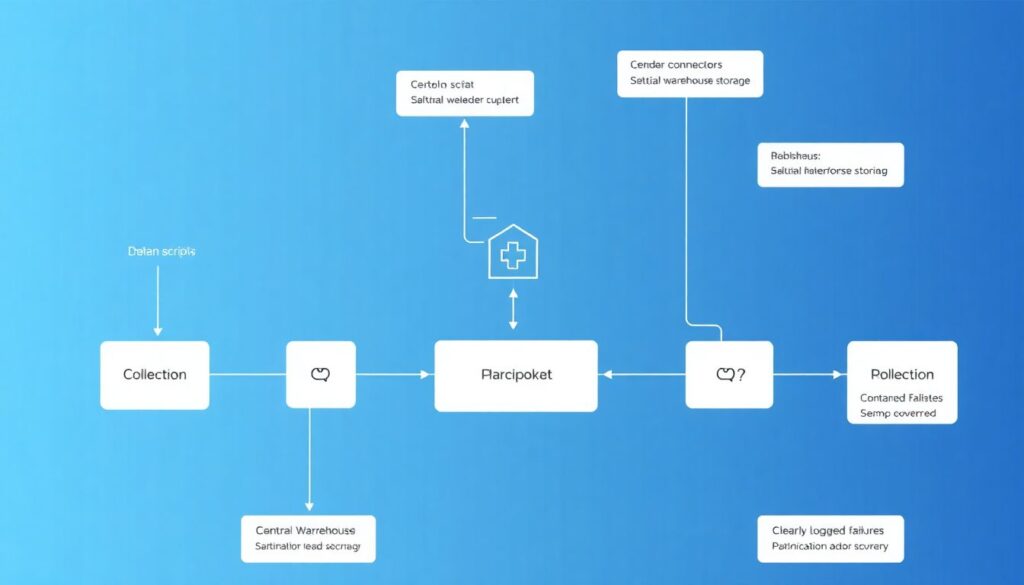
- Collection layer
- Simple scripts (Python, Node) or vendor connectors pulling data on a schedule.
- Respect rate limits and ToS; log failures instead of retrying aggressively.
- Storage layer
- Start with a relational database (e.g., PostgreSQL) or cloud warehouse; avoid spreadsheet-only setups for long-term data.
- Define consistent IDs: player, account, team, match, series, patch.
- Analytics and visualization
- Use BI dashboards or dedicated plataformas de análise de dados para e-sports to visualize trends and leaderboards.
- Configure per-role views so coaches can quickly filter by lane, position, or agent/hero pool.
Security and access control
- Restrict raw data access to analysts; give coaches curated dashboards.
- Use per-user logins and revoke access when staff or players leave the organization.
- Encrypt backups and avoid sharing player-level data over public links or unsecured chats.
Behavioral, communication and team-fit analytics
Preparation checklist before applying the process
- Define which teams and roles you are scouting for (main, academy, talent pool).
- Agree internally on what “good communication” and “team-fit” mean for your club.
- Prepare consent terms explaining that comms and behavior may be recorded and analyzed.
- Set up a secure folder structure for VODs, voice logs, and notes.
- Create a simple scoring template that all coaches will use consistently.
- Map behavioral traits you care about
Identify the non-mechanical factors that matter most to your club and game title. Avoid vague labels; translate them into observable signals.- Examples: tilt control, leadership, following calls, information sharing, respect for staff, practice discipline.
- Document 5-8 traits so every evaluator uses the same language.
- Design structured comms review sessions
Use selected scrim or ranked VODs with voice comms to evaluate communication quality under real conditions.- Pick games with different states: ahead, behind, even; early game and late-game clutch moments.
- Have at least two staff members tag clips independently to reduce bias.
- Create a unified scoring rubric
For each trait, define a small scale (for example 1-5) with clear behavioral descriptions.- 1 = harmful: flames teammates, refuses feedback, gives up in losing games.
- 3 = neutral: communicates basic info, sometimes emotional, accepts feedback with some resistance.
- 5 = ideal: proactive, calm under pressure, constructive, helps stabilize others.
- Capture data from interviews and references
Use standardized questions to reduce noise across different interviews and staff styles.- Ask about practice habits, conflict management, scrim seriousness, and previous role in team dynamics.
- Log answers in the scouting system rather than in personal notebooks or DMs.
- Combine qualitative tags with performance stats
For each candidate, combine mechanical metrics with behavior and communication scores in one profile.- Avoid rejecting strong behavioral fits purely on short-term performance dips; look at trajectory and coaching potential.
- Mark players as “developmental”, “starter-ready”, or “needs monitoring” based on both aspects.
- Review team-fit at lineup level
Evaluate whether the full roster’s personalities and roles are compatible, not just each player alone.- Look for redundancy (too many shotcallers) or gaps (no one comfortable taking leadership in clutch moments).
- Simulate pressure scenarios in scrims to validate how the group communicates and resolves conflicts.
Machine learning approaches for predicting potential
Most esports clubs do not need complex AI to improve scouting. If you start experimenting with machine learning, treat it as a decision-support tool, not an automatic answer. Use this checklist to keep projects safe, realistic, and aligned with coaching reality.
- Confirm that you have enough clean, labeled data over multiple seasons and patches before training models.
- Limit model scope to answer narrow questions (e.g., probability of reaching a certain rank or league within a timeframe).
- Ensure models never use sensitive attributes (race, religion, personal health, unrelated social media data).
- Validate model predictions against coach evaluations and actual future performance, not only internal metrics.
- Check that errors are acceptable: it is safer to miss a few hidden gems than to mislabel many strong players as weak.
- Keep features interpretable where possible (e.g., lane leads, clutch stats) so you can explain decisions to staff and players.
- Monitor performance after patches and meta shifts; retrain or pause models when data distribution changes significantly.
- Document how the model is used in decisions and who is responsible for final calls (always a human).
- Provide coaches with simple outputs (tiers, flags, short explanations) instead of raw probabilities or complex scores.
- Have a rollback plan: if the model proves harmful or noisy, you can revert to manual criteria quickly.
Practical workflow: from data to tryout to contract
Implementing a practical pipeline is where tools and process meet. This is also where most clubs misuse ferramentas de analytics para recrutamento em e-sports and create dashboards that look impressive but do not improve roster quality. Avoid these common mistakes.
- Relying only on ladder stats without scrim or official match validation against high-level opponents.
- Using software de scouting para times de e-sports with default metrics that do not match your game plan or team style.
- Skipping structured interviews and references, assuming the data “already shows everything”.
- Failing to align coaches, analysts, and management on how much weight analytics has in final decisions.
- Not updating criteria after major patches or strategic shifts, so you recruit for an old meta.
- Ignoring cultural and language fit when recruiting international players purely on analytics.
- Mixing professional and casual accounts for the same player, polluting stats with smurf or off-role games.
- Rushing from shortlist to contract without a structured, time-bounded tryout phase with clear evaluation goals.
- Overpromising roles or playstyle during recruitment that do not match how the staff will actually use the player.
- Storing sensitive player data in unsecure tools or personal devices with no access control or retention policy.
Privacy, ethics and legal constraints in esports data use
Data-driven scouting must respect player rights, platform rules, and local regulations. When in doubt, favor transparent, consensual processes and use aggregated insights rather than intrusive tracking. Consider these alternative approaches depending on your resources and risk tolerance.
- Consent-based analytics pipelines
Ask trial and academy players to sign clear consent forms explaining what data you collect (matches, comms, evaluations), how you use it, and how long you keep it. This is suitable for structured programs where you can manage documentation and renewals. - Public-data-only scouting
Limit analysis to data that players have made public, such as official match results and public ladder stats, accessed in line with ToS. This is safer for smaller clubs without legal support or when scouting a wide pool of unknown players. - Aggregated and anonymized benchmarks
Build role benchmarks from anonymized historical data (e.g., typical stat ranges for your league) and compare candidates without storing unnecessary personal information. This works well when you need guidance but do not require deep individual profiles. - Third-party managed solutions
Use reputable soluções de data analytics para organizações de e-sports that handle security, compliance, and storage, while your staff focuses on interpretation. This is practical if you lack internal engineering capacity but can pay for external services.
Recruitment Q&A and common pitfalls
How can we start using analytics if we only have a small staff?
Start with a simple spreadsheet-based pipeline: define 5-10 core metrics, log key matches, and review them weekly with coaches. As you grow, move to dedicated scouting or BI tools instead of custom code that you cannot maintain.
Which tools are best for data-driven scouting in esports?
Choose tools that integrate with your game’s APIs and tournament platforms, support role-based dashboards, and are easy for coaches to read. For many Brazilian clubs, basic BI platforms plus specialized ferramentas de analytics para recrutamento em e-sports are enough.
How do we avoid overvaluing solo queue performance?
Treat ranked stats as a filter, not a final verdict. Require scrim and official match validation, and weigh communication, discipline, and adaptability at least as highly as solo queue win rate when deciding whom to sign.
Is it safe to use social media data to evaluate players?
Be very careful: social media often contains sensitive and personal information, and heavy monitoring can create legal and ethical risks. Focus on publicly visible professional behavior and avoid storing or scoring private or irrelevant data.
How can data help us with academy and rookie development?
Use analytics to track progress over time instead of expecting pro-level stats immediately. Set clear development milestones and monitor improvements in decision-making and communication, not only raw mechanical numbers.
How transparent should we be with players about analytics?
Explain what data you collect, what metrics matter, and how they influence roster decisions. Transparency builds trust, reduces paranoia about “hidden numbers”, and helps players focus practice on the right areas.
Does using data guarantee better recruitment decisions?
No, data only improves decisions when it is clean, relevant, and interpreted by people who understand the game. Combine analytics with coaching expertise, clear processes, and respectful communication to get real benefits.