
Data-driven technology in football transfers turns scattered tracking, event and medical information into structured risk-reward insights for buying, selling or renewing players. Clubs use analytics to rank profiles, simulate tactical fit, price contracts, time negotiations and manage injury risk, always complementing traditional scouting and medical judgment, not replacing expert human decisions.
Primary implications for transfer strategy
- Clarifies which player profiles genuinely improve team performance instead of just looking impressive on highlight reels.
- Connects tactical fit, wage demands and resale potential into a single value framework for transfers.
- Uses consistent metrics so sporting director, coach, scouts and analysts argue from shared evidence.
- Flags hidden downside risks such as injury exposure or style misfit before contracts are signed.
- Improves negotiation timing by tracking market dynamics, age curves and competing clubs' behaviour.
- Reduces dependence on agents' narratives by grounding decisions in transparent, auditable data processes.
How scouting models quantify player value
Scouting models use performance, physical and contextual data to estimate future contribution and transfer value. They suit clubs with stable playing philosophy, reliable data and willingness to blend analytics with live scouting. They are a poor fit where data coverage is weak, coach turnover is constant, or political pressure overrides evidence.
- Define role templates for each position aligned with your game model.
- Map available plataformas de estatísticas avançadas para análise de jogadores to those role templates.
- Combine on-ball, off-ball and context metrics into role-specific scores.
- Benchmark targets against internal players and realistic market alternatives.
- Review model outputs with scouts to add qualitative flags and local knowledge.
| Metric focus | Practical implication for transfers |
|---|---|
| On-ball contribution (xG, xA, progression) | Helps price creative players and justify premiums compared to goal/assist-only views. |
| Off-ball work (pressures, rotations, coverage) | Reveals hidden-value players who fit pressing or compact defensive systems. |
| Age and development curve | Supports decisions between peak-ready signings and younger resale assets. |
| League and tactical context | Helps adjust expectations when importing players from very different environments. |
Data pipelines: turning tracking feeds into decision-ready metrics
Reliable análise de dados no mercado de transferências do futebol depends on robust data pipelines that turn raw event and tracking feeds into clean, validated dashboards. Before adopting advanced analytics, clubs must secure the right technologies, access and skills to avoid opaque black-box outputs that decision-makers cannot trust or explain.
- Clarify which competitions, teams and age groups need continuous coverage.
- Select trusted providers of tracking, event and physical data for those competitions.
- Deploy secure storage and a basic data model (matches, events, players, clubs).
- Adopt software de análise de desempenho para clubes de futebol that supports custom metrics and exports.
- Invest in engineers or external partners to maintain ETL (extract, transform, load) workflows.
- Give scouts and coaches simple interfaces instead of raw tables for everyday use.
| Tool layer | Role in the transfer process |
|---|---|
| Ferramentas de big data para mercado de transferências esportivas | Macro-screening of leagues, positions and undervalued markets. |
| Tecnologia esportiva para scout e contratação de jogadores | Day-to-day shortlisting, video links and scout collaboration. |
| Internal data warehouse | Combining external feeds with medical, training and contract data. |
Injury risk forecasting and its impact on contract timing
Injury risk forecasting should always support, not replace, medical, physiotherapy and coaching judgment. The goal is to structure information so transfer teams understand ranges of risk, not deterministic predictions. Use conservative thresholds, protect player privacy and document assumptions behind every recommendation to keep the process defensible.
-
Map available medical and workload data safely
List what you legally and ethically can use: match minutes, training loads, previous injuries, positional demands. Exclude sensitive information not required for transfer decisions, and confirm with legal and medical staff that collection and sharing comply with national laws and league regulations.
-
Standardise injury history descriptions
Convert free-text reports into structured fields: type, body area, severity, time lost, recurrence. This makes comparisons across targets fairer and allows medical staff to spot meaningful patterns instead of relying on memory or incomplete notes.
-
Combine medical opinion with simple risk flags
Co-create a small set of risk categories with doctors (for example, low, medium, high). Use clear criteria such as number of soft-tissue injuries, repeated surgeries or chronic conditions. Document that these are guiding flags, not guarantees, to avoid overconfidence.
-
Link risk bands to contract policies
Agree internally how each risk band affects contract length, wage structure, bonuses or medical clauses. For higher-risk profiles, consider shorter terms, stronger performance triggers or staggered payments, always checked by legal to ensure compliance and fairness.
-
Time decisions around fixture congestion
When possible, adjust transfer or renewal timing to minimise exposure during heavy fixture periods. Coordinate with performance staff so any incoming player with known history gets progressive integration and sufficient recovery windows.
-
Continuously review outcomes safely
Every window, compare projected risk bands with actual availability, in aggregate, not player-by-player blame. Use this to refine thresholds and policies with medical teams, keeping the process focused on learning, not assigning fault.
Fast-track mode for injury risk decisions
- Ask medical staff for a clear written risk band and key drivers for each target.
- Apply a pre-agreed table linking risk band to maximum contract length and structure.
- Check with legal that clauses and data use comply with regulations and privacy rules.
- Record the final decision and rationale for post-window review and learning.
Market signaling: using analytics to shape negotiation tactics
Analytics helps clubs read market conditions and send credible signals in negotiations. Instead of reacting to agents, recruitment teams can use objective indicators to decide when to move fast, when to wait and how much room they truly have for concessions in fees, wages and add-ons.
- Check whether alternative players of similar profile are realistically available this window.
- Estimate how many clubs with your budget and needs are likely to bid for the same target.
- Monitor social and traditional media to anticipate narrative pressure on valuations.
- Use data to define your walk-away price before any meeting with agents or clubs.
- Vary offer structure (bonuses, sell-on, appearance clauses) instead of only headline fee.
- Prepare evidence-based arguments (minutes, age, impact) that support your valuation.
- Track all negotiation interactions in a central system for post-window evaluation.
Integrating analytics into sporting and recruitment workflows

Analytics only changes transfer outcomes when embedded into daily routines of scouts, coaches and directors. Integration means agreeing who does what, when data is consulted and how disagreements are resolved. Avoid building parallel "data reports" that nobody reads or that arrive too late to influence real decisions.
- Not defining clear decision gates where analytics input is mandatory.
- Letting models run as black boxes without explainable outputs for scouts and coaches.
- Over-optimising for one style of play when the club often changes coaches.
- Ignoring academy and internal data while focusing only on external markets.
- Failing to train scouts to interpret new metrics and dashboards correctly.
- Measuring analysts on volume of reports instead of impact on final decisions.
- Allowing political considerations to erase documented, evidence-based recommendations.
- Skipping post-window reviews that compare data-based plans to actual outcomes.
Legal, ethical and transparency constraints on data use
Clubs must respect privacy, labour and competition laws while maintaining trust with players and agents. Being transparent about how data informs transfer decisions reduces conflict and reputational risk. When full data collection is not possible or appropriate, alternative approaches still allow progress without overstepping boundaries.
- Rely more on aggregated, anonymised benchmarks when detailed personal data is restricted.
- Use publicly available match and tracking data instead of intrusive monitoring of private life.
- Formalise data-sharing agreements with players and agents for specific medical information.
- When data access is limited, focus on strengthening qualitative scouting and clear game models.
Practical concerns practitioners raise about analytics in transfers
Does analytics replace traditional scouts and live games?
No. Analytics supports scouts by narrowing search, validating ideas and highlighting hidden patterns. Live observation remains essential for behaviour, mentality and context you cannot capture in databases, especially under Brazilian and South American conditions where some leagues still have limited data.
How can smaller Brazilian clubs start without big budgets?
Start with targeted use of affordable or free platforms, focusing on one or two positions of need. Build simple spreadsheets, use basic reports from existing providers and add structured feedback from scouts. Over time, upgrade tools as you prove impact on transfer decisions and sales.
What if coaches ignore the data during transfer meetings?
Agree decision rules in advance, such as requiring at least one data-based shortlist and a brief discussion of key metrics for every target. Keep reports short and visual, and invite coaches into the design of dashboards so they recognise their own questions in the outputs.
Is it ethical to use detailed medical data for negotiations?
Only if the data is collected legally, with clear consent and handled by authorised staff. Use the minimum information necessary, avoid sharing sensitive details broadly and focus on framing risk for contract structure, not on stigmatising players or leaking information externally.
How do we validate that our models work in the Brazilian market?
Track post-transfer performance, availability and resale outcomes versus your pre-transfer projections, segmented by competition level and region. Adjust models when they systematically over- or underestimate players moving between Série A, Série B and foreign leagues that differ tactically from Brazil.
What skills should we hire first for a transfer analytics project?
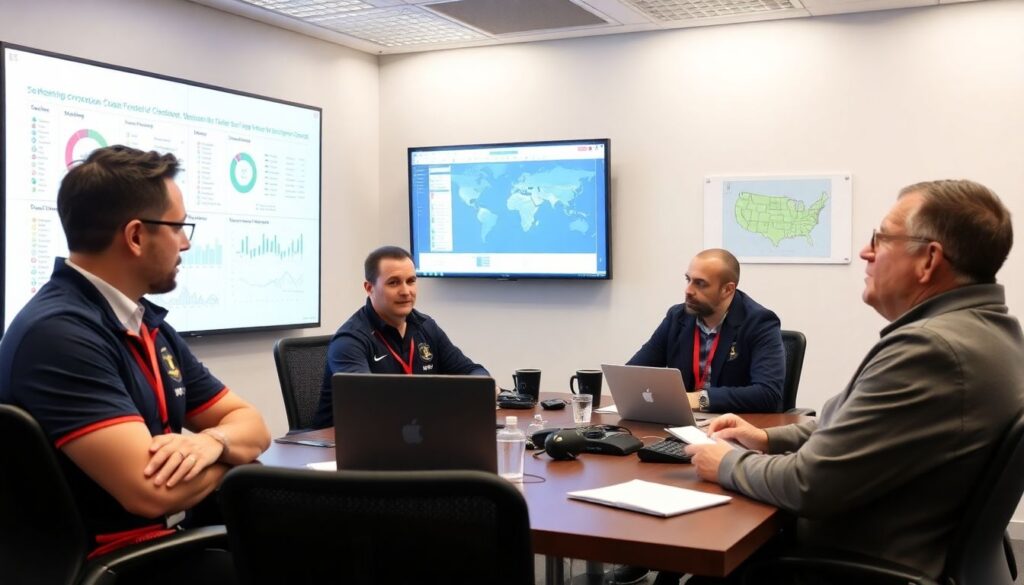
Initially, prioritise one practitioner who understands both football and basic data analysis, capable of translating questions between coaches, scouts and technical staff. As complexity grows, add engineering support for data pipelines and a more specialised data scientist or external partner.
Can big data tools create legal issues in transfer dealings?
Yes, if they encourage anti-competitive behaviour, misuse of personal data or discrimination. Always involve club legal counsel when combining multiple datasets, using predictive injury models or sharing information with third parties, especially when working across jurisdictions such as Brazil and Europe.