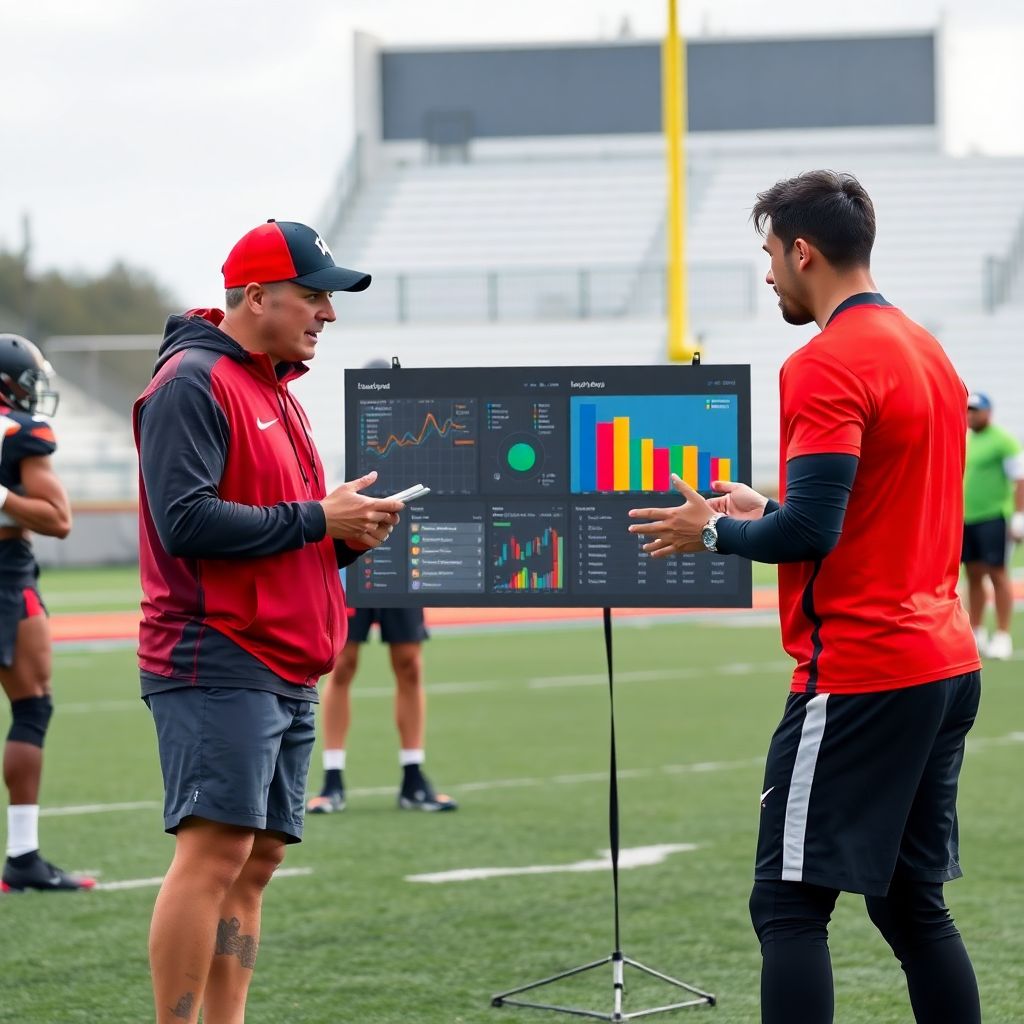
Clubs and athletes use performance analytics tools to transform raw match, training and scrim data into practical decisions: adjust training loads, refine tactics, prevent injuries and improve scouting. Start small: define your key questions, choose safe data sources, select one or two tools, then test clear workflows with staff and players.
What Practitioners Must Know Before Implementing Performance Analytics
- Define competitive problems first (fatigue, tactical gaps, talent ID) before buying any ferramentas de análise de desempenho esportivo.
- Align physical, technical and tactical KPIs with the game model of coaches and analysts.
- Plan reliable data collection: devices, video angles, APIs, permissions and data governance.
- Start with simple descriptive analysis; only then move to predictive or machine learning.
- Integrate tools into daily routines of coaches, staff and players, not in parallel “lab” workflows.
- Set clear rules for privacy, consent and access, especially with sistemas de monitoramento de atletas com dados em tempo real.
- Continuously review whether metrics and dashboards actually change decisions and performance.
Choosing the Right Metrics: From Physical Load to In-Game KPIs
Performance analytics is useful when your club, academy or e-sports organisation already has basic structure: defined training plans, regular competitions and staff available to interpret data. It is not the best moment to invest heavily if coaching staff changes constantly, infrastructure is unstable or basic training quality is still chaotic.
Use this problem-first structure before choosing metrics:
- Clarify the primary competitive problem – examples: late‑match fatigue, poor pressing coordination, unreliable aim under pressure, inconsistent rotations in MOBA or FPS.
- Map the decisions you want to improve – training design, match strategy, substitution rules, scouting filters, load management.
- Choose a small KPI set per decision – keep it minimal and interpretable by coaches and players.
Typical metric groups:
- Physical load – distance bands, accelerations, decelerations, high‑intensity bursts, heart rate zones, recovery indicators.
- Technical execution – passes under pressure, first touch quality, duels, shots from dangerous zones, skill usage efficiency in e‑sports.
- Tactical behaviour – team compactness, line height, pressing triggers, rotations, map control, objective trade‑offs.
- Mental and cognitive aspects – decision time, error concentration, clutch performance, tilt moments, communication quality (tagged qualitatively).
Implementation tip for Brazilian context (pt_BR): when adopting any software de análise de dados para clubes de futebol, begin by replicating metrics coaches already use on paper or spreadsheets; only then add advanced KPIs so adoption resistance stays low.
Data Collection Infrastructure: Wearables, Video, Telemetry and APIs
To make analysis work safely and reliably, define what you need in terms of data, tools and access before you buy licenses or devices.
Core requirements for field sports (football, futsal, rugby)
- Wearables and tracking
- GPS or optical tracking for position and physical load.
- Heart rate belts or equivalent for internal load, when medically approved.
- Video capture
- At least one tactical wide‑angle camera; two or three angles are ideal.
- Stable storage and tagging tool for clips (desktop or cloud).
- Data hub
- Central database or spreadsheet structure where all sessions and matches are logged.
- Secure access rules for coaches, analysts and medical staff.
Core requirements for e-sports teams
- Game telemetry and logs
- Official APIs when available (publisher or tournament APIs).
- Safe desktop clients or parsers approved by the game’s competitive rules.
- Screen and POV recording
- Record scrims and officials with overlays showing minimap, communications and inputs.
- Store in structured folders by game, map, side and role.
- Voice comms and notes
- Recorded and organised voice channels, respecting team consent and rules.
- Simple tagging of rounds, fights, set plays or rotations.
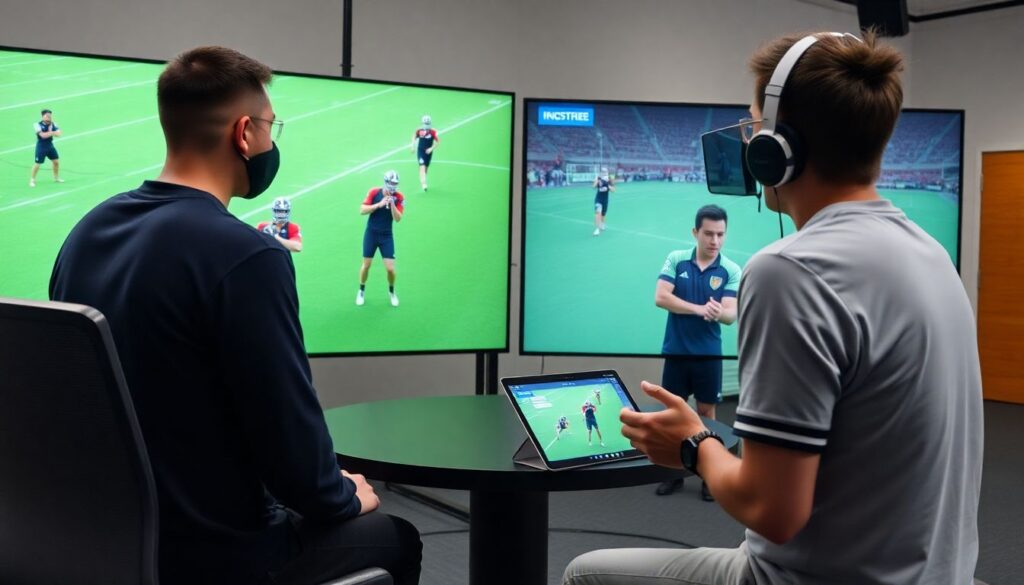
Comparing tool types across field sports and e-sports
| Tool / Approach | Main Use in Field Sports | Main Use in E-Sports | Typical Scenario |
|---|---|---|---|
| Wearable tracking | Monitor running load, sprint count, positioning tendencies. | Rare; sometimes used for posture or basic biometrics. | Managing weekly training load and recovery. |
| Video tagging software | Code set plays, defensive errors, pressing patterns. | Tag rounds, fights, misplays and rotations. | Post‑match review with coaches and players. |
| Game telemetry dashboards | Limited, usually event data from providers. | Core source of kill/death, economy, map and objective stats. | Building KPIs and scouting opponent tendencies. |
| Data warehouse / spreadsheets | Store fitness, wellness and match KPIs. | Store scrim stats, champ/agent pools, comp success. | Long‑term monitoring and recruitment decisions. |
| Custom dashboards | Combine load, wellness and performance in one view. | Combine individual, team and macro KPIs per title. | Daily briefings with staff; pre‑match preparation. |
When choosing plataformas de análise de performance em e-sports or broader soluções de análise de dados esportivos para clubes e equipes profissionais, verify data security policies, compatibility with current devices and whether the provider offers support in Portuguese for your staff.
Processing Pipelines: Cleaning, Synchronization and Real-Time Feeds
Reliable pipelines turn chaotic raw feeds into trusted, safe information. Use these steps as a practical blueprint.
- Design a simple data model – define how you name teams, athletes, matches, training sessions and scrims so everyone uses the same IDs.
- Avoid free‑text naming; use controlled lists for competition, opponent and location.
- Document this in one shared page for staff and analysts.
- Centralise raw data collection – create one secure folder or database where GPS exports, video tags, telemetry files and wellness forms are stored.
- Separate raw and processed folders to avoid accidental overwrites.
- Restrict delete permissions to a small, responsible group.
- Clean and validate inputs – check for missing entries, impossible values, duplicated players or mismatched timestamps.
- Use simple scripts or spreadsheet rules to flag anomalies.
- Keep a log of known errors and how to fix them safely.
- Synchronise data sources by time – align GPS, heart rate, video and event data to a common timeline or game clock.
- Use known reference events (kick‑off, pause, first round start) to match streams.
- Document offsets applied so others can reproduce the process.
- Aggregate into analysis tables – convert second‑by‑second or frame‑by‑frame data into per‑player, per‑segment and per‑match summaries.
- Keep both granular and aggregated data for flexibility.
- Define standard segments (halves, periods, rounds, zones, maps).
- Automate repeatable steps carefully – only automate cleaning and aggregation rules after testing on several matches or scrims.
- Start with simple, transparent rules; avoid complex macros that nobody can audit.
- Schedule backups before major automation changes.
- Configure real‑time feeds safely – if you push live dashboards from sistemas de monitoramento de atletas com dados em tempo real or telemetry APIs, design safe fallbacks.
- Ensure real‑time views are clearly labelled as provisional.
- Train staff not to overreact to noisy live data; confirm with post‑match review.
Быстрый режим: minimal pipeline for smaller clubs and teams
- Standardise names for players, matches and training sessions in one master spreadsheet.
- Store all raw files from wearables, video tagging tools and game logs in a single, backed‑up folder.
- Use one cleaning template to check for missing data and duplicate entries each week.
- Generate simple weekly summary tables (per player, per position, per role) and review them with coaches.
- Only after a few stable weeks, add live dashboards or automated scripts.
Analysis Techniques: Statistical Models, Machine Learning and Pattern Detection
Use this checklist to verify that your analyses are robust, interpretable and practically useful before presenting them to staff or athletes.
- Clearly link every model or chart to a concrete competitive question or decision.
- Confirm that input data has passed basic quality checks and manual sanity review.
- Prefer transparent metrics and visualisations (rates, maps, timelines) before complex models.
- When using machine learning, explain features in plain language and avoid black‑box decisions.
- Test findings against simple baselines (last season, league average, previous split) instead of claiming absolute truths.
- Check whether conclusions remain stable when removing outlier matches or scrims.
- Validate tactical patterns with video or VODs, not only with numbers or heatmaps.
- Separate descriptive reports (what happened) from diagnostic and predictive claims (why, what might happen).
- Ensure charts and tables can be understood quickly by non‑analyst staff.
- Document assumptions and limitations for each model, especially when informing long‑term contracts or medical decisions.
Operationalizing Insights: Coaching Workflows, Scouting and Match Prep
Even excellent analytics fails when it does not fit daily coaching and competitive routines. Avoid these common mistakes.
- Producing long reports that arrive too late for the next match or scrim block.
- Focusing more on fancy visuals than on clear, actionable recommendations.
- Changing KPIs and report formats every month, confusing staff and players.
- Ignoring coach and player input when designing dashboards and templates.
- Using data mainly to justify decisions after the fact instead of informing them beforehand.
- Overloading athletes with numbers and rankings instead of 2-3 key focuses per week.
- Not aligning scouting filters with the club’s game model and budget realities.
- Copy‑pasting metrics from other leagues or titles without adapting to your context.
- Neglecting integration between medical, physical, technical and tactical perspectives.
- Relying on a single analyst, with no documentation, making the system fragile when staff changes.
Ethics, Privacy and Competitive Security in Sports and E‑Sports
Some organisations cannot or should not run heavy internal analytics projects. These alternatives can still provide value safely.
- External analytics providers – hire specialised companies that operate trusted ferramentas de análise de desempenho esportivo and deliver standardised reports, while you keep only essential data locally; useful for small clubs without full‑time analysts.
- League or federation data services – in many competitions, you can leverage centralised stats and video tagging instead of building full infrastructure; this is especially practical for regional clubs in Brazil with limited resources.
- Game‑integrated analytics for e-sports – use official match histories, replays and simple overlays from game publishers or tournament organisers, staying away from unapproved software that may break competitive rules.
- Lightweight in‑house dashboards – maintain only anonymised, aggregated datasets for long‑term trends, while sensitive personal and health data remains in secure medical systems with strict access control.
Practical Answers to Common Implementation Challenges
How should a mid‑tier club start without a big budget?

Begin with free or low‑cost video tools, spreadsheets and clear naming rules. Focus on two or three game‑model KPIs and a basic load index. As you prove value, gradually justify investment in software de análise de dados para clubes de futebol or specialised staff.
What is the safest way to use real-time tracking during matches?
Limit real‑time use to simple, high‑level indicators such as substitution risk or team load, and clearly label all live data as provisional. Always confirm decisions with post‑match review using cleaned data and video before adjusting long‑term plans.
How can e-sports teams avoid overcomplicating analytics?
Start with official game stats and VOD review, then add focused dashboards for economy, objective control and role performance. Introduce more advanced plataformas de análise de performance em e-sports only when coaches already act on existing numbers.
How do we protect athlete privacy when collecting sensitive data?
Collect only data that is clearly linked to performance decisions, obtain informed consent, and store health or biometric data in secure medical systems. Limit access to a small group and avoid sharing raw personal data with external vendors whenever possible.
What is a realistic role for machine learning in my club today?
Use it to support pattern discovery and scouting shortlists, not to replace coach judgement. Always combine model outputs with video and staff expertise, and keep simple descriptive metrics as the base layer for communication with athletes.
How can professional teams choose between in-house and outsourced solutions?
Clubs with stable staff and IT support can benefit from in‑house systems, especially when managing multiple squads. Smaller organisations may gain more from external soluções de análise de dados esportivos para clubes e equipes profissionais that bring proven workflows and technical maintenance.
What if coaches are skeptical about “data-driven” approaches?
Start by answering their existing questions faster and more clearly using data, instead of forcing new topics. Show one or two positive cases where analytics improved decisions, and progressively involve them in metric and report design.