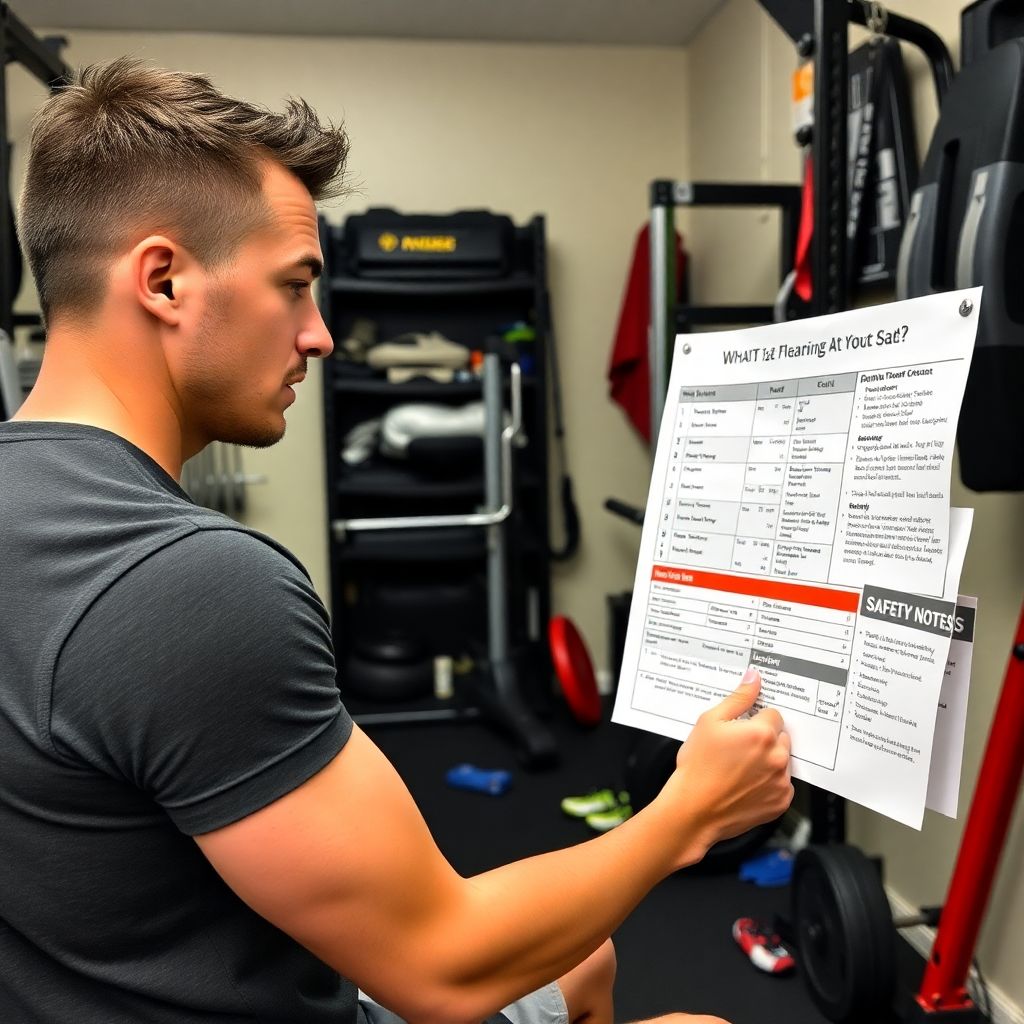
A home plan inspired by elite football clubs uses structured weeks, clear objectives and progressive overload, adapted to your space and equipment. You combine strength, plyometrics, conditioning, mobility and recovery in planned blocks, monitor simple metrics and adjust often, keeping safety first and respecting your current fitness and injury history.
Core principles behind elite-club training adapted for home
- Start from a realistic assessment of fitness, injuries and schedule before copying any professional model.
- Organise work in microcycles and mesocycles instead of random workouts, even in a basic plano de treino em casa futebol de elite.
- Prioritise multi-joint strength, sprint-like conditioning and football-specific coordination over isolated exercises.
- Control intensity, volume and recovery with clear rules, not by feeling tired only.
- Include daily mobility and soft-tissue care to prevent overuse issues common in high-frequency training.
- Track simple performance and wellness metrics to guide deloads and progressions.
- Adapt methods from treino em casa métodos de clubes profissionais, but never copy professional volumes one-to-one.
Evaluating fitness level, constraints and specific objectives
Who this style of plan suits best
This guide targets intermediate players in Brazil who already tolerate 2-3 weekly sessions without pain: amateur footballers, weekend league players, and active adults wanting a programa de treino em casa alto rendimento “lite” version. You should understand basic exercise technique (squats, lunges, push-ups, planks) and have medical clearance for vigorous exercise.
If you play for a local club, this home structure can complement pitch sessions when you cannot attend team training, or during off-season/holidays when you want to maintain conditioning without access to full facilities.
When you should not follow this approach
- Recent injury, surgery or persistent pain (knee, hip, ankle, back, shoulder) without medical release.
- Cardiovascular, metabolic or other clinical conditions without explicit doctor approval for high-intensity interval work.
- Complete beginners with no training experience in the last months; you first need a simpler base phase.
- Periods of extreme fatigue, illness or strong life stress, where extra load can worsen recovery and immunity.
Simple starting assessment you can do at home
- Strength/endurance:
- Max push-ups in 1 set with good form.
- Bodyweight squats in 1 minute, stopping if technique breaks.
- Single-leg balance: stand on one foot for 30 seconds each side without support.
- Conditioning:
- Brisk 1 km run or shuttle in place for 6 minutes, noting perceived effort (easy/medium/hard).
- Mobility:
- Deep squat hold: can you sit down with heels on the floor for 30 seconds without pain?
Use these numbers only as a personal baseline, not to compare with professionals. Elite players are tested and monitored daily by full staffs; your goal is relative improvement at home.
Clarifying your primary objectives
Pick one main and one secondary objective for the next 6-8 weeks:
- Main options:
- Explosive acceleration and agility for football.
- General strength and joint robustness.
- Aerobic/anaerobic conditioning for small-sided games.
- Secondary options:
- Body composition (lose fat, maintain muscle).
- Injury prevention and mobility.
Write these goals down; they will guide exercise choice and weekly frequency when you decide como montar treino em casa estilo clube de futebol for your reality.
Quick troubleshooting for the evaluation phase

- If assessments cause pain, stop immediately and consult a professional before starting.
- If everything feels “very hard”, downgrade your initial volumes and remove jumps for 2-3 weeks.
- If everything feels “very easy”, you can progress faster, but still follow planned steps, not huge jumps.
Structuring micro- and mesocycles for progressive overload
Basic structure: from club logic to your living room
Elite clubs think in mesocycles (3-6 weeks) made of microcycles (1 week). At home, you can use:
- Mesocycle: 4 weeks (3 “build” weeks + 1 lighter deload).
- Microcycle: your weekly plan (e.g., 3-5 sessions mixing strength, plyometrics, conditioning and mobility).
- Session types:
- Lower-body strength + acceleration.
- Upper-body + core stability.
- Conditioning (intervals) + mobility.
Equipment and environment requirements
To bring treino em casa métodos de clubes profissionais into a small apartment in Brazil, you only need a smart minimal setup. The table below compares three equipment levels:
| Setup level | Equipment | What you can train well | Notes for safety |
|---|---|---|---|
| Bodyweight-only | Mat, towel, wall, stairs or step | Basic strength, core, low-impact conditioning | Avoid high jumps on hard floors; focus on control and technique. |
| Minimal | 2-4 adjustable dumbbells or kettlebells, mini-band, skipping rope | Full-body strength, simple plyometrics, interval conditioning | Use shoes with grip; secure bands to stable points. |
| Enhanced | Suspension trainer, resistance bands set, small cones, slider discs | Football-like agility, deceleration, unilateral strength | Check anchors before each session; keep enough free space to move. |
Example: 4-week home mesocycle template (intermediate player)
Assume 4 available days per week, plus one small-sided game on the weekend.
- Week 1-2 (build):
- Day 1: Lower-body strength + short accelerations.
- Day 2: Upper-body + core + low-impact conditioning.
- Day 3: Plyometrics + agility patterning.
- Day 4: Interval conditioning + extended mobility.
- Week 3 (peak at home level):
- Increase 1-2 sets on main lifts, keep technique strict.
- Keep plyometric volume moderate; focus on quality and landings.
- Week 4 (deload):
- Cut total sets and jumps in half.
- Add more mobility, soft-tissue work and sleep priority.
Quick troubleshooting for cycle design
- If you often miss sessions, reduce to 3 key days per week and keep that consistent.
- If you feel more tired every week, your deload is too weak; drop more volume in week 4.
- If progress stalls, change 1-2 main exercises next mesocycle, not everything.
Choosing multi-joint movements, plyometrics and conditioning
Before steps, consider these specific risks and limitations of an elite-inspired programa de treino em casa alto rendimento:
- High-impact jumps on hard or slippery floors increase ankle, knee and back risk; reduce height and volume.
- Trying to copy professional sprint volume in a corridor or small yard can overload soft tissues quickly.
- Fatigue from work/study plus intense intervals may reduce recovery; respect at least 1-2 low-load days per week.
- Training alone without supervision demands conservative exercise selection and slower progressions.
- Previous injuries (ACL, hamstring, ankle sprain) require modified angles and gradual re-exposure to plyometrics.
Step-by-step selection and session building
-
Define session role inside the week
Each session needs a “job”: strength emphasis, speed/plyometrics emphasis, or conditioning emphasis. This clarity avoids doing everything every day and getting nowhere.
- Strength day: lower + upper multi-joint lifts, core stability.
- Plyometric/speed day: low to moderate jump volume, short accelerations or footwork drills.
- Conditioning day: intervals modelled on game demands, plus mobility.
-
Choose 3-5 core multi-joint strength movements
For a home plano de treino em casa futebol de elite, rely on big movements that train many muscles together and mimic game positions.
- Lower body:
- Split squat or lunge variations.
- Hip hinge (Romanian deadlift with dumbbells or hip thrust on sofa).
- Step-ups on a stable chair or step.
- Upper body:
- Push-ups (hands elevated if needed).
- Rowing with bands, TRX, or dumbbells.
- Core:
- Front plank and side plank variations.
- Dead bug or hollow body holds.
- Lower body:
-
Add safe plyometrics scaled to your level
Plyometrics bring the “club feel”, but they must be dosed carefully at home. Quality and soft landings are mandatory.
- Low-impact options:
- Ankle pogo jumps in place (small amplitude).
- Squat to calf raise (no jump) for beginners.
- Moderate-impact options:
- Countermovement jumps with hands on hips.
- Lateral skater hops with controlled landings.
- Advanced options (only when pain-free and adapted):
- Low box jumps on a stable surface.
- Repeated hurdle or cone hops over small objects.
- Low-impact options:
-
Design conditioning that fits your space
Elite clubs use GPS-based running; at home you can emulate intensity with timed intervals and multi-directional patterns.
- Small-space options:
- High-knee runs in place with arm drive.
- Lateral shuffles between two marks (3-4 m apart).
- Quick forward-backward steps (shadow pressing movements).
- Outdoor corridor/yard options:
- 10-20 m accelerations with walk-back recovery.
- Shuttle runs (e.g., 5-10-5 m patterns) adapted to space.
- Small-space options:
-
Integrate core, coordination and ball work
To truly feel like treino em casa métodos de clubes profissionais, include coordination and technical touches where possible.
- Core with coordination:
- Plank with shoulder taps.
- Single-leg balance with mini-band around knees.
- Ball-included options (if you have a ball and some space):
- Fast touches against a wall between sets.
- Low-intensity dribbling patterns around objects during rest.
- Core with coordination:
-
Example of one complete elite-inspired home session
This template assumes minimal equipment and fits in a living room for an intermediate player.
- Preparation (8-10 minutes):
- Joint circles (ankle, knee, hip, shoulder) and dynamic stretches.
- Glute bridge + bird dog + high-knee marches.
- Main strength (20 minutes):
- Split squat, hip hinge, push-up, row, core plank (2-4 sets of 6-12 controlled reps).
- Plyometrics (6-10 minutes):
- 2 jump variations, 3-5 sets of 3-6 reps each, full rest, perfect landings.
- Conditioning finisher (6-10 minutes):
- Intervals of 20-30 seconds of intense movement, 30-60 seconds easy, repeated 6-10 times.
- Cooldown (5-8 minutes):
- Slow breathing, stretching of calves, quads, hamstrings, hip flexors.
- Preparation (8-10 minutes):
Quick troubleshooting for exercise choice
- If you feel pain (sharp, localized), replace that movement by a simpler version or different angle.
- If you cannot control landings, downgrade to non-jump or lower-amplitude versions.
- If you get dizzy in intervals, lengthen rest and lower intensity immediately.
Setting intensity, volume and recovery ratios per session
Simple rules to dose work like an elite staff would
Instead of complex heart-rate zones, you can use perceived exertion and basic set/rep rules to keep your como montar treino em casa estilo clube de futebol safe and productive.
- Strength work:
- Most sets should feel like you could do 1-3 extra reps with perfect form.
- Stop a set if technique degrades or movement becomes jerky.
- Plyometrics:
- Few high-quality contacts; stop far before heavy fatigue.
- Conditioning intervals:
- Hard intervals: breathing heavy but still able to speak 2-3 words.
- Recovery intervals: breathing slows clearly before next effort.
Checklist to confirm your session is well-dosed
- You can complete all sets with steady, controlled technique (no collapsing, no uncontrolled swinging).
- Last set of each exercise feels challenging but not like a “max test”.
- Jumps feel crisp and elastic; as soon as you feel “heavy”, you stop jump work for that day.
- Your breathing calms significantly within 2-3 minutes after the conditioning part.
- You wake up the next day with normal muscle soreness, not joint pain or limping.
- By the end of the week, you feel “pleasantly tired” but still motivated to train.
- At least one day per week is clearly lighter or free from intense work.
- Every 4th week you intentionally reduce sets, jump contacts and interval total time.
- Sleep duration and quality do not worsen after you start the program.
- Ball training or games do not suffer significantly; if they do, reduce home workload.
Quick troubleshooting for intensity and recovery
- If you are exhausted before the end of a session, cut one exercise or 1-2 sets from each.
- If joints hurt more than muscles, reduce plyometrics and hard intervals first.
- If you feel strong but progress is slow, you can add 1 extra set to 1-2 main lifts next week.
Integration of mobility, soft-tissue work and injury prevention
Why recovery elements are non-negotiable
Elite clubs invest massive resources in physio, massage and recovery rooms. At home, you need low-tech solutions to bring a similar protection effect to your programa de treino em casa alto rendimento.
- Daily micro-mobility:
- 5-10 minutes of ankle, hip and thoracic spine mobility, preferably after a warm shower.
- Soft-tissue self-care:
- Massage with your hands, a simple ball or foam roller on calves, quads and glutes after intense days.
- Prehab exercises:
- Mini-band walks, single-leg balance, hamstring bridges 2-3 times per week.
Common mistakes that increase injury risk

- Skipping warm-up and jumping straight into hard intervals or jumps because of time pressure.
- Ignoring old injuries (ankle sprains, knee pain) and repeating patterns that previously caused issues.
- Training barefoot on slippery or very hard surfaces without adaptation.
- Doing static stretching only before training and never post-session or on off days.
- Overusing high-intensity interval training on consecutive days with little sleep.
- Copying “pro day” plans from social media without considering your schedule and recovery capacity.
- Progressing load (weights, jumps, interval duration) and frequency at the same time.
- Neglecting hydration and basic nutrition, expecting mobility work to fix systemic fatigue.
- Staying in painkillers as a strategy to “tolerate” more load instead of adjusting the plan.
Quick troubleshooting for recovery and prevention
- If a specific area always feels tight, add 5 minutes of targeted mobility and light activation for it daily.
- If soreness lasts more than 72 hours, reduce volume next week and improve sleep and hydration.
- If the same pain returns every cycle, consult a physio or consider assessoria esportiva online treino em casa personalizado.
Tracking metrics, deloads and data-driven plan adjustments
Essential metrics you can track without gadgets
You do not need GPS or force plates to adapt treino em casa métodos de clubes profissionais. Simple notes in a notebook or app are enough.
- Performance:
- Reps and sets completed per key exercise.
- Time or distance of a standard conditioning test (e.g., 6-minute run or shuttle).
- Wellness:
- Daily sleep hours and a 1-5 energy rating.
- Any joint pain notes, especially knees, ankles, lower back.
- Football-specific:
- How you feel in games or informal peladas: speed, stamina, post-game fatigue.
Practical deload rules
- Every 4th week:
- Cut strength sets by around half.
- Remove the hardest plyometric variation.
- Shorten conditioning intervals or reduce total repetitions.
- If life stress spikes (work, study, travel):
- Transform 1-2 sessions into mobility + light technical ball work only.
Alternative structures and when they fit better
Not everyone needs the same structure. Here are alternative options to adapt your programa de treino em casa alto rendimento style:
- 2-day full-body model:
- Use when you only have two reliable training days weekly.
- Each session mixes lower, upper, core, light plyometrics and short intervals.
- Short daily “micro-dose” model:
- Use when you cannot find long blocks of time but can commit 20-25 minutes daily.
- Rotate focus: Day 1 strength, Day 2 mobility + core, Day 3 intervals, repeating with moderate load.
- Hybrid with online support:
- Use when you want personalized oversight: an assessoria esportiva online treino em casa personalizado can adjust volumes, progressions and rehab needs remotely.
- Send regular videos and metrics so the coach can refine your mesocycles.
- Seasonal maintenance plan:
- Use during competition-heavy periods when pitch work is already intense.
- Focus on 1-2 short sessions weekly of strength and mobility, minimal intervals.
Quick troubleshooting for monitoring and adjustments
- If numbers plateau for 3-4 weeks and you feel fresh, increase one variable (sets, difficulty, or frequency).
- If numbers drop and you feel tired or moody, insert an extra deload week immediately.
- If football performance improves while home metrics stagnate, keep structure; the main goal is the game.
Practical clarifications and common implementation challenges
How many weeks should I follow one home plan before changing?
Most intermediate players benefit from 6-8 weeks on a structure before making bigger changes. Within that time, you still progress by adding reps, sets or complexity, but keep the same main exercises and weekly pattern to consolidate adaptation.
Can I combine this with regular team training on the pitch?
Yes, but you must consider total load. Keep home strength and plyometrics on days away from intense team sessions, and use the day before a match as a low-load mobility or activation day, not heavy intervals or deep strength work.
What if I only have 30 minutes, three times per week?
Use two full-body sessions and one conditioning-focused session. Cut warm-up and cooldown to the essentials, reduce exercise variety, and stay consistent; short, regular work beats long, inconsistent sessions for progress and injury prevention.
Do I need equipment to make progress like in elite clubs?
No, but minimal equipment accelerates progress and variety. Bodyweight-only can still deliver strong results if you manipulate tempo, unilateral work and range of motion. Adding bands or dumbbells mainly helps upper-body and hinge patterns.
How do I avoid overtraining if I love to push hard?
Pre-plan deload weeks and respect them strictly. Track sleep, mood and joint sensations; if two or more are negative for a few days, reduce volume immediately. Remember that elite-style training means intelligent planning, not constant maximum effort.
Is it safe to do plyometrics at home if my floor is ceramic?
It can be, but only with precautions: use a mat or carpet, choose low-amplitude jumps, wear stable shoes and stop at the first sign of joint discomfort. Prioritise landings quality over height or number of contacts.
Should my home plan change during the competitive season?
Yes, in-season you should reduce volume and especially high-impact work. Focus on maintaining strength and mobility with shorter, lower-volume sessions, using home work mainly as support to performance and recovery, not as an extra source of fatigue.