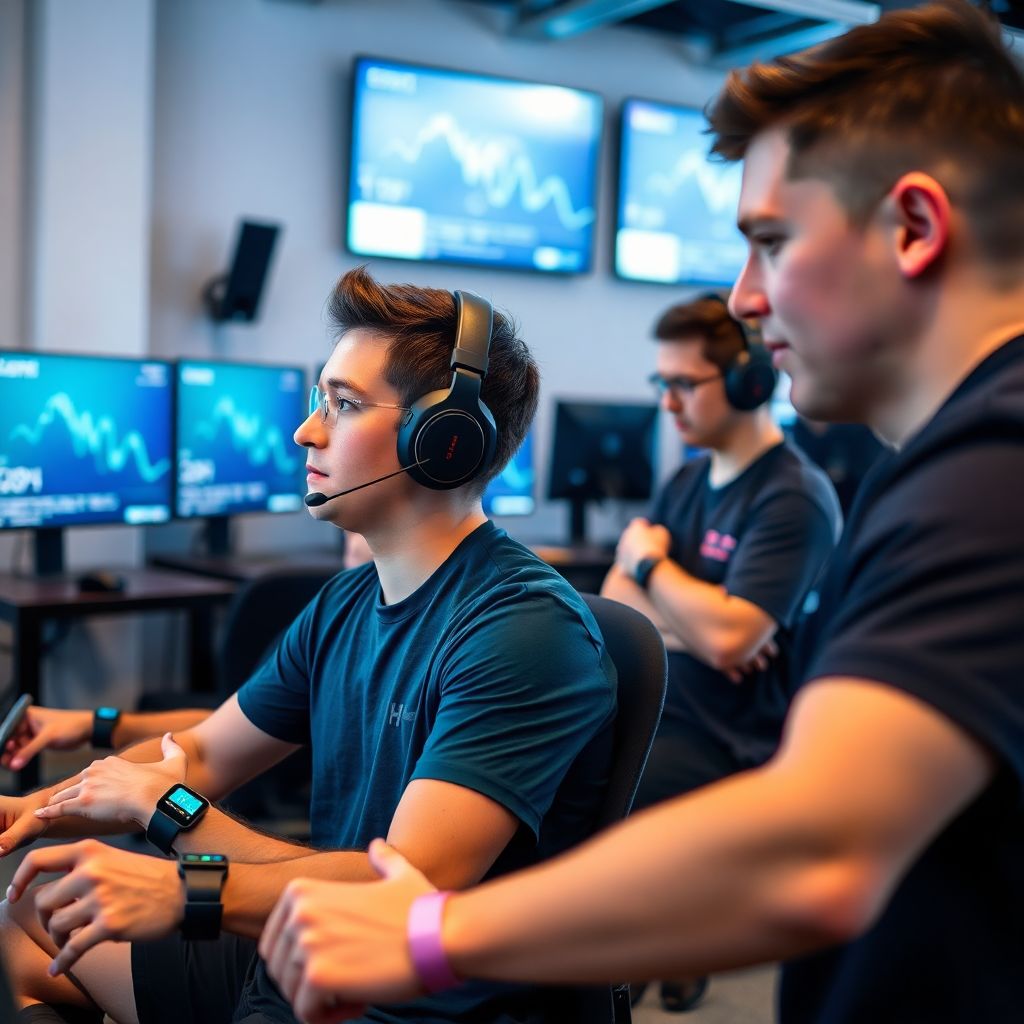
Clubs and esports organizations can safely monitor players’ physical condition by combining simple wearables, privacy-first data collection, and conservative analytics focused on health and workload, not surveillance. Start with voluntary participation, minimal metrics (heart rate, sleep, RPE), clear protocols, secure storage, and regular reviews with staff and players to adjust or pause monitoring when needed.
Critical monitoring insights for esports performance
- Start with basic health and workload metrics before adding complex sensors or AI models.
- Voluntary participation, clear consent, and opt-out options are non-negotiable for biometrics.
- Data pipelines must be secure by default, collecting only what the staff will actually use.
- Analytics should support coaching decisions, not replace medical judgment or pressure athletes.
- Integration with in-game data is powerful but easy to misinterpret without sports science support.
- Written protocols, defined roles, and incident response plans prevent ad-hoc and risky usage.
Sensors and wearables: metrics tracked and selection criteria
For most Brazilian clubs, the safest starting point in monitoramento físico em atletas de e-sports tecnologia is low-friction devices that are already familiar to players, such as consumer-grade wrist wearables or smart rings. These can track heart rate, sleep duration and regularity, basic activity, and sometimes heart rate variability.
More advanced wearables para jogadores profissionais de e-sports include chest straps, posture sensors for neck and back, and eye-tracking devices for visual fatigue. These can be helpful for specific questions (for example, neck pain or very long training blocks) but should come after the basics are working and accepted by players.
Situations where clubs should not introduce new devices yet:
- No clear goal or question (for instance, buying gadgets only because competitors use them).
- Lack of secure storage or data protection practices.
- No staff member responsible for explaining data to players and staff.
- Players already showing strong privacy concerns or low trust in management.
Key criteria for choosing tecnologia de condicionamento físico para clubes de e-sports:
- Ease of use in daily routines (charging, syncing, wearing during scrims).
- Clear privacy policy and ability to export or delete player data.
- Vendor-neutral formats (CSV, APIs) to avoid lock-in.
- Battery life long enough for tournaments and travel days.
- Robustness and comfort for long sedentary sessions.
Implementation checklist for sensor selection:
- Define 3 priority questions (for example, sleep regularity, acute fatigue, pain risk).
- Limit initial rollout to a small group of volunteer players.
- Test comfort and data quality for at least two weeks before scaling.
- Document what each metric means and who can access it.
Data pipelines: collection, storage, and real-time processing
Once devices are selected, clubs need a minimal but robust data pipeline. For many teams, a mix of vendor dashboards and simple cloud storage is enough at the beginning, without building complex plataformas de análise de dados físicos para organizações de e-sports.
Core components to plan:
- Collection: Apps that sync wearables, manual inputs (RPE, wellness forms), and game data exports.
- Transport: Encrypted connections (HTTPS, VPN) from devices to central storage.
- Storage: A secure database or data warehouse with access control per role (coach, analyst, medical).
- Processing: Scripts or BI tools that calculate daily and weekly summaries rather than raw second-by-second streams.
- Visualization: Dashboards focusing on trends and simple alerts, not constant live monitoring of individuals.
Typical tools for software de performance física para times de e-sports:
- Vendor platforms that aggregate metrics from their wearables.
- General BI tools to build custom dashboards (for example, fatigue index, sleep regularity).
- Secure shared drives for exporting and backing up processed reports.
Access requirements to define early:
- Who may view raw biometric data versus only aggregated/anonymous reports.
- Conditions for sharing data with external staff (nutritionists, physiotherapists, psychologists).
- Data retention periods and criteria for deleting old data.
Implementation checklist for safe data pipelines:
- Choose one primary storage location and forbid unencrypted local copies.
- Enable two-factor authentication for all tools handling biometrics.
- Assign a data steward to review access rights monthly.
- Start with daily batch updates; add near real-time views only if clearly needed.
Algorithms and analytics: from fatigue detection to performance prediction
Before implementing analytics, clubs must understand and communicate limitations clearly. Simple rules and transparent metrics are usually safer than opaque prediction models.
Key risks and limitations to acknowledge:
- Biometric data can be noisy and affected by travel, illness, or caffeine, not only training.
- Algorithms may reflect bias from small samples or previous seasons.
- False alarms can create anxiety or reduce trust in staff and systems.
- No model replaces clinical evaluation by qualified health professionals.
- Define concrete questions and decisions – Start with 2 or 3 questions, such as when to reduce daily scrim volume, when to suggest extra rest, or which players might need individual physical support. Tie each metric or model output to a specific decision, not to curiosity.
- Standardize basic input metrics – Agree on which daily data points are mandatory: for example, RPE after scrims, sleep hours, resting heart rate, and simple wellness scores. Consistent data quality is more important than model complexity and avoids misleading outputs.
- Build simple rule-based indicators first – Create threshold rules before machine learning, such as flags when sleep drops several days in a row or when RPE stays high while heart rate decreases (possible accumulated fatigue). Use these as discussion triggers, not automatic commands.
- Prototype conservative models with expert review – If you develop fatigue or performance prediction models, keep them conservative and reviewed by sports science or medical staff. Document model inputs, outputs, and how they should and should not be used in coaching decisions.
- Validate models with historical and live data – Test algorithms on past weeks and then in live use without changing training plans initially. Compare predictions with real outcomes (for example, self-reported fatigue, missed practices, or reported pain) and adjust or discard models that do not add clear value.
- Communicate results in plain language – Present outputs as risk ranges and trends, not deterministic labels. Explain to players how the system works and emphasize that data supports dialogue rather than punishing or ranking individuals.
Implementation checklist for analytics rollout:
- Limit the first version to one or two clear indicators (for example, a weekly fatigue risk score).
- Ensure at least one staff member can explain each indicator without technical jargon.
- Schedule regular review meetings to decide whether models help or should be simplified.
- Document and share with players how analytics will and will not influence decisions.
Integrating physiological telemetry with in-game data
Combining biometric telemetry with in-game metrics can reveal how physical state affects reaction time, accuracy, or decision-making, but this integration is easy to overinterpret. Start with a few key match and scrim indicators and correlate them with simple physical markers, instead of building complex pipelines immediately.
Checklist to verify safe and useful integration between physiology and game data:
- Confirm that timestamps or session identifiers allow you to match scrims and physical records reliably.
- Choose a small set of in-game KPIs (for example, reaction-dependent events, unforced errors, clutch win rate) that make sense for your title.
- Limit biometric variables used in correlation to robust ones like sleep duration, heart rate trends, and subjective fatigue.
- Aggregate results over multiple sessions and weeks rather than drawing conclusions from single matches.
- Ensure dashboards emphasize team-level trends before individual comparisons, reducing pressure and stigma.
- Share findings with players and staff together, so interpretations and next steps are aligned.
- Cross-check insights with staff observations and player feedback before changing training loads.
- Clearly mark speculative patterns as hypotheses to test, not as proven cause-effect relationships.
- Review integration workflows when platforms de análise de dados físicos para organizações de e-sports or game APIs change their data structures.
Implementation checklist for integration:
- Select one game and one role (for example, support or entry fragger) for a pilot correlation study.
- Run the pilot for several weeks before making any workload adjustments.
- Document at least three concrete examples where integration changed staff decisions or confirmed existing intuition.
Privacy, consent and cybersecurity for athlete biometrics
Handling biometric data from esports athletes demands strict privacy and security practices. Trust can be lost quickly if data is misused, leaked, or weaponized in contract or selection decisions.
Frequent and risky mistakes to avoid:
- Collecting more biometric variables than necessary just because devices allow it.
- Using biometrics in contract negotiations or punishment (for example, to justify benching without context).
- Failing to provide clear consent forms describing what is collected, why, and for how long.
- Allowing broad access to raw data for non-medical or non-technical staff.
- Storing sensitive data in personal laptops or unsecured cloud folders.
- Continuing to process data from players who left the organization without explicit permission.
- Sharing identifiable information with sponsors or third parties in exchange for devices or discounts.
- Not having basic incident response procedures for data leaks or account compromises.
- Ignoring local labor and privacy regulations that may apply to professional players in Brazil.
Implementation checklist for privacy and security:
- Write a short, accessible privacy policy specifically for biometric monitoring.
- Use separate storage for health-related data, with stricter access controls.
- Define clear retention periods and automated deletion routines for ex-players.
- Train coaches and analysts on appropriate and inappropriate uses of biometric data.
Operationalizing monitoring: protocols, staffing and incident response
Not every club needs a full biomonitoring program. Alternatives can deliver value with lower complexity, cost, and risk, especially for smaller or developing organizations.
Strategic options and when they are appropriate:
- Lightweight monitoring only – Use simple questionnaires, RPE, and basic sleep logs without continuous wearables. Suitable for amateur teams, academy rosters, or clubs without dedicated performance staff.
- Vendor-managed platforms – Rely on integrated tecnologia de condicionamento físico para clubes de e-sports from reputable providers who handle device management and dashboards. Works for organizations that prefer service contracts over building internal tools, but still requires internal policies and oversight.
- External sports science partners – Collaborate with universities, sports science labs, or medical partners who can analyze data periodically. Helpful for pro teams that lack internal expertise but want deeper insights, with strict data-sharing agreements.
- Hybrid approach with internal coordinator – Designate a single staff member (performance lead) to coordinate tools, vendors, and medical advice, ensuring consistency and safe practices across squads.
Regardless of the option, incident response basics are essential:
- Named person responsible for responding to data breaches or misuses.
- Simple playbook: detect, contain, notify affected players, and review causes.
- Clear channel for players to raise concerns or request data deletion.
Implementation checklist for operations:
- Choose one of the four strategic options and write a one-page operational plan.
- Define roles: who collects data, who analyzes it, who communicates with players.
- Run a tabletop exercise simulating a data leak and refine your playbook based on findings.
Practical concerns and clarifications for teams
Do we need a doctor or sports scientist to start monitoring?
For basic wellness questionnaires and simple wearables, you can start with educated staff oversight, but you should involve qualified medical or sports science professionals as soon as you move into interpreting biometrics or making health-related decisions.
How can small clubs afford monitoring tools?
Begin with low-cost or free apps, basic consumer wearables, and manual tracking, focusing on consistency rather than complexity. As value becomes clear, you can phase in more advanced software de performance física para times de e-sports within budget limits.
Will players feel over-controlled by continuous monitoring?
They might, if monitoring is imposed or used in disciplinary ways. Keep participation voluntary, explain goals clearly, show concrete benefits, and let players see and discuss their own data regularly to build trust.
What metrics are most important for esports athletes?
For most teams, sleep regularity, subjective fatigue, resting heart rate, and basic activity levels are safer and more actionable than complex biomarkers. You can add more metrics later only when there is a clear question and staff to interpret them.
How do we handle data from players who leave the team?
Explain in contracts and consent forms what happens to data when a player leaves. By default, stop collecting, restrict access, and delete or anonymize existing data unless the player agrees in writing to specific continued uses.
Can sponsors access player biometric data if they provide devices?
Only with explicit, informed consent from players and strong contractual limits. In most cases it is safer to keep identifiable biometrics internal and share only aggregated, anonymous statistics with sponsors.
Is real-time monitoring during matches necessary?
Usually not. Periodic summaries before and after practice or competition are often enough, and they carry fewer risks of distraction, misinterpretation, and pressure on individual players during critical moments.