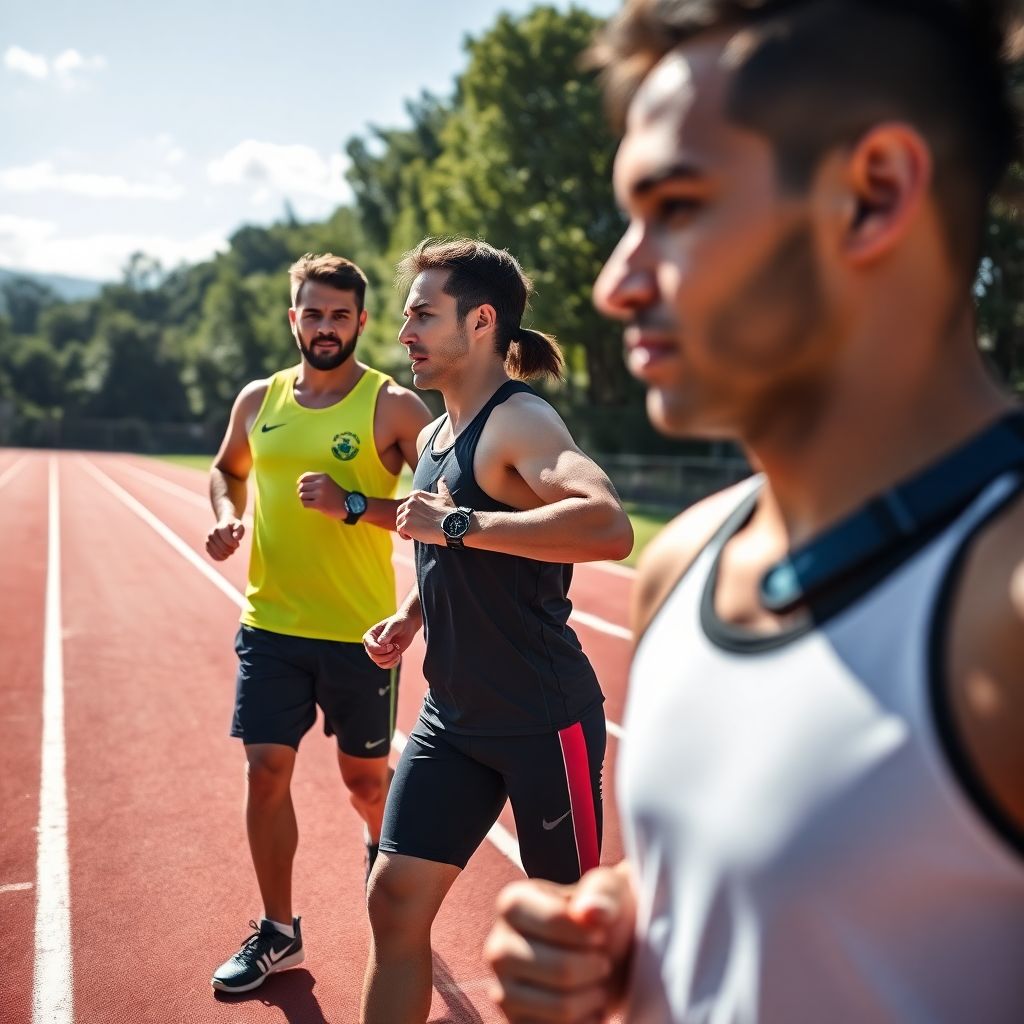
Elite athletes use fewer wearables than marketing suggests: usually a professional sports watch, chest heart‑rate strap, GPS/IMU pod, sometimes smart glasses, and occasional biomechanics sensors. In Brazil’s high‑performance context, devices win space only if they change decisions about load, recovery, or tactics and can be validated against lab‑grade measurements.
Performance metrics every wearable must supply
- External load: distance, speed profile, acceleration / deceleration, changes of direction.
- Internal load: heart rate, HRV trend, session RPE, simple training‑stress index.
- Intensity distribution: time in speed and heart‑rate zones relevant to your sport.
- Recovery flags: sleep duration/regularity, HRV baseline, resting heart rate drift.
- Mechanical stress: impact counts, jump metrics, asymmetry when possible.
- Context tags: position, drill type, surface, environmental conditions.
Wearable sensors: underlying technologies and what they measure
Sport wearables are small sensor systems that capture movement, physiology or environment during training and competition. In elite squads they are not gadgets, but instruments that must withstand validation against timing gates, lab ECG, motion‑capture or metabolic carts before staff rely on their numbers.
Core families are: GPS/GNSS and inertial units for tracking movement; optical and electrical sensors for cardiovascular data; thermistors and infrared sensors for skin temperature; and sometimes pressure or force sensors in soles or equipment. Many so‑called vestíveis de tecnologia esportiva para monitoramento de desempenho combine these into a single ecosystem.
Common form factors in Brazilian high‑performance programs are: a relógio esportivo profissional para atletas de alto rendimento on the wrist, a monitor cardíaco de peito para treino de alta performance under the jersey, a GPS/IMU pod between the scapulae, and, in some Olympic sports, óculos de realidade aumentada para esportes de alto rendimento for live cues and overlays.
Practical rule to decide if a wearable belongs in an elite routine: it must (1) measure a metric linked to injury risk, performance or decision‑making, (2) be validated versus a reference, and (3) fit smoothly into the daily workflow without adding more friction than value.
GPS, inertial tracking and tactical movement analysis
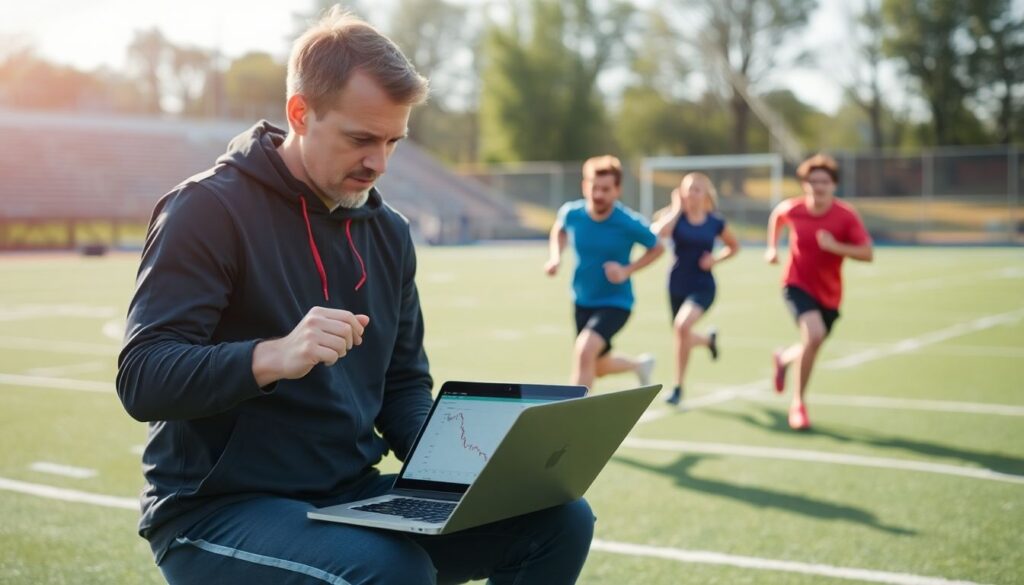
GPS and inertial systems are the backbone for quantifying external load and positioning in field and court sports. They mix satellite signals, accelerometers, gyroscopes and magnetometers to reconstruct how fast and how far an athlete moves, plus how often they change speed or direction.
- Satellite positioning (GPS/GNSS): multi‑band receivers estimate latitude, longitude and sometimes altitude. Algorithms smooth the path and derive distance, speed and positional heatmaps.
- Accelerometers: measure linear acceleration to count impacts, steps and jumps, and to refine speed estimation when satellite data are noisy or briefly lost.
- Gyroscopes and magnetometers: capture rotation and orientation, improving detection of changes of direction and body orientation, crucial for tactical profiles.
- Sensor fusion: onboard processors merge GPS and IMU signals, producing metrics like high‑speed running, sprint count, player load and deceleration events.
- Field alignment: software maps positional data onto a virtual pitch or court, enabling tactical analysis such as team compactness or passing‑lane occupation.
- Data synchronization: timestamps align GPS data with video, heart rate and RPE to reconstruct contextualized sessions for coaches and performance analysts.
Typical applied scenarios include: managing high‑speed running exposure for wingers across a congested match schedule; quantifying explosive accelerations for futsal or basketball guards; and comparing match demands with training drills to ensure specificity and progressive overload.
Quick protocol to check if your tracking system is performing acceptably: (1) run fixed‑distance sprints on a measured track; (2) compare reported distance and peak speed with timing gates; (3) repeat under different weather and stadium conditions; (4) flag consistent biases and adjust thresholds rather than trusting default speed bands.
Physiological monitoring: heart rate, HRV, temperature and metabolic proxies
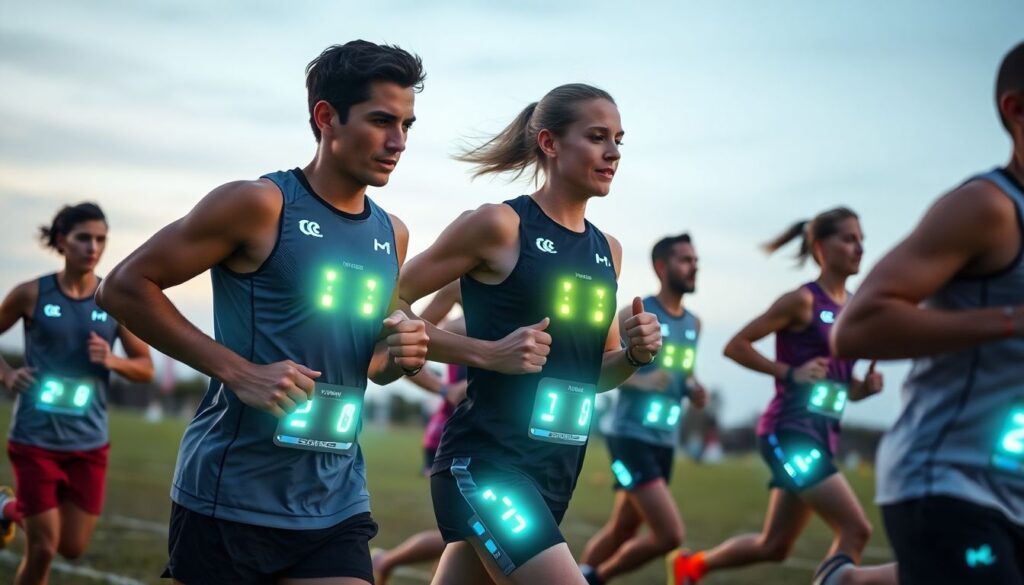
Physiological wearables translate how hard the body is working and recovering, beyond simple distance or speed. They are central in endurance sports, but also increasingly used in team environments to monitor cumulative stress and guide rotation decisions.
- Endurance and mixed‑mode sports: melhores smartwatches esportivos para corrida e triathlon and chest straps guide intensity control by heart‑rate zones, lactate‑threshold approximations and simple training‑load metrics. HRV trends are used to adjust key sessions, especially under travel or heat stress.
- High‑intensity intermittent team sports: integrated GPS+HR systems help relate external loads (high‑speed running, accelerations) to internal response. Staff watch how quickly heart rate recovers between bouts and sessions to decide on deloads or limited‑minutes roles.
- Heat and humidity management: skin‑temperature sensors and algorithms for thermal strain support cooling strategies in hot Brazilian venues. They can trigger extra hydration, cooling breaks or adjustments in warm‑up duration.
- Sleep and travel fatigue: wearables track sleep duration, timing and regularity across time zones. Combined with morning HRV, they help plan lighter days after long flights or late‑night matches.
- Return‑to‑play progressions: by comparing heart rate and perceived exertion for standard drills before and after injury, staff check if cardiovascular cost for a given external load has normalized.
- Metabolic cost estimation: some systems estimate energy expenditure or carbohydrate use from heart rate and movement. In practice, elite programs use these mainly for trend monitoring, not as precise nutrition calculators.
Fast check of physiological data quality: (1) compare chest strap versus wrist optical HR during intervals; (2) look for stable HRV baselines on at least a few weeks of data; (3) ignore day‑to‑day noise and act only on consistent multi‑day shifts plus contextual cues (illness, travel, stress).
Biomechanics in practice: IMUs, markerless capture and force estimation
Biomechanical wearables extend analysis from “how much” to “how” movement happens. Inertial measurement units on segments, smart insoles and markerless video systems estimate joint angles, impact loads and asymmetries without full lab setups, helping to flag technical or overload risks in elite squads.
In Brazil, these tools appear most in Olympic sports (sprint, jumps, combat sports, gymnastics) and in clubs with strong sports‑science departments. They are often used in short testing blocks rather than daily, due to setup time and the need for expert interpretation.
Practical benefits of biomechanical wearables
- Identify landing and take‑off asymmetries in jumpers and basketball players without full force‑plate labs.
- Monitor trunk and pelvis control in runners during specific sessions, complementing footage from the melhores smartwatches esportivos para corrida e triathlon.
- Quantify ground‑contact times and step patterns during sprint phases, guiding technical drills.
- Estimate internal loads on joints when combined with GPS/IMU data, supporting workload caps after injuries.
- Allow repeated field tests in the athlete’s normal environment, increasing ecological validity.
Known limitations and sources of bias
- Estimates, not direct forces: calculations rely on models and assumptions that may not hold for all body types and techniques.
- Sensor placement sensitivity: small changes in IMU position or strap tightness can alter outputs, especially for joint angles and asymmetries.
- Drift and calibration: longer sessions without recalibration can introduce drift in segment orientation and step detection.
- Complex interpretation: raw waveforms require expertise; dashboards may hide uncertainty, encouraging overconfidence in single numbers.
- Limited validation in elite populations: many algorithms are trained on recreational users, not athletes de alto rendimento.
Simple field algorithm for using biomechanical data: (1) choose 1-2 key metrics linked to your specific injury or technical goal; (2) run short, standardized drills monthly; (3) compare against the athlete’s own baseline, not generic norms; (4) only change technique when metrics and video consistently tell the same story.
Real‑time feedback, edge processing and coach-facing workflows
Modern systems push calculations to the device or pitch‑side receiver, promising instant dashboards, alerts and even AR overlays via óculos de realidade aumentada para esportes de alto rendimento. The bottleneck is rarely computation; it is interpretation, workflow and resistance from staff overloaded with data.
- Myth: more live numbers always improve decisions. In practice, staff can track only a handful of live indicators. Overcrowded screens lead to alert fatigue and missed critical changes.
- Myth: real‑time equals more scientific. For many questions (readiness, chronic load, injury risk) the relevant signal is a trend over days or weeks, not second‑by‑second fluctuations.
- Mistake: skipping post‑session data cleaning. Edge processing does not eliminate the need to remove corrupted sessions, mis‑worn devices or missed drills before analysis.
- Mistake: building workflows around the “coolest” feature. Buying a system for its highlight clip or AI buzzword often creates frustration when it cannot answer the program’s priority questions.
- Myth: one dashboard fits all roles. Coaches, S&C, medical and analysts need different views. Forcing a single interface reduces adoption and decision quality.
- Mistake: ignoring manual coach input. Session design, perceived intensity and tactical notes are essential to interpret any real‑time metric; numbers alone cannot capture context.
Robust workflow rule: define in advance 3-5 metrics allowed on live screens (e.g., acute high‑speed running, live heart rate, substitution‑relevant flags). Everything else is processed calmly after sessions and discussed in daily or weekly meetings.
Procurement, validation and regulatory considerations for elite programs
Choosing wearables for a high‑performance environment is less about marketing specs and more about alignment with staff questions, data quality and compliance with league and privacy rules in Brazil and internationally.
Brief example of a procurement and validation flow for a relógio esportivo profissional para atletas de alto rendimento and ecosystem:
- Define decisions first: what concrete decisions will the system influence (e.g., weekly load caps, return‑to‑play criteria, tactical shape analysis)? Ignore features unrelated to these decisions.
- Screen candidate systems: include at least one chest‑strap‑based monitor cardíaco de peito для treino de alta performance, one integrated GPS+HR vest, and one of the melhores smartwatches esportivos para corrida e triathlon with open data export.
- Run a structured pilot:
- Test 5-10 athletes across typical drills for 2-4 weeks.
- Compare key metrics against reference tools you already trust (timing gates, validated HR straps, manual distance).
- Document practical issues: connectivity, battery, comfort, data‑export friction.
- Check regulatory and ethical fit:
- Confirm competition rules on in‑game wearables and live data in your league.
- Ensure data storage and sharing respect privacy laws and club policies.
- Clarify data‑ownership between club, athlete and vendor.
- Decide with a simple scoring algorithm:
- Give each system a 1-5 score on: data validity, usability, integration, support, and cost.
- Eliminate any system scoring <3 on validity, even if it scores high on features.
- From the remaining, choose the one that best fits existing workflows, not the one with most metrics.
Final quick algorithm to check if any wearable is delivering real value in an elite program:
- List 3-5 recurring staff decisions (e.g., who rests, who trains restricted, how to adjust session load).
- For each decision, mark whether wearable data changed the decision at least once in the last month.
- If a device does not influence any decision for two consecutive mesocycles, either redefine its role or remove it from daily use.
Practical concerns athletes and staff ask most often
Do elite athletes really wear multiple devices every day?
Most high‑performance squads standardize on one main ecosystem: GPS/IMU pod plus chest strap, or professional watch plus strap. Extra devices like biomechanics sensors or AR glasses are used in targeted sessions or testing blocks, not all the time.
Is a chest strap always better than wrist heart rate?
For high‑intensity, intermittent work, chest straps still provide more reliable heart‑rate data, especially for rapid changes. Wrist optical sensors from good devices are acceptable for steady endurance, but in elite settings chest straps remain the reference for validation.
Are consumer smartwatches acceptable in elite programs?
Top consumer watches can be useful when they allow raw data export and have known validation. However, many clubs prefer dedicated systems with better multi‑athlete management, antenna placement and support. Smartwatches are more common in individual endurance sports than in team‑sport match tracking.
How should we handle days when data look obviously wrong?
Flag and remove clearly corrupted sessions from analysis rather than trying to “fix” them. If a device repeatedly fails in specific drills or venues, adjust protocols or reconsider its role instead of ignoring the pattern.
Can wearables replace traditional testing and coach observation?
No. Timing gates, field tests, video analysis and coach judgement remain central. Wearables complement these tools by adding continuous monitoring and context, especially across congested calendars and travel periods.
Is it worth investing in advanced biomechanics sensors for a mid‑budget club?
Only if you have staff who can design protocols and interpret outputs. For many squads, improving GPS/HR workflows and consistent RPE collection yields more immediate returns than adding complex biomechanics systems.
How do we avoid athlete fatigue with so many devices?
Minimize setup time, standardize locations, and clearly explain to athletes how data influence their protection and performance. Rotating specialized devices and focusing on a small, stable core toolkit helps maintain buy‑in.