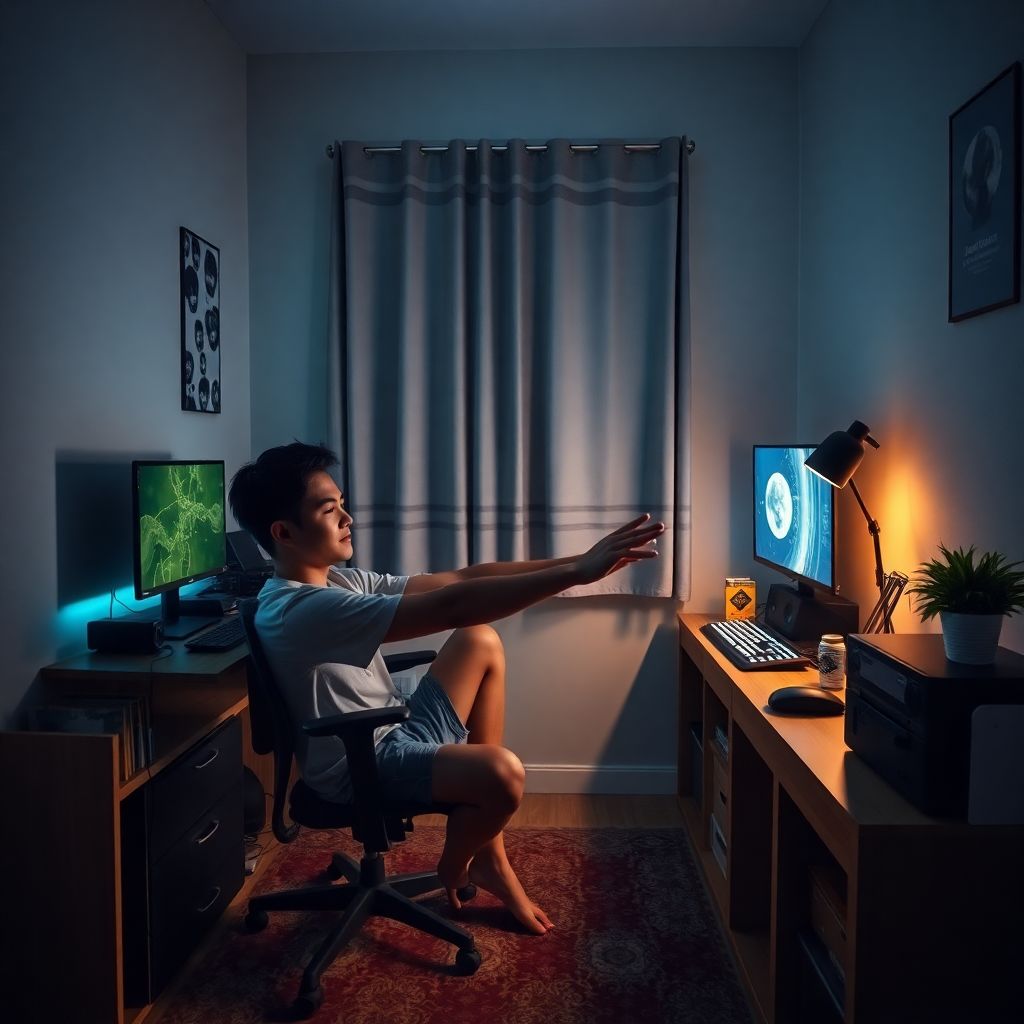
To protect health while watching or playing e-sports for hours, combine ergonomic setup, short movement breaks, basic strength work, smart fueling, and strict sleep routines. This guide gives safe, step‑by‑step strategies, with simple checks so you can adjust even in a small Brazilian apartment, LAN house, or gaming studio.
Actionable Priorities for Safe, High-Performance Sitting Sessions
- Set your monitor, chair, and peripherals so joints stay close to neutral and vision stays relaxed.
- Insert short-burst movement breaks every 30-60 minutes to prevent stiffness and boost focus.
- Organize easy, repeatable hydration and snack routines around your matches or study blocks.
- Protect sleep timing and pre-bed routines to stabilize reaction time and learning.
- Track early signs of physical or mental overload and schedule recovery blocks before burnout.
- Use personal and team rules to limit uninterrupted sitting during training, ranked queues, or streams.
Ergonomics Beyond the Chair: Optimal Desk, Monitor, and Controller Positioning
This setup is suitable for most people who spend long hours at a PC, console, or mobile device and are looking for saúde para gamers e jogadores de e-sports without buying a full new “gamer” room. Skip or modify these suggestions if you have acute pain, recent surgery, or a condition where your doctor gave specific posture limits.
Monitor and screen placement for eyes and neck
- Place the top of the monitor roughly at eye level so you look slightly downward, not up.
- Keep the screen at about an arm’s length; if you lean forward to read, increase font size instead.
- Angle the monitor directly in front of you to avoid twisting your neck toward one side.
- For multi-monitor e-sports setups, make the main game screen centered, with secondary screens off to the side.
Chair, desk, and lower-body position
- Adjust seat height so your feet rest flat on the floor; use a stable footrest or stacked books if needed.
- Keep knees roughly at hip height or slightly lower; avoid deep sofas that force you to slouch.
- Use the chair’s backrest to support your lower back; add a small cushion if there is a gap.
- Keep some space (a few fingers) between the front edge of the seat and the back of your knees to avoid cutting circulation.
Keyboard, mouse, and controller handling
- Bring the keyboard and mouse close enough that your elbows stay under your shoulders, not reaching forward.
- Let wrists float in line with forearms; avoid bending them sharply upwards on the desk edge.
- Hold controllers with relaxed grip; if your thumbs or fingers go numb, reduce tension and add more breaks.
- For mobile gaming, support your forearms on pillows or armrests instead of holding the phone up in the air.
Room, lighting, and noise for long sessions
- Use soft, indirect light to reduce screen glare; avoid bright light directly behind or in front of the monitor.
- Keep a stable room temperature; overheating increases fatigue and reduces concentration.
- Use headphones or in-ear monitors at moderate volume; your ears should still hear someone speaking nearby.
- Organize cables and objects so you can stand up and move without tripping, even when tired after long queues.
Short-Burst Exercise Protocols to Prevent Stiffness and Maintain Focus
For these protocols you need minimal equipment: comfortable clothes, a stable chair, some floor space (about the length of your body), and optionally a light resistance band or backpack with books. These dicas de fitness para quem passa horas jogando fit small Brazilian apartments, dorm rooms, and even backstage areas at e-sports events.
Safety and modification principles for movement breaks
- Stop any exercise that causes sharp, electric, or sudden pain; gentle muscle burn and mild effort are acceptable.
- If you have heart, joint, or neurological conditions, follow your healthcare provider’s limits first.
- Move within a comfortable range; do not force joints to the point of strong stretching pain.
- For balance issues, do exercises next to a wall or sturdy table you can hold for support.
Micro-break formula for every 30-60 minutes
- Stand up, roll shoulders backward and forward several times, and gently circle your neck within a pain-free range.
- Walk around the room or on the spot for a short period to get blood flowing to your legs.
- Do a brief wrist routine: open and close your hands, rotate wrists, then gently stretch your fingers backward and forward.
Desk-friendly strength and mobility mini-circuit
- Chair squats: stand up and sit down slowly from your chair a moderate number of times, keeping knees tracking over feet.
- Wall push-ups: place hands on the wall at shoulder height and do controlled push-ups to work chest and arms without floor space.
- Seated knee extensions: sit tall, extend one leg until the knee straightens comfortably, hold briefly, and lower; repeat both sides.
- Thoracic rotations: sit upright, cross arms over chest, rotate your upper body left and right in a slow, controlled way.
Daily base treino físico for gamers profissionais e amadores
- Lower-body focus: include squats, lunges, or step-ups on stairs or a stable platform several times per week.
- Upper-body focus: mix pushing (push-ups against wall or table) and pulling (rows using a band or backpack) on alternating days.
- Core stability: add planks on elbows or hands, and dead-bug variations lying on your back, keeping the lower back gently pressed to the floor.
- Progression: when exercises feel easy and controlled, add repetitions or slow the tempo before adding more load.
Fueling Long Sessions: Practical Nutrition and Hydration Plans
Before following these steps, consider key risks and limits so your plan stays safe, even during intense ranked grinds or long tournaments.
- If you have diabetes, kidney disease, food allergies, or are on specific medication, align this routine with your doctor or nutritionist.
- Avoid extreme restriction or “crash” diets during heavy practice; they can impair focus and mood.
- Do not use energy drinks or supplements as your only strategy to fight fatigue or lack of sleep.
- When in doubt about a product’s safety, choose simpler, less processed options you recognise.
- Define your session blocks and natural break points.
Map your typical day: school or work, then queues, scrims, VOD review, or streaming. Identify pause windows between matches, maps, or series where you can stand up, hydrate, and eat without rushing.
- Prepare simple hydration anchors around screens.
Place a water bottle within arm’s reach of your main setup before starting. Use visual cues such as finishing a portion of the bottle by the end of each match, lecture, or best-of series.
- Choose mostly water; unsweetened tea or coffee is fine in moderate amounts earlier in the day.
- Limit high-sugar drinks close to bedtime because they can disrupt sleep and make you feel wired.
- Create balanced, low-effort meals between blocks.
Plan meals that mix a source of protein, a carbohydrate, and some vegetables or fruit, using ingredients that are common and affordable in Brazil.
- Example combinations: rice and beans with eggs; chicken with sweet potato; whole-grain bread with cheese and salad.
- Aim for meals that leave you satisfied but not overly heavy or sleepy in the next hour.
- Organize smart snacks for mid-session focus.
Instead of relying on random delivery food, pre-portion snacks that are easy to grab and do not dirty your mouse or controller.
- Options include nuts, fruit, yogurt, or small sandwiches, rather than only chips and sweets.
- Keep portions moderate so snacking does not silently become a full extra meal.
- Coordinate caffeine timing with matches and sleep.
Use coffee or tea strategically earlier in your schedule, particularly when you want sharper focus for ranked pushes or scrims.
- Avoid new, highly caffeinated products on competition days; test them only on normal training days.
- Reduce or stop caffeine several hours before your planned bedtime to let your nervous system calm down.
- Plan delivery and convenience food as backup, not default.
When ordering food during long streams or tournaments, scan menus for options that are closer to your usual balanced meals.
- Prioritize grilled instead of fried items, and add vegetables or salad when possible.
- Save richer fast-food choices for occasional treats, not the base of your routine.
- Monitor your body’s feedback and adjust.
Notice how different foods affect your energy, concentration, and digestion during and after sessions.
- If a meal regularly causes sleepiness, heaviness, or reflux, reduce portion size or change ingredients.
- Track patterns for at least a week before making big changes so you do not react to a single bad day.
Sleep Hygiene and Timing Strategies to Preserve Reaction Time and Learning
Use this checklist to see whether your sleep routine is supporting or sabotaging your game sense, aim, and decision-making.
- You go to bed and wake up at roughly the same time on most days, including weekends and off-days.
- You stop ranked games, scrims, or intense VOD review at least some time before bed to allow mental cool-down.
- You avoid large, heavy meals very close to bedtime, especially greasy or highly spicy foods.
- You reduce bright screen exposure in the final part of your evening, or at least dim brightness and use warmer tones.
- You keep your bedroom or sleep space cool, dark, and as quiet as your environment allows.
- You reserve the bed mainly for sleep and calm activities, not endless scrolling, to help your brain link bed with rest.
- You limit caffeine and energy drinks later in the day so they do not delay your ability to fall asleep.
- You notice that after a stable sleep routine, your reaction time and in-game decisions feel smoother and more consistent.
Mental Resilience: Identifying Burnout Signs and Recovery Interventions
Common mistakes that weaken mental resilience and make it harder to manter a saúde assistindo e jogando e-sports por longos períodos:
- Ignoring early warning signs like irritability, loss of enjoyment, headaches, or difficulty focusing between maps.
- Using endless queues or streams to escape life problems instead of solving them or seeking support.
- Refusing rest days, believing that more hours always equal more skill, even when quality is dropping.
- Comparing your schedule and results constantly with top pros or streamers without considering their support structures.
- Skipping any offline hobbies, social contact, or physical activity, making your identity depend only on ranks or view counts.
- Pushing through strong anxiety or low mood for weeks without talking to friends, family, or a professional.
- Letting tilt control your queues instead of having pre-set rules for when to stop after a streak of bad games.
- Dismissing physical pain (wrists, back, eyes) as “normal for gamers” instead of adjusting training and ergonomics.
Institutional and Personal Policies to Limit Sedentary Harm During Study or Play
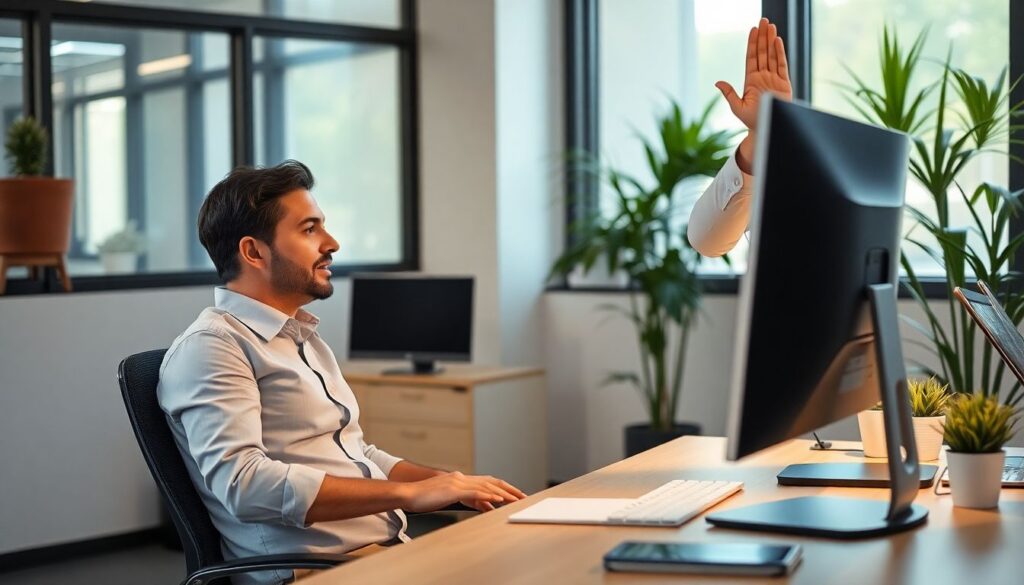
These policy-style alternatives help turn melhores exercícios para quem fica muito tempo no computador and movement breaks into consistent habits instead of one-time efforts.
Team or group movement rules during practice
Clans, university teams, and gaming houses can schedule mandatory short movement breaks between scrim blocks or at fixed match counts. Shared rules make it easier for individuals to stand up without feeling they are “weak” or interrupting the group.
Personal screen-time and break contracts
Set your own maximum continuous sitting time and number of matches before a break, and respect it as if it were a scrim time. Use alarms, calendar reminders, or software timers to enforce these limits during study, ranked, and content-watching sessions.
Environment-based prompts in home and LAN settings
Place simple exercise or stretching cues near your setup, such as a mat on the floor or a resistance band on the chair. In LAN houses and training centers, mark safe standing areas where players can walk or stretch between games without blocking others.
Integrating fitness into team goals and reviews
Coaches and captains can track movement, sleep, and basic treino físico for gamers profissionais e amadores alongside in-game stats. When health metrics appear in reviews and planning, players treat them as part of performance, not optional extras.
Practical Concerns, Quick Fixes, and When to Seek Help
How can I start improving my saúde para gamers e jogadores de e-sports if I only have 10 minutes per day?
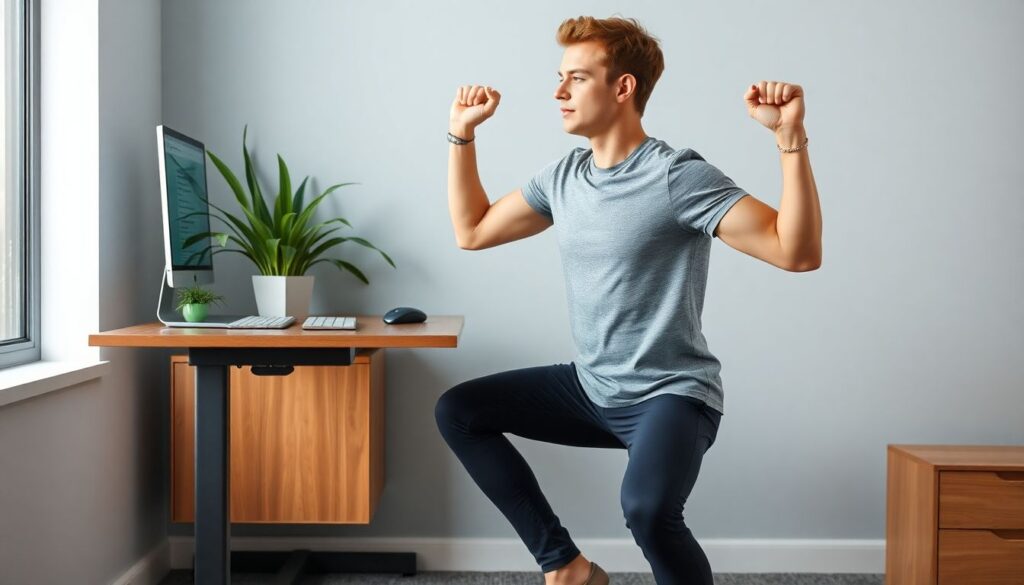
Begin with one daily 10-minute block: 5 minutes of walking or light marching plus a simple bodyweight set of squats, wall push-ups, and planks. Add one ergonomic change at your setup each week, such as adjusting monitor height or moving the keyboard closer.
What are the safest dicas de fitness para quem passa horas jogando when I have knee or back sensitivity?
Prioritize low-impact movements like walking, gentle hip and ankle mobility, and wall push-ups. Avoid deep squats or jumps; keep ranges small and pain-free. If pain persists or increases, consult a physiotherapist or doctor before progressing exercises.
How do I balance treino físico for gamers profissionais e amadores with already long scrim and study schedules?
Attach short workouts to existing routines, such as before your first block or right after it. Two or three focused sessions per week, plus micro-breaks between matches, are more sustainable than trying to add long daily gym sessions on top of everything.
What quick changes improve how I feel when I ficar muito tempo no computador?
Raise your screen to eye level, keep feet supported, and ensure your back is against the chair with a small cushion if needed. Stand up and move briefly every 30-60 minutes, and keep a water bottle visible on the desk as a reminder to drink.
When should I worry that gaming or e-sports watching is harming my mental health?
Take concern seriously if you notice lasting low mood, loss of interest in other activities, major sleep disruption, or conflicts at work, school, or home because of your habits. Seek professional help if these patterns continue for several weeks or feel overwhelming.
How can I manter a saúde assistindo e jogando e-sports during travel to events or when sharing a small space?
Use bodyweight moves that require no equipment, like squats, wall push-ups, and standing calf raises, in short bursts through the day. Keep regular hydration, plan lighter meals before play, and protect your usual sleep times as much as flight or bus schedules allow.
What if I struggle to apply all these strategies at once?
Choose one small change per week, such as regular movement breaks or earlier caffeine cutoff, and only add the next habit when the first feels automatic. Consistency with a few basics is more protective than a short burst of perfect habits that quickly disappear.
Комментарии
В итоге оформлял аренду юрадреса через этот сервис: сразу подобрали немассовый адрес под нужную ИФНС, дали полный комплект документов, к которым у налоговой вопросов не возникло. Отдельный плюс — в договоре прописана гарантия: если вдруг из‑за адреса откажут, возвращают деньги или дают замену. Для Москвы, по-моему, это сейчас один из самых адекватных вариантов.