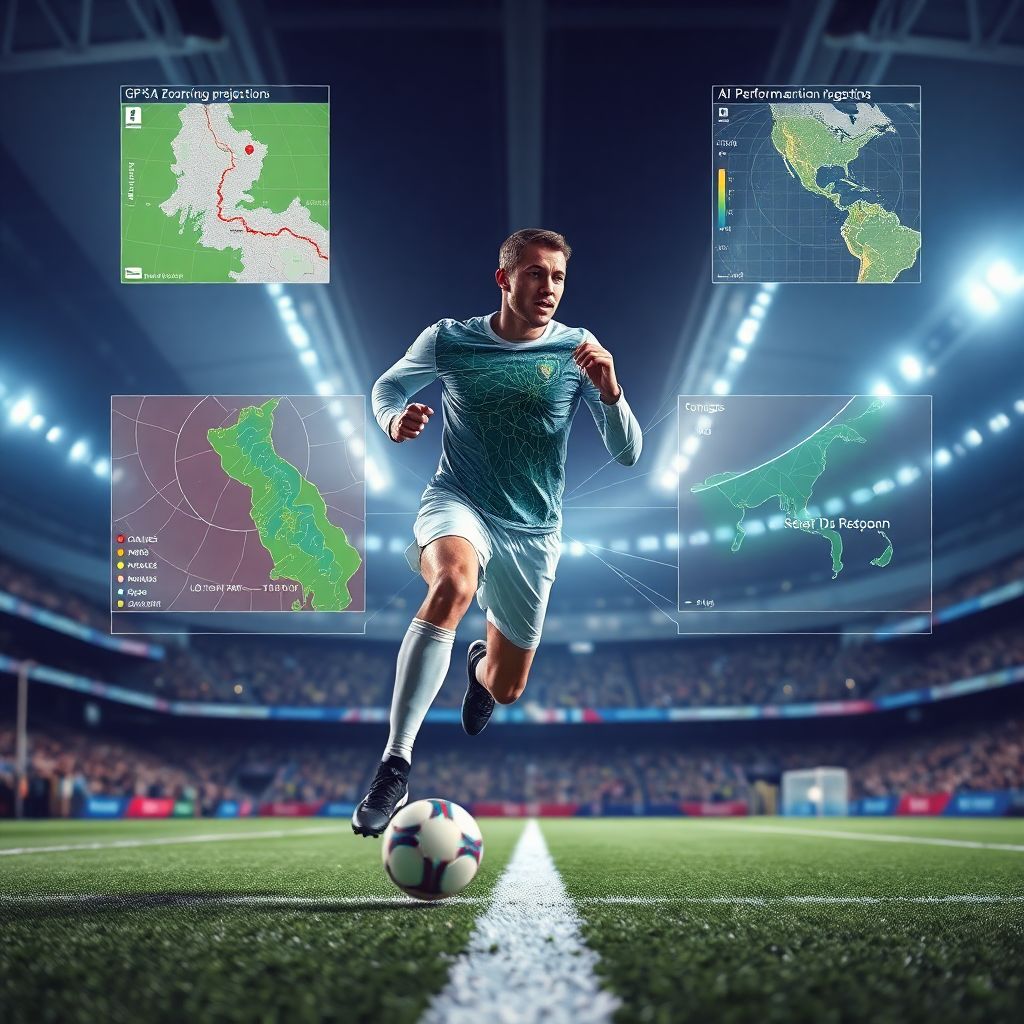
Performance technology increases transfer value by turning GPS, movement tracking and AI outputs into clear evidence of reliability, upside and fit. Clubs in Brazil and abroad pay premiums when they see consistent high-intensity running, repeat sprint ability, robust biomechanics, and AI-supported projections of future performance, all contextualised by league, position and tactical role.
Value drivers at a glance
- Consistent GPS data that proves availability, match load tolerance and repeat sprint capacity by role.
- Motion analysis showing efficient biomechanics, low injury risk signals and position-specific movement patterns.
- Transparent AI models linking current performance to realistic minutes, goals or defensive actions in higher leagues.
- Benchmarking against recent transfers in similar age, position, league and style of play.
- Negotiation-ready reports that agents and clubs can show on one or two pages, not raw spreadsheets.
- Clear data ownership, consent and compliance so evidence is usable in formal negotiations.
Quantifying physical output: GPS and wearable metrics explained
For Brazilian clubs implementing tecnologia no futebol gps e análise de desempenho, GPS and wearables help transform “eye test” impressions into measurable physical profiles. They are ideal for clubs with regular training monitoring and at least basic sports science support, and for agents representing players in physically demanding positions.
You should avoid heavy GPS programmes when:
- You cannot guarantee consistent device use (different units, forgotten vests, missing sessions).
- You lack staff to clean and validate data, leading to misleading numbers.
- You work in amateur or semi-pro environments where players resist monitoring.
- The league or federation has strict limits on wearable use on match day.
For valuation, focus on a small, repeatable metric set rather than every number the software provides:
- Total distance per 90 only as context, never as the main selling point.
- High-speed running distance and sprint distance relative to position and team style.
- Number of sprints and repeat sprint sequences (e.g., >3 sprints in 30 seconds).
- Peak speed to signal athletic ceiling (useful for wingers, full-backs, centre-backs).
- Acute vs. chronic load ratios to show controlled progression and resilience.
Biomechanics and motion analysis: what scouts can measure and trust
Biomechanics and motion capture turn video into quantifiable movement quality. plataformas de análise de movimento e gps para scouting de atletas allow scouts to link “smooth” or “rigid” movement to measurable joint angles, asymmetries and deceleration quality, especially valuable for knee, ankle and hamstring risk assessment.
To use these tools reliably, you need:
- High-quality video capture:
- Stable camera positions (wide tactical view + closer angle for mechanics).
- Consistent frame rate; avoid mixing low-FPS TV footage with high-speed training video.
- Good lighting to support automated tracking.
- Software capabilities:
- Automatic player tracking and skeleton (pose) estimation.
- Export of joint angles, acceleration, deceleration and change-of-direction metrics.
- Integration or manual linking with GPS data and event data (passes, shots, duels).
- Staff and workflow:
- At least one analyst with basic biomechanics literacy.
- Clear tagging protocol: which actions to analyse (sprints, landings, cutting, duels).
- Time budget: limit analysis to high-impact actions per player (e.g., 10-15 clips per match).
Trust metrics that are stable across several matches and contexts: recurring asymmetries, repeat braking loads before fatigue, and typical turning patterns by side. Treat one-off spikes or strange values with caution and always review the underlying video.
| Technology | Main valuation impact | Typical metrics that convince buyers | Best suited roles |
|---|---|---|---|
| GPS / wearables | Proves physical capacity and robustness over a season. | High-speed running per 90, repeat sprints, peak speed, load progression. | Full-backs, wingers, box-to-box midfielders, high press forwards. |
| Motion / biomechanics | Signals injury risk and movement efficiency. | Deceleration quality, asymmetry indexes, joint angles in cutting and landing. | Players with prior injuries; explosive positions like wide forwards, centre-backs. |
| AI performance models | Projects performance and minutes after transfer. | Expected minutes, expected goals/assists or duels, league adjustment factors. | All positions; especially helpful for young prospects and cross-league moves. |
| Integrated performance platforms | Combines physical, technical and tactical data into one valuation story. | Player radar vs cohort, health flag summary, “fit score” for target club style. | Top targets where fee and salary justify deeper analysis. |
From data to price tag: AI models for projecting transfer value
The uso de ia na avaliação de jogadores de futebol only becomes valuable when you follow a disciplined sequence from data collection to a negotiation-ready valuation range. Below is a safe, practical flow any intermediate analyst or agent can implement with support from a data provider or internal staff.
- Define the valuation question clearly. Decide if you are estimating fair transfer fee, expected minutes, or impact metrics after a move. Be explicit about the target league and role (e.g., Série A full-back in a high-press 4-3-3).
-
Collect and clean multi-source performance data. Combine event data, GPS outputs and motion indicators into a unified player-season table.
- Separate training and match GPS; most buyers care more about match intensity.
- Normalise metrics per 90 minutes and adjust for playing time and red cards.
- Flag missing or unreliable matches so the model does not learn from noise.
-
Build a comparison cohort of similar players. Your AI cannot value a player in isolation; it needs context.
- Select players by age band, position, primary role (e.g., ball-winning 6 vs deep-lying 6).
- Include players who already transferred between comparable leagues in recent seasons.
- Record their pre-transfer metrics, post-transfer performance and actual fees.
-
Engineer features that reflect football reality. Transform raw numbers into football-intelligent inputs for the model.
- Create role-adjusted metrics (e.g., high-speed running vs position average).
- Aggregate load trends over rolling windows (e.g., last 5 matches) to reflect form and resilience.
- Include simple context: team strength, possession style, press intensity index.
-
Train a transparent AI model. Use algorithms that allow interpretation (e.g., gradient boosting, regularised regression) via software de performance esportiva para clubes de futebol or custom notebooks.
- Split your data into training and validation sets, avoiding leakage across seasons.
- Prioritise models where you can explain which features drive the predicted fee or minutes.
- Check that predictions for known past transfers are within a realistic error band.
-
Translate predictions into a valuation band. Never present a single “magic” price.
- Give a base valuation plus an upside and downside scenario.
- Show how minutes, goals/assists or defensive actions are expected to change post-transfer.
- Benchmark all outputs against the question “como a análise de dados valoriza jogadores no mercado de transferências” in this specific case.
-
Package outputs into a negotiation-ready narrative. Present a concise visual story instead of raw model code.
- Use 1-2 pages with charts, cohort comparisons and clear bullet conclusions.
- Highlight injury risk and workload sustainability along with performance upside.
- Prepare a short speech connecting data to club strategy: style, age profile, resale potential.
Fast-track mode for clubs and agents
When time is limited, you can still apply AI in a simplified, safe way:
- Pick 10-20 recent transfers of similar players and collect their key physical and event metrics.
- Compare your player’s per-90 metrics and GPS profile to the median and top quartile of that group.
- Use a simple regression or trusted external model to estimate expected minutes and impact in the target league.
- Define a valuation band (conservative, base, optimistic) and prepare a one-page visual summary.
Real-world transfers: concise case studies where tech moved the market
To check if technology is truly adding value to your transfer decisions, use this practical review list after each major deal or failed move.
- Did GPS and movement data clearly explain why your club or client was paying or asking above the “market rumour” price?
- Was there at least one metric where the player was clearly superior to recent comparable transfers?
- Did the buying staff actually read and use the report in meetings, or was it attached at the end and ignored?
- Did the projected minutes and role from the AI model match the coach’s real plan?
- After six to twelve months, are the player’s physical outputs in the new club aligned with pre-transfer benchmarks?
- Did the data help reduce disagreement between scouting, medical and board rather than increase confusion?
- Were there any surprises in injury or load tolerance that the model could have anticipated with better inputs?
- Can you show one or two graphs that clearly link performance tech to the financial outcome of the deal?
Operationalizing performance data in scouting, contracts and negotiations
Even with strong technology, operational mistakes can destroy credibility and value in negotiations.
- Presenting too many metrics at once, without highlighting the 3-5 most relevant for the player’s role.
- Ignoring medical and contextual information, creating AI outputs that contradict obvious reality.
- Using different data definitions than the buying club’s analysts, leading to confusing metric names and ranges.
- Over-promising predictive certainty, speaking as if the model “guarantees” future goals or minutes.
- Failing to separate training and match data, accidentally overselling players based on training numbers only.
- Not aligning reports with contract structure (bonuses, appearance clauses) where data could protect both sides.
- Sending heavy spreadsheets without a short executive summary for decision-makers.
- Allowing confidential player load or medical-related metrics to circulate without proper consent.
Risks, biases and regulatory constraints of tech-driven valuations
Performance technology is powerful but not always the right primary tool. In some cases you should rely more on simpler, complementary approaches, especially when data quantity or quality is limited.
- Expert-panel scouting valuations. Combine several independent scout reports and coach interviews to create a qualitative scorecard when tracking data is incomplete or inconsistent across leagues.
- Benchmarking with public event data only. Use widely available on-ball data for lower divisions where wearables and motion systems are rare, focusing on role-based performance instead of raw athleticism.
- Scenario-based financial modelling. For players with short data histories (e.g., breakout season), build manual best/median/worst scenarios instead of overfitted AI outputs.
- Hybrid “light tech” approach. Use basic video tagging and simple GPS summaries rather than full AI stacks when budgets or data rights are constrained, especially in smaller pt_BR clubs building their first analytics structure.
Well-chosen software de performance esportiva para clubes de futebol should support these alternatives by making it easy to work with different data depths, from rich GPS feeds to simple event logs, without forcing a single heavy solution for all contexts.
As more Brazilian clubs adopt tecnologia no futebol gps e análise de desempenho, the focus should remain on responsible usage, privacy, and transparent communication of limitations to players and staff, ensuring long-term trust and sustainable gains in the transfer market.
Quick practical answers for clubs, agents and analysts
How can GPS data directly increase a player's transfer value?
GPS data helps when it reveals sustained high-intensity output and robustness across many matches. If a player repeatedly hits strong high-speed and repeat sprint numbers without spikes in load or absence, buying clubs are more comfortable paying a premium for reliability.
What is a safe starting point for AI-based player valuation?
Start with a narrow, clearly defined use case, such as projecting minutes in a specific target league. Use a modest dataset of comparable transfers, a simple, interpretable model, and always communicate ranges and uncertainty, not single “truth” prices.
Do smaller clubs in Brazil really need motion analysis systems?
Most smaller clubs can begin with structured video review and basic pose-tracking tools instead of full labs. Focus on obvious asymmetries, deceleration and landing patterns on a few key players rather than trying to quantify every detail for the entire squad.
How should agents use performance tech reports in negotiations?
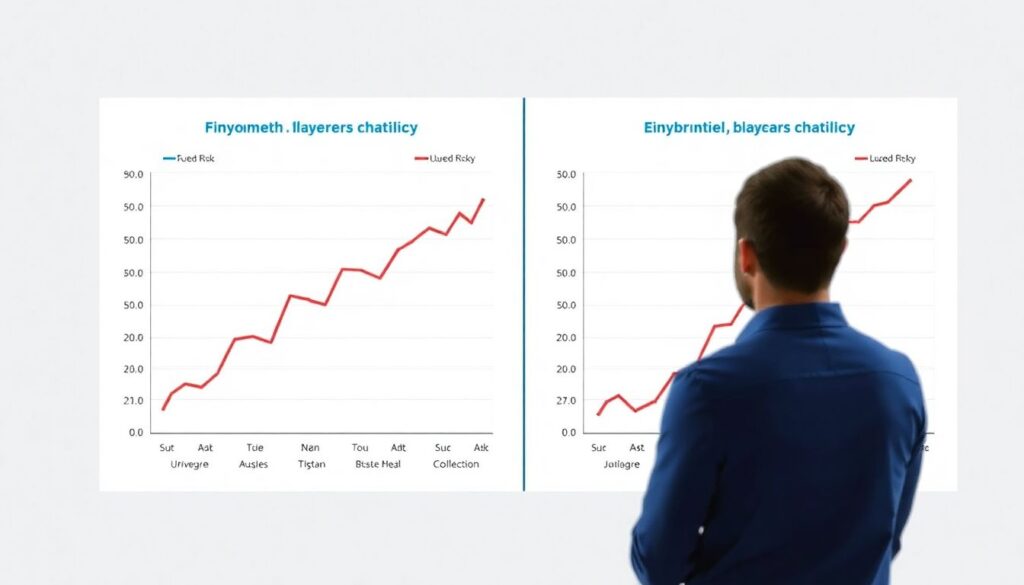
Agents should treat tech outputs as supporting evidence, not the whole argument. Lead with fit to the buying club’s style, then show two or three clear charts that link physical and performance metrics to reduced risk and upside compared to recent signings.
What are the main risks of relying too much on AI for valuations?
Excessive reliance on AI can hide data gaps, amplify historical biases and ignore real-time context like coach changes or new positions. It can also damage credibility if model numbers conflict with what coaches and scouts see every week.
How do data ownership and privacy affect performance-based valuations?
Without clear agreements, sharing GPS and movement data can breach regulations or contracts. Ensure players consent to how their data will be used, limit sensitive health-related indicators in external documents, and respect club and federation policies when exporting reports.
What if there is very little GPS or tracking data for a target player?
When tracking is limited, rely more on detailed video, event data and qualitative scouting. You can still build simple benchmarks using available matches, but avoid strong AI claims and frame your valuation as scenario-based rather than fully data-driven.