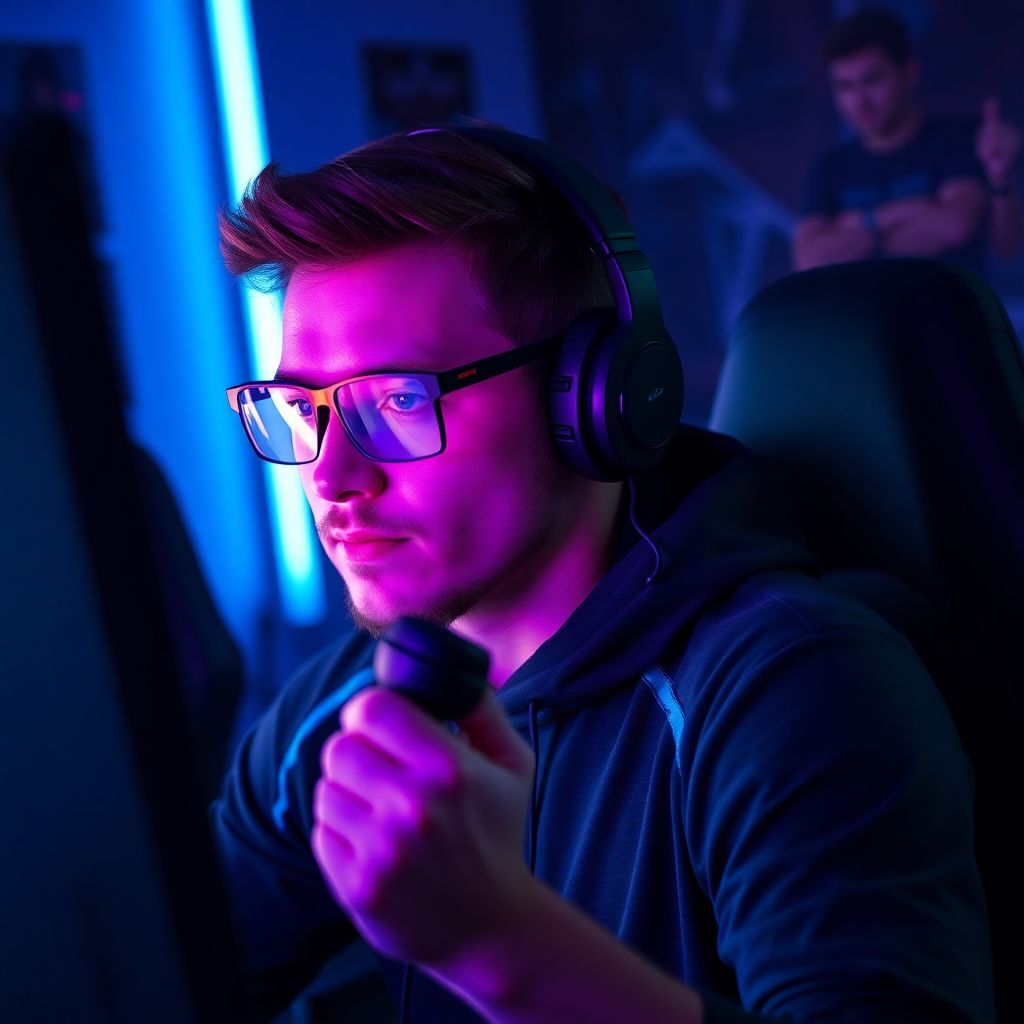
A gamer-specific health and fitness routine combines short daily mobility, strength, and cardio blocks with focused reaction and cognitive drills, structured meals, and consistent sleep. It must fit your ranked and scrim schedule, protect joints and eyes, and be simple enough to follow on tilt days, tournament weeks, and travel.
Core principles for a gamer-specific health and fitness plan
- Anchor training and meals to fixed daily time blocks, not to how ranked or scrims went.
- Prioritize joint health, eyes, and back before heavy lifting or advanced conditioning.
- Use micro-sessions (5-20 minutes) between queues instead of long, unrealistic workouts.
- Train reaction speed, decision-making, and aim under light physical and mental fatigue.
- Base nutrition on stable energy and focus, not on quick sugar or caffeine spikes.
- Protect sleep windows with strict cutoffs for screens, caffeine, and ranked queues.
- Track a few simple KPIs: reaction time, pain level, mood, and in-game performance markers.
Assessing the player profile: physiology, schedule, and measurable goals
This approach suits most healthy gamers who want a structured rotina de treino para gamers e esportes eletrônicos, from aspiring pros to streamers and serious casuals. It is not a replacement for medical care; anyone with heart, joint, metabolic, or mental health conditions must clear plans with a doctor first.
Start with a quick assessment that fits the Brazilian (pt_BR) reality of long gaming nights, study/work, and limited space at home.
- Define your role and competitive level
- Pro / academy / high-tier ranked: 5-7 days of structured play, scrims, VOD, and physical work.
- Streamer: Long, irregular hours on camera, often seated, variable intensity.
- Casual competitor: Fixed job/study schedule, training mostly at night or weekends.
- Map your weekly load and constraints
- List hours per day for games (ranked, scrim, content), commuting, and study/work.
- Mark two non-negotiable sleep blocks and one daily 15-30 minute slot for body work.
- Note equipment access: home bodyweight only, bands, dumbbells, or full gym.
- Check current physical status
- Rate pain from 0-10 in: neck, shoulders, lower back, wrists, fingers, and eyes (fatigue).
- Test basic capacity: 10 bodyweight squats, 10 push-ups (or incline), 20-second plank, 30-second fast walk.
- If any test causes sharp pain, dizziness, or shortness of breath, stop and seek medical advice.
- Set 4-8 week measurable goals
- Performance: average reaction time on a simple online test, ranked focus for one full best-of series.
- Health: reduce pain scores by 1-2 points, add 1-2 reps or 10-20 seconds to core holds.
- Behavior: fixed bedtime, daily mobility block, stable pre-rank queue routine.
Periodized training for reaction speed, cognitive endurance, and motor control
To criar um treino físico e mental para jogadores profissionais de games and serious competitors, combine strength, conditioning, and game-specific drills in simple cycles. Equipment is optional but helpful.
- Basic equipment and tools
- Yoga mat or towel for floor work.
- Light resistance band and, if possible, a pair of dumbbells or kettlebell.
- Desk setup: adjustable chair, external keyboard/mouse, and monitor at eye level.
- Free apps or websites for reaction-time tests and aim-training (for FPS/MOBA players).
- Weekly structure template
- 3 days lower- and upper-body strength + core (20-30 minutes).
- 2-3 days light cardio: brisk walking, cycling, or jump rope (15-25 minutes).
- Daily 5-10 minutes of posture, wrist, and neck mobility before first queue.
- 4-6 days of cognitive and reaction drills (5-15 minutes) before or after aim training.
- Micro-cycles for different roles
- Pro player / academy: 3-4 week cycles increasing load slowly, then one easy week; place heavier strength on lighter scrim days.
- Streamer: Short, frequent movement snacks between blocks of content (every 60-90 minutes).
- Casual competitor: Two slightly longer sessions on weekends; mini-sessions of 10-15 minutes during weekdays.
- Reaction and decision-making drills
- Online reaction tests (simple and choice reaction) 3-5 rounds, record average time weekly.
- Aim-training scenarios with tracking, flicks, and target switching under mild fatigue.
- Short dual-task drills: for example, light step-ups while solving simple mental math or callout tasks.
Keep intensity submaximal so it supports, not replaces, your in-game treino físico e mental para jogadores profissionais de games and semi-pros.
Nutrition protocols to sustain focus, reaction time, and tournament-day energy
Before the step-by-step protocol, prepare a simple environment that supports como melhorar saúde e desempenho nos e-sports through food and hydration.
- Clear your desk from ultra-processed snacks you mindlessly eat while tilted or streaming.
- Fill a reusable water bottle and keep it within reach of your mouse hand.
- Plan a basic grocery list that you can afford and find easily in Brazilian markets.
- Decide rough eating times around your training and match blocks.
- Note any medical conditions (diabetes, food allergies, IBS) and adapt with professional guidance.
- Anchor meals to your gaming schedule
Eat in consistent windows that do not collide with the most intense ranked or scrim blocks.- Place the main meal at least 60-90 minutes before your highest-stress matches.
- Add a light snack 30-45 minutes before queues if you are hungry.
- After late-night sessions, prioritize a small, easy-to-digest meal rather than heavy fast food.
- Build balanced gamer-friendly plates
Use a simple visual rule that works even when you do not want to count calories.- Fill about half the plate with vegetables or fruit (fresh, frozen, or cooked).
- Reserve roughly a quarter for protein: beans, lentils, eggs, chicken, fish, beef, tofu.
- Use the rest for carbs and healthy fats: rice, pasta, mandioca, bread, olive oil, nuts, avocado.
- For snacks: choose fruit, yogurt, nuts, or whole-grain toast instead of chips and sweets.
- Use caffeine and sugar strategically
Many dicas de alimentação e fitness для gamers competitivos fail because of uncontrolled energy drinks and soda.- Limit caffeine later in the day to protect sleep and morning focus.
- Use coffee or tea rather than high-sugar energy drinks when possible.
- Pair any sugary snack with protein or fiber (nuts, yogurt, fruit) to reduce hard crashes.
- Hydrate with simple rules
Mild dehydration can worsen headaches, eyestrain, and tilt.- Drink some water with each meal and snack.
- Keep the bottle on your desk and take a few sips between games or during queue.
- Reduce very salty and heavily processed foods that make you extra thirsty and bloated.
- Plan tournament and long-stream nutrition
Match-day food can make or break programa de exercícios para atletas de e-sports and competition performance.- Test your match-day meals during scrim days; avoid new or very spicy food.
- Use smaller, more frequent meals and snacks between games rather than one huge meal.
- Prepare portable options: bananas, nuts, sandwiches, simple rice and protein boxes.
- For long streams, pre-portion snacks away from the desk to avoid endless grazing.
Sleep and circadian strategies: timing, naps, and sleep hygiene for peak performance
Use this checklist to see if your sleep supports or sabotages your plan to como melhorar saúde e desempenho nos e-sports long term.
- You keep a consistent sleep and wake time on both ranked days and off days.
- You stop high-intensity ranked or scrims at least one hour before planned bedtime.
- You reduce strong light from monitors and mobile by lowering brightness or using warm filters at night.
- You avoid heavy meals, large amounts of caffeine, and energy drinks close to bedtime.
- You use short naps (20-30 minutes) earlier in the day, never as a replacement for full-night sleep.
- Your bedroom is dark, quiet, and as cool as possible, even if you share space with others.
- You keep the bed mostly for sleep and rest, not for late-night ranked grinds.
- You can fall asleep without needing constant streams, videos, or social media scrolling.
- You wake feeling reasonably refreshed on most days, without constant headaches and eye burning.
- When travel or tournaments disrupt sleep, you return to your regular schedule within a few days.
Musculoskeletal health and prevention: posture, eyestrain, and repetitive-strain routines
A strong rotina de treino para gamers e esportes eletrônicos also avoids common mistakes that increase pain and injury risk.
- Ignoring wrist or finger pain and continuing full-volume ranked or scrims without rest or adaptation.
- Playing for long blocks without standing, stretching, or changing posture for hours.
- Keeping the monitor too high or too low, forcing neck flexion or extension all day.
- Using armrests or desk height that cause shoulders to shrug up toward the ears.
- Leaning forward from the lower back instead of hinging slightly at the hips.
- Skipping warm-up entirely and going straight from bed or couch to high-intensity matches.
- Training heavy in the gym with poor technique because of fatigue from late-night queues.
- Wearing the same tight headset for very long sessions without breaks for the neck and jaw.
- Forgetting regular eye breaks: looking at distant points and blinking often to reduce dryness.
- Returning too early after an injury without a gradual ramp-up, making pain chronic.
Recovery and monitoring: active recovery, modalities, biomarkers, and performance KPIs
Recovery does not require expensive tools. Choose options that match your schedule, budget, and current health.
- Low-equipment active recovery days
Choose light walks, easy cycling, gentle mobility flows, and breathing exercises.
Use when you feel stiff, mentally drained, or after long tournament days and travel, but still want to move. - Gym-based or structured recovery sessions
Use low-intensity cardio machines, stretching areas, and light resistance work.
Helpful for pro and semi-pro players who already train in a club or gym and need controlled environments. - At-home modalities and self-care
Apply simple tools like cold or warm showers, basic self-massage with a ball, and regular eye-care routines.
Use when budget is limited or access to therapists is difficult. - Professional support and medical follow-up
Look for sports physicians, physiotherapists, and psychologists with experience in gamers and esportes eletrônicos.
Essential when pain persists, performance drops sharply, or mental health issues affect life and play.
Practical troubleshooting for common player performance problems
What should I do if I feel too tired to train after long scrim blocks?
Simplify to a five-minute mobility routine and a short walk instead of skipping entirely. Reduce volume, not frequency, and check if your sleep and nutrition are the real bottlenecks.
How can I add cardio without ruining my aim or mechanics the next day?
Keep intensity moderate and duration reasonable, and avoid doing hard sessions right before heavy ranked or aim training. Start with two short sessions per week and increase gradually while monitoring in-game precision.
How do I adjust the plan during tournament weeks?
Shift focus to mobility, light activation, and match-specific warm-ups. Reduce heavy lifting, keep meals simple and familiar, and protect sleep as much as possible around travel and schedules.
What if I only have bodyweight and no gym access?
Use squats, lunges, push-ups, planks, and band work for wrists and shoulders. Combine with walking or stair climbing for conditioning, and keep the same structure of strength, mobility, and reaction drills.
How can I track if my health routine actually improves performance?
Record reaction times, pain levels, sleep hours, and simple game stats such as consistency across matches. Review every few weeks and adjust training, food, and recovery based on the trends.
How do I avoid gaining weight when grinding ranked for many hours?
Control portions, prioritize whole foods, and keep snacks pre-portioned away from the desk. Add small daily movement blocks and monitor weight and waist measurements regularly.
When should I stop and see a doctor or specialist?

Seek professional help if you experience persistent or sharp pain, chest discomfort, breathing problems, repeated injuries, or major mood and sleep changes that affect your life beyond games.