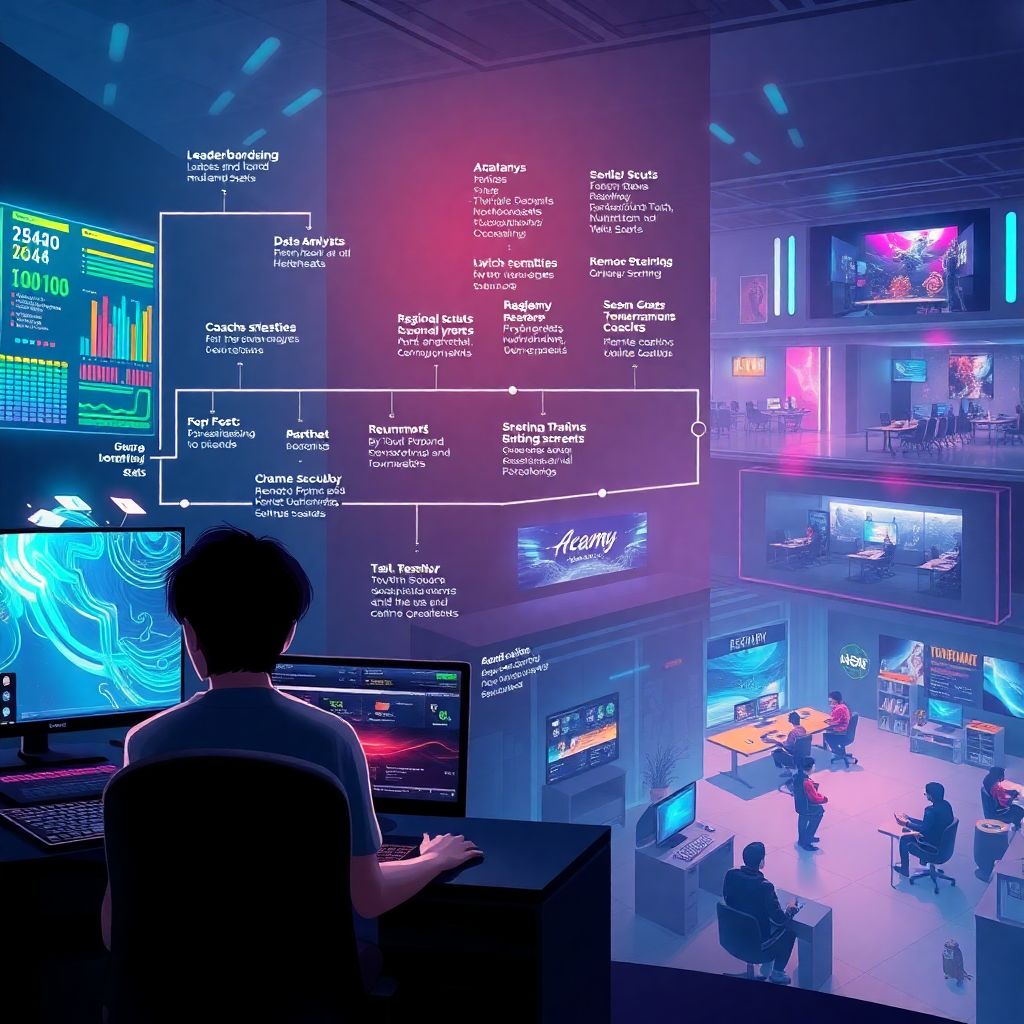
Asking how unknown ladder grinders end up on a Worlds or TI stage overnight is like asking how an indie musician suddenly sells out arenas: there’s a lot of structure behind the “overnight” part. Big clubs have quietly built pipelines that look more like traditional sports than hobby gaming — with scouts, academies, sports psychologists, and even talent agencies.
Below is a practical, no‑nonsense look at how this works today and what it means if you want to ride that wave yourself.
—
How big orgs turned “random solo‑queue gods” into structured talent pipelines
Over the last three years, esports stopped being just about spotting a cracked player in ranked and throwing them a contract. Major brands now run full ecosystems: open ladders, scouting combines, academy rosters and partner streams. Between 2021 and 2023, global esports audience numbers climbed from roughly 465 million to well over 500 million unique viewers, according to Newzoo projections, and that growth forced organizations de e-sports contratar jogadores profissionais in a more systematic way. Instead of one coach checking leaderboards, you now have analysts mining in‑game APIs, talent managers browsing Twitch and TikTok, plus regional scouts embedded in local communities.
At the same time, publishers like Riot and Valve expanded semi‑pro circuits and collegiate leagues, creating clear “tiers” similar to minor leagues in baseball or youth academies in football. That structure matters: it gives orgs a safer sandbox to test rookies under pressure and lets unknowns rack up tournament reps long before they appear in the main league broadcast. So when someone finally “pops” on the big stage, that moment usually caps off 12–24 months of invisible grind inside a system, not a lucky DM sent last night.
—
Different approaches big orgs use to find and shape talent
1. Data‑driven scouting vs. “eye test” recruitment
In the last three years, the biggest divide between approaches has been how much weight orgs put on stats versus human intuition. Some teams now rely heavily on in‑house dashboards tracking every scrim and official match: reaction times, ability usage, map control, economy management, even team‑fight positioning. Others still trust seasoned coaches who watch VODs and judge intangibles like game sense, comms quality and emotional stability. Both methods can work, but they build very different rosters. Data‑heavy teams tend to favor consistent role players and undervalued specialists, while “eye test” orgs are more likely to gamble on explosive, streaky prodigies who can hard‑carry on a good day and disappear on a bad one.
From 2021 to 2023, plenty of top‑tier rosters were quietly rebuilt using these tools. Analysts report that in some regions more than half of newly signed rookies first appeared on orgs’ internal watchlists, not public tournaments. The key difference from the past is scale: one scout might track a few dozen players by hand, but automated tools can monitor thousands across multiple regions. Still, most successful teams use a hybrid: stats to filter, humans to decide.
—
2. Academies and schools versus loose tryout systems
As competitions got tougher, relying only on open tryouts proved too chaotic. That’s why many clubs now partner with or even operate academias e escolas de e-sports para formar pro players. These setups range from full‑time residential programs with coaches, nutritionists and psychologists, to weekend training centers that combine studies with structured scrims. In parallel, org‑run academy teams play in secondary leagues directly under the main roster, mirroring traditional sports like football and basketball.
The contrast with old‑school “pickup” recruiting is huge. In a loose tryout model, hundreds of players show up for a two‑day grind, and a handful may get trial contracts. Development is mostly self‑directed and inconsistent. In an academy framework, there’s a curriculum: review sessions, mechanical drills, macro theory, comms practice and mental resilience work. Between 2021 and 2023, the number of academy or “B” rosters in major titles like League of Legends, VALORANT and CS grew steadily, and in some regions more than 30–40% of rookies debuting in top leagues came through a direct academy pipeline rather than being picked straight from solo queue.
—
3. In‑house programs vs. external career management
Another major divergence is how orgs handle long‑term careers. Some teams build everything internally: staff, marketing, legal, even personal branding workshops. Others lean heavily on empresas que gerenciam carreira de jogadores de e-sports, which function more like talent agencies for streamers and pro players. These agencies handle sponsorships, PR, scheduling, and sometimes even conflict resolution, so the org can focus on performance and competition.
This split became more visible as player brands exploded on streaming platforms. Over the last three years, many rookies joined top teams already having six‑figure follower counts on TikTok or Twitch. For those players, agency support can be the difference between a sustainable career and burnout. Big orgs benefit too: agencies spread risk and provide backup options if a roster move goes wrong. The trade‑off is control; organizations that outsource too much may struggle to shape a unified identity or culture.
—
Pros and cons of the technologies behind modern talent development
Analytics, tracking tools and performance platforms
Performance tech underpins most programas de treino e desenvolvimento de talentos em e-sports today. Scrim‑tracking tools log every map, aim trainers record accuracy over time, voice‑comms software lets coaches replay shot‑calling in high pressure moments. When used correctly, these tools turn vague feedback like “play safer” into specific, measurable goals: “reduce unnecessary peeks in disadvantageous 2v3 situations by 20% over the next month.”
The upside is massive: over the past three seasons, several top teams publicly credited their rise to consistent use of data dashboards and structured review. Some reported noticeable improvements in objective control or clutch‑round conversion after introducing targeted drills. The downside is information overload and dehumanization. Players can start to feel like spreadsheets instead of teammates, and young prospects often obsess over statistics that don’t directly translate to better team play. Without strong coaching and mental‑health support, that pressure has led to burnout and early retirements, especially among 17–20‑year‑old prodigies entering big leagues too fast.
—
Content platforms, streaming and social amplification
Technology didn’t just change how players practice — it reshaped how they become stars. Three years ago, many rookies debuted on stage with almost no public presence. Now, it’s normal for a “nobody” to arrive on a top roster already streaming regularly, uploading highlight clips and interacting with fans on social media. Short‑form video and live streaming became informal scouting platforms: coaches and managers quietly watch how a player communicates, tilts, or leads viewers through their decision‑making.
The advantages are obvious. Players build audiences early, so when a big match happens, there’s already a fanbase cheering. Orgs get more sponsor value because each rookie comes with built‑in reach. But there are trade‑offs: streaming demands time and emotional energy, and public mistakes are archived forever. New players sometimes end up prioritizing content over rest or focused training, which can hurt long‑term performance. Balancing “brand building” with competitive growth is now a crucial skill — and one that not everyone learns fast enough.
—
Remote infrastructure, bootcamps and hybrid schedules
During and after the pandemic, remote scrims and online leagues became the norm. Instead of flying everyone to one city, teams invested in high‑end PCs, low‑latency connections and remote coaching workflows. Even as offline events came back in force by 2023, many organizations kept a hybrid structure: long stretches of online training punctuated by short, intense bootcamps around key tournaments. That flexibility lets orgs scout and test players from regions that used to be hard to access, then bring the most promising ones in for in‑person evaluations.
The pro is scalability: a coach can oversee multiple trial players across the world without massive travel budgets. The con is that online performance doesn’t always translate on stage. Some “scrim gods” struggle with crowd noise, lights and travel, while others thrive only when they feel the LAN pressure. The most successful systems explicitly train both: they simulate stage stress during practice and gradually introduce rookies to live events, instead of throwing them straight into the finals spotlight.
—
How to choose the right development path (and org) as an aspiring pro
Clarifying your path: big org, academy, or wildcard route
If you’re wondering como se tornar pro player em times de e-sports grandes, the first step is deciding which ecosystem you actually want to grow in. There isn’t a single “correct” answer. Some players thrive inside highly structured organizations with strict schedules and detailed feedback. Others prefer more freedom, working with a smaller team that gives them room to experiment and stream on their own terms. Over the last three years, plenty of breakout stars came from both camps: ultra‑coached academy graduates and scrappy grinders who made noise in third‑party tournaments or ranked ladders.
A practical filter is to look at where current rookies in your game came from. If most of them passed through formal academies, that’s a sign the scene values structure and proven teamwork experience. If you see lots of open qualifier heroes making it to the top, then a high‑risk, high‑reward route of constant ladder grind and third‑party events might be viable. In both cases, consistency matters more than any single tournament run; orgs want to see months of stable high‑level play, not one lucky weekend.
—
Concrete criteria when picking an org or program
When you start getting offers — whether from teams, training programs or agencies — it’s tempting to grab the first “pro” tag you see. Instead, use a simple checklist to compare options. Pay attention not just to the logo’s prestige, but to how they actually treat players on a daily basis. Many of the most sustainable careers in the last few seasons came from medium‑sized orgs that offered good coaching, mental‑health support and fair contracts, rather than chasing the flashiest brand and burning out within a year.
Key questions you should ask (and ideally get in writing):
1. Who will be my direct coach or mentor, and how often will we review VODs together?
2. What does a typical week of training, scrims and rest days look like?
3. Do you provide support staff (analyst, psychologist, physio, nutrition)?
4. How are conflicts handled if roles change or the roster underperforms?
5. What happens to my content, socials and sponsorships if I leave the team?
The answers matter more than promises of future fame. Good structures turn average talents into solid pros; bad ones can waste even the most gifted mechanics.
—
Choosing between academies, schools and self‑directed grind
Formal academies and training centers aren’t mandatory, but they can shorten your learning curve. Quality academias e escolas de e-sports para formar pro players usually offer a blend of technical coaching, team‑play experience and life‑skills training: time management, dealing with stress, even media handling. Over the last three years, many students from reputable programs have at least reached semi‑pro leagues or full‑time content careers, even if they didn’t all become tier‑one starters.
The catch is cost and quality. Not every “esports school” is worth your money or time. Before committing, look at their alumni outcomes, coaching staff experience and partnerships with established teams. If they can show clear, recent examples of players moving into academy teams or reputable organizations, that’s a good sign. If not, you may be better off combining online resources, free VOD reviews, and community teams while focusing on climbing the ladder and showcasing your gameplay through streams and socials.
—
Key trends shaping talent development in 2026
More professionalization and cross‑pollination with traditional sports
Even with my information cutoff in 2024, the direction for 2025–2026 is fairly clear: esports is borrowing more and more from traditional sports science. Over the 2021–2023 window, you could already see teams hiring physical trainers, performance psychologists and sleep specialists. That trend is unlikely to reverse. Expect even more structured load management, standardized contracts and rigorous off‑season programs. Young players joining top rosters today are less “random gamers” and more like specialized athletes who started focused practice in their early teens.
This professionalization also means increased competition. The bar for “average” mechanical skill continues to rise, and standing out now depends heavily on versatility and mental resilience. In bigger organizations, simply being talented isn’t enough; you need to adapt to systems, accept feedback, and stay healthy under constant scrutiny. The winners will be those who treat their career like a long‑term project, not a one‑season gamble.
—
Growth of specialized training programs and hybrid careers
We’re also seeing a maturation of programas de treino e desenvolvimento de talentos em e-sports outside of pure team structures. Bootcamps, online coaching platforms, role‑specific clinics and analytics‑as‑a‑service tools are making high‑level training accessible to anyone with a decent connection and the willingness to grind. For players who can’t yet join a major team, these services offer a way to get “pro‑style” feedback and build a portfolio of progress screenshots, VODs and stats they can share with recruiters.
At the same time, hybrid career paths are becoming normal. Instead of aiming only for a starting spot on a tier‑one roster, many talented players combine semi‑pro competition, coaching, and content creation. Agencies and empresas que gerenciam carreira de jogadores de e-sports are leaning into that by representing not just star players, but analysts, in‑game leaders, and multi‑role personalities who can switch between competing, streaming and casting. That flexibility can extend careers far beyond the usual “retire at 23” stereotype that dominated early esports.
—
Smarter recruitment and broader regional scouting
Finally, recruitment is becoming more global and data‑driven. As infrastructure improves in regions previously considered “developing” markets, big orgs are scanning a much wider talent pool. Over the last few years, we’ve already seen new regions produce breakout stars in titles like FPS and mobile esports. With better ping, more local tournaments and publisher‑backed circuits, that trend should accelerate into 2026. Organizations de e-sports contratar jogadores profissionais will increasingly look beyond traditional powerhouses, building regional academies and satellite rosters to tap into fresh styles and strategies.
For unknown players, that’s good news: you no longer have to live in a major esports capital to get noticed. Solid tournament results, high‑level ranked play, and a well‑maintained online presence can put you on scouting radars if you consistently show up. The challenge is staying patient and disciplined while the system does its slow work of filtering, testing and promoting talent.
—
Putting it all together: from unknown to global stage
The transformation from “nobody in ranked” to “global star” isn’t magic, and it isn’t random anymore. It’s the product of layered systems: scouting tools, academies, coaches, agencies, and clear competitive ladders. Over the last three years in particular, those systems have hardened into real pathways, which is why you see so many young rookies arriving polished, media‑trained and ready to win.
If you’re aiming to step into that world, focus on three pillars: sustained high‑level performance, visible and professional communication (in teams and online), and smart choice of environment — whether that means a strong academy, a serious amateur squad or a well‑run agency. Big organizations will keep refining their methods; your job is to make sure that when their radar sweeps past your region and your rank, you’re exactly the kind of player they’re searching for.
Комментарии