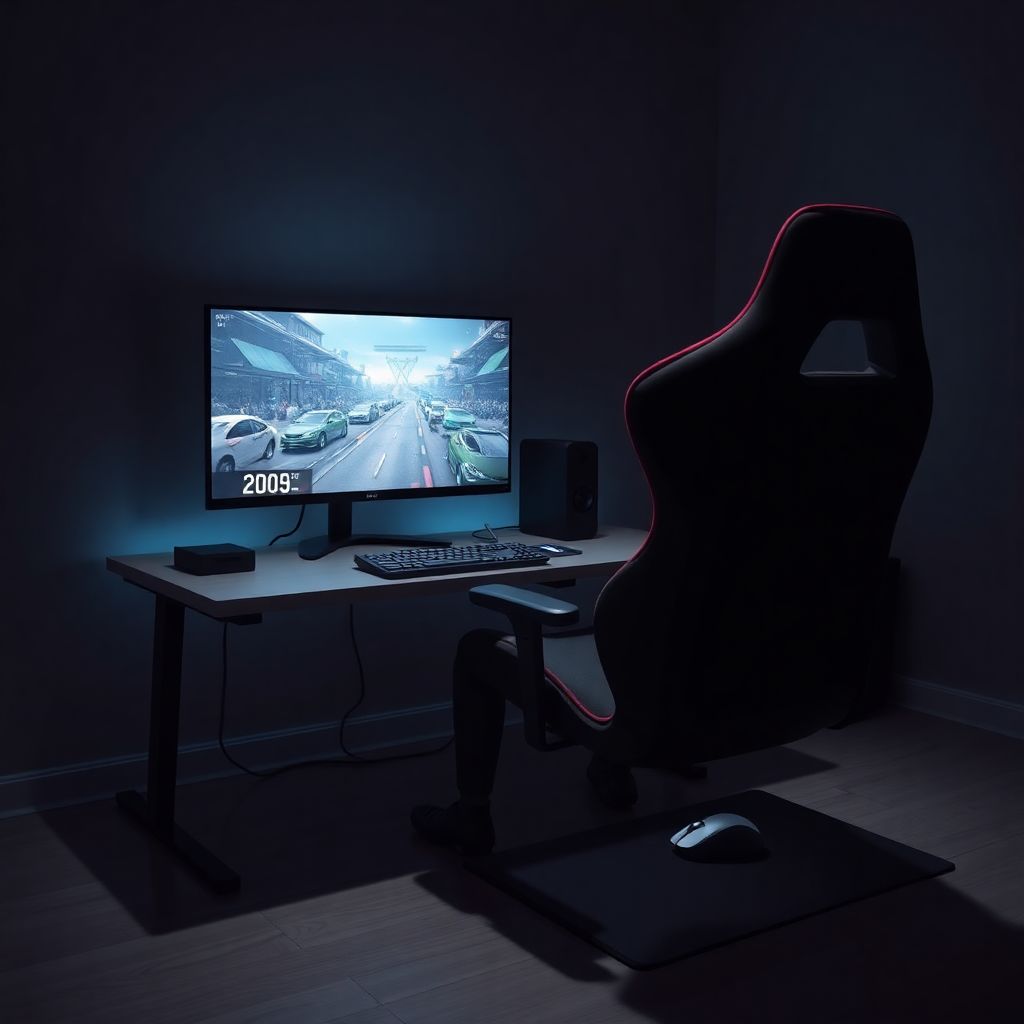
In 2026, “esports tech” basically means treating your gaming setup like sports equipment, not decoration. Everything — from chair angles to monitor refresh, from sensor latency to audio stage — directly impacts reaction time, consistency and long‑term health. Below is a step‑by‑step guide to building and upgrading a modern competitive setup, with a focus on what really matters right now and what is just expensive hype.
1. Define your competitive goal before buying hardware
Before you even search for a cadeira gamer ergonômica para e-sports or the latest mouse, you need clarity on how far you actually want to go competitively. A semi‑pro aiming for ranked ladders and online qualifiers needs different priorities than a casual player who just wants smooth matches after work. In 2026, games and peripherals are tuned around metrics like input latency, frame pacing and eye tracking fatigue, so you should list your main titles, resolution targets (1080p, 1440p, 4K) and your practice time per week. This context will help you avoid two classic mistakes: overspending on features you will never use (like 540 Hz when your GPU barely pushes 200 fps) and underspending on ergonomics, which can silently ruin your hands, back and focus over months of grinding.
2. Choosing a chair: ergonomics first, “gamer look” later
Chairs are no longer just about “race car” aesthetics; in high‑volume training, posture is a performance parameter. A good cadeira gamer ergonômica para e-sports focuses on lumbar support adjustability, seat depth, armrest angles and breathable fabric or mesh, not just color patterns and logos. The priority is to maintain a neutral spine and shoulder position so that your forearms float naturally at desk height, reducing tension on wrists and neck. A frequent beginner error is buying a very soft chair that feels “comfortable” for one hour, but forces you into a curved back posture during long scrims. Over time this increases fatigue, slows micro‑corrections with the mouse and even lowers breathing efficiency, which indirectly hurts your focus under pressure.
3. Step-by-step: setting up your gaming chair correctly
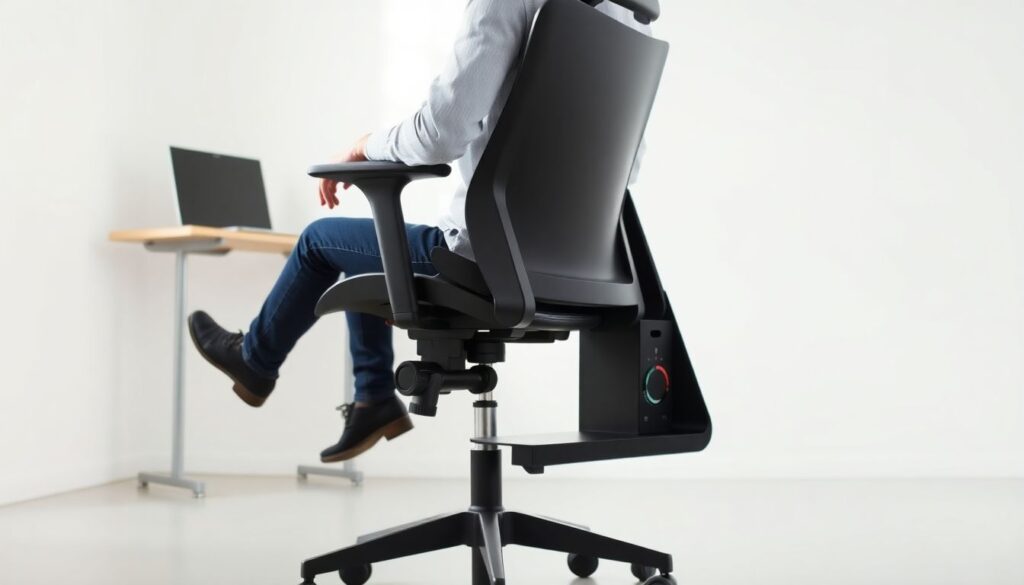
To really extract performance from an ergonomic chair, treat the setup like tuning a racing seat. Start by adjusting seat height so your feet rest fully on the floor and your knees are at roughly 90 degrees, preventing blood flow restriction. Then set backrest tilt close to upright, with minimal recline for FPS and MOBA, because extra lean back adds unnecessary strain to your neck when you look at the top of the monitor. Next, dial in lumbar support so you feel a gentle but constant pressure at the natural curve of your lower spine, never a hard edge poking you. Finally, configure 3D or 4D armrests to match the height and width of your keyboard and mouse position, avoiding shrugged shoulders or flared elbows. Many newcomers ignore armrest alignment and then blame their mouse or keyboard for discomfort, when in reality the problem is arm angle, not hardware quality.
4. Monitors in 2026: refresh rate, response and clarity
For competitive titles, the monitor has arguably the highest impact after your input devices. The melhor monitor gamer 240hz para jogos competitivos in 2026 usually combines three pillars: high refresh rate, low response time and clean motion clarity with minimal overshoot or ghosting. While 360 Hz and even 480+ Hz panels exist, 240 Hz remains the sweet spot for most players, especially at 1080p and 1440p, because it balances GPU load and visual stability. A common mistake is chasing pure hertz numbers and ignoring panel quality, color accuracy and backlight strobing modes, which strongly influence visibility of distant targets and motion tracking. Also, adaptive sync (G‑Sync, FreeSync or equivalent) is vital to reduce tearing and maintain consistent input feel when your frame rate is unstable, particularly in large, chaotic team fights.
5. Step-by-step: calibrating your monitor for competitive play
Proper monitor calibration is not just a “pro streamer thing”; it’s almost free performance. Start by setting refresh rate to the maximum your panel supports in the OS and the GPU control panel, ensuring your games actually run at 240 Hz or more instead of staying locked at 60 Hz by default. Then, disable excessive post‑processing like motion blur, film grain and heavy sharpening in game options, as they add visual noise and sometimes extra input lag. Next, adjust brightness, gamma and contrast to reveal detail in dark corners without completely washing out the image; the goal is to see enemies fast, not to have a cinematic look. You can also test backlight strobing or “blur reduction” modes, but if they introduce noticeable flicker or reduce brightness too much, you might prefer standard adaptive sync. Many beginners forget to match in‑game resolution and aspect ratio to the monitor’s native specs, which causes scaling artifacts and subtle blurriness that make precise tracking more difficult.
6. Keyboards and mice: the real core of mechanical performance
In e‑sports, your keyboard and mouse are your “racket and shoes”. A well‑chosen kit periféricos gamer profissional teclado e mouse can significantly reduce misclicks, improve consistency in key combos and increase micro‑adjustment accuracy in aim duels. Modern competitive mice in 2026 emphasize ultra‑low latency wireless (often indistinguishable from wired), high‑efficiency sensors well above 20K DPI, but used at reasonable in‑game sensitivities, and lightweight designs under 60 grams for faster flicks. For keyboards, the trend is toward hot‑swappable PCBs with optical or magnetic switches, allowing fine control over actuation point and rapid‑trigger behavior, which is particularly useful for movement keys in shooters and rhythm sequences in MOBAs. A frequent mistake for newcomers is choosing maximal RGB and macro features while ignoring factors like switch type, key layout, and build stiffness, which directly affect input precision and fatigue during multi‑hour sessions.
7. Step-by-step: tuning sensitivity and keybinds like a pro
Once the hardware is chosen, configuration is where serious performance gains appear. First, set a base DPI (often between 400 and 1600) and then adjust in‑game sensitivity till you reach a consistent cm/360 or degrees/360 that feels controllable for both micro corrections and wide flicks. Avoid constantly changing settings; instead, track performance over several days. Second, disable acceleration at OS and game level to maintain a linear relationship between hand movement and on‑screen rotation, a fundamental requirement for reliable muscle memory. Third, map critical actions to easily reachable keys, keeping fingers on WASD or your main movement cluster without awkward stretches; experimenting with alternate layouts like ESDF or using mouse side buttons for key abilities can yield surprising benefits. One notable beginner error is copying a pro player’s sensitivity and binds without considering their own mouse pad size, grip style or role, which often leads to frustration rather than skill transfer.
8. Audio: 3D awareness and communication clarity
Audio tech in e‑sports has advanced rapidly, and in 2026 spatial awareness is often the hidden edge in competitive play. A high‑quality headset gamer com som surround para e-sports helps you determine the vertical and horizontal position of opponents, track footsteps through multiple surfaces and react to ultimates or abilities from off‑screen directions. Modern virtual surround implementations use individualized HRTF profiles, making sound localization much sharper than older generic solutions. However, not all surround modes are equal; some add reverb or distortion that can mask vital cues. Additionally, microphone quality and noise suppression are crucial for in‑game comms — a clear, stable voice streamlines team calls and reduces misunderstandings in chaotic situations. Many rookies underestimate audio and play with open speakers or low‑end headsets, losing a significant chunk of environmental information that higher‑level players consider standard.
9. Step-by-step: configuring in-game audio for competitive clarity
To optimize audio, start by selecting the correct sound profile in both your headset software and game options; often “headphones” or “competitive” modes are tuned to emphasize directional cues and critical frequencies like footsteps, reloads and ability triggers. Next, disable heavy equalizer presets such as “bass boost” designed for music, which can drown out subtle sounds vital for positioning reads. Then, test surround processing on and off in a controlled scenario (like a bot match) to check whether your perception of direction actually improves; if the soundstage becomes confusing, stick with high‑quality stereo. Also, calibrate microphone gain and enable noise gate and suppression, so your teammates hear commands rather than keyboard clatter and background noise. A common mistake is running game audio too low compared to voice chat or music, which makes you slow to react to flank cues or utility usage even with great hardware.
10. Gadgets and advanced accessories: what is really worth it in 2026
Around the core devices, there is a wide ecosystem of gadgets gamer avançados para setup profissional, and not all of them are necessary. Performance‑oriented add‑ons include high‑quality mousepads with controlled glide and consistent surface texture, arm sleeves to reduce friction and stabilize aim, USB latency analyzers, and even eye‑tracking tools used for VOD review to understand your visual focus patterns. There are also smart desk lighting systems that sync brightness with screen content to reduce eye strain, along with under‑desk cable management channels to prevent drag on your mouse cable if you still use wired devices. On the more experimental side, some teams now use biometric sensors to track heart rate variability and stress levels during practice, helping players develop resilience routines. However, beginners often fall into the trap of buying niche gadgets before stabilizing basics like a solid chair, monitor and input devices, which deliver far greater performance per dollar.
11. Typical mistakes when building an esports setup
Even with good intentions, players frequently misprioritize their spending and time. Some of the most common errors include focusing on RGB and aesthetics instead of ergonomics and input latency, choosing ultra‑wide or 4K displays that look great but impose heavy GPU load and extra head movement for competitive play, or ignoring cable management and desk layout, which can actually introduce physical obstacles during fast mouse movements. Another very frequent issue is neglecting health factors such as screen distance, blue light exposure and regular breaks; over months, these oversights may cause eye strain, headaches or wrist pain, quietly limiting training volume and progression. Newcomers also tend to rely exclusively on default device software presets, never exploring advanced features like debounce time, polling rate configuration or per‑game profiles, which could align their hardware behavior more closely with the demands of their main titles.
- Overinvesting in cosmetic features while underinvesting in comfort and latency‑critical components.
- Buying hardware above their actual skill or GPU capabilities, such as very high refresh 4K monitors that cannot be fed stable frame rates.
- Ignoring long‑term posture, desk height and screen distance, leading to fatigue and reduced focus across long sessions.
12. Practical tips for beginners entering competitive e-sports
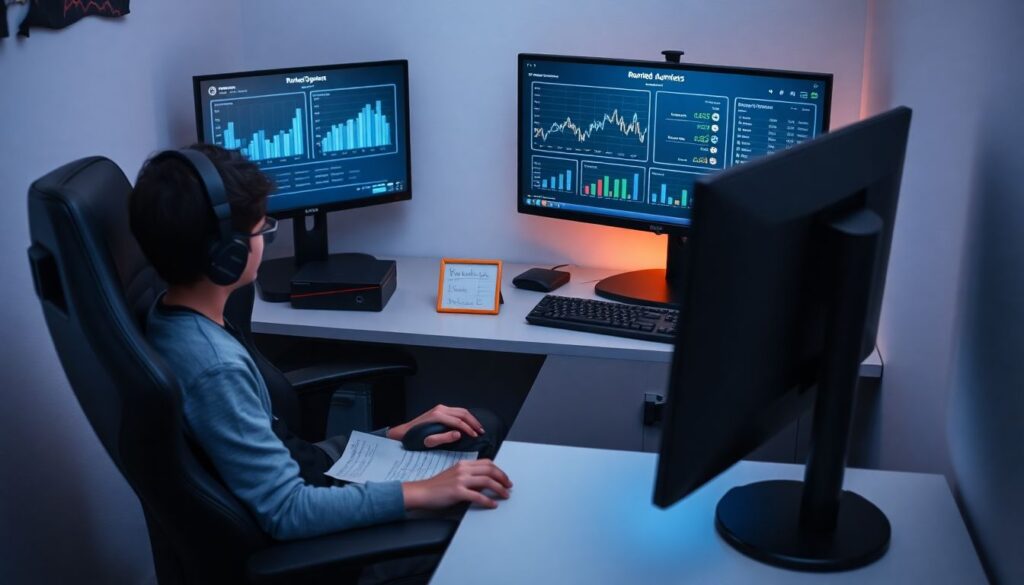
If you are just starting in ranked or amateur leagues, the best approach is incremental and data‑driven. First, set a realistic budget and split it into tiers: core essentials (chair, monitor, mouse, keyboard, headset), then optional upgrades. Second, track your performance with simple metrics like win rate, aim training scores and subjective fatigue before and after each major hardware change, so you can confirm whether a device actually improves your game. Third, resist the urge to constantly tweak settings; instead, stabilize on a configuration for several weeks and focus on training routines. Finally, pay attention to comfort signals — numbness, tension or back pain are clear indicators that your current setup needs ergonomic adjustments more than new gear. Beginners who cultivate this analytical mindset early on progress faster and save money, because they learn to distinguish between genuine performance upgrades and marketing noise.
- Prioritize consistent, comfortable posture and clear visuals over flashy aesthetics.
- Upgrade step by step, validating each change with in‑game performance and comfort feedback.
- Use pro setups as references, but adapt choices to your own body, desk space and main games.
13. Bringing it all together: a modern, balanced esports setup
When you assemble everything — a well‑tuned ergonomic chair, a high‑refresh, low‑latency monitor, a calibrated keyboard and mouse, and a precise audio system — your esports setup becomes a coherent performance platform rather than a random pile of parts. In 2026, the cutting edge is less about one magical device and more about synergy: posture supports precision, clear visuals support fast decision‑making, accurate audio supports map awareness, and sensible gadgets refine comfort and consistency. The key is to think like an athlete: your gear should reduce friction between your intentions and your in‑game actions, protect your body over long seasons, and allow you to train at high intensity without burning out. With a structured approach, even a modest budget can deliver a setup that genuinely makes a difference in competitive play.