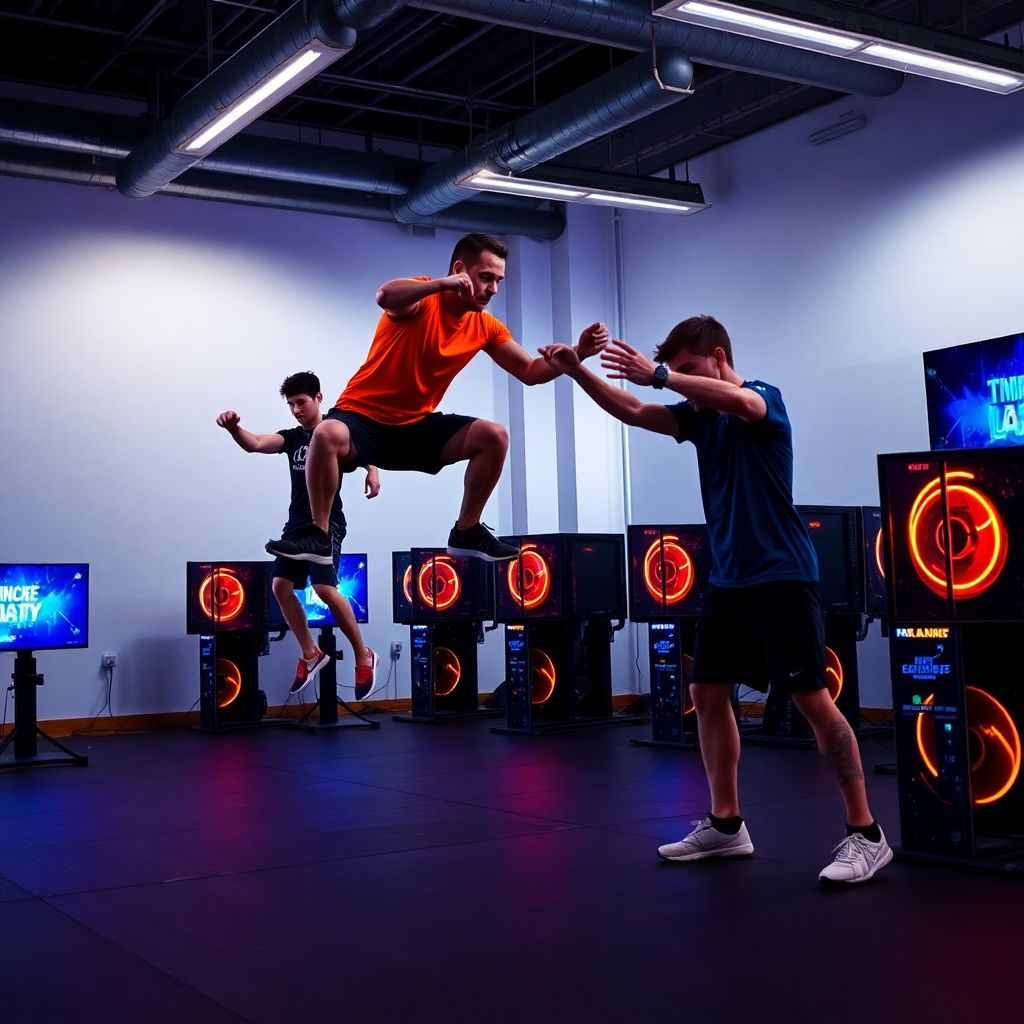
High-intensity training for e-sports players means short, focused sessions that improve reaction time, stamina, posture and injury resilience without leaving you too sore to play. Combine dynamic warm-ups, plyometrics, visual-motor drills and interval conditioning, 3-5 times per week, progressing volume and speed slowly while monitoring pain, sleep and in-game performance.
Primary Goals of High-Intensity eSports Conditioning
- Boost reaction time and click-to-decision speed without increasing injury risk.
- Increase physical resistance so you can maintain focus during long, competitive matches.
- Stabilize posture to reduce neck, shoulder and lower-back pain during long sessions.
- Improve cardiovascular fitness with minimal time investment and no impact on fine motor control.
- Build a simple, repeatable programa de condicionamento físico para atletas de e-sports you can run year-round.
- Integrate exercícios físicos para melhorar reflexo em gamers directly with aim, tracking and decision drills.
Warm-up and Neuromuscular Prep Specific to Gamers
This warm-up is for healthy gamers (16+) without acute pain, dizziness, heart or uncontrolled blood-pressure problems. If you have cardiac, joint, or neurological issues, are pregnant, or feel pain, stop and see a doctor before any treino de alta intensidade para jogadores de e-sports.
Do this sequence before high-intensity blocks or ranked queues longer than 45-60 minutes, 5-10 minutes total:
- Joint mobility (2-3 minutes)
- Neck circles: 5 slow circles each direction.
- Shoulder rolls: 10 forward + 10 backward.
- Wrist circles and finger opening/closing: 20-30 seconds each.
- Dynamic upper-body activation (2-3 minutes)
- Arm swings (cross-body and overhead): 15-20 each direction.
- Scapular wall slides or band pull-aparts: 2×12-15.
- Light push-up variation (wall or incline): 2×8-10, easy pace.
- Lower-body and posture prep (2-3 minutes)
- Bodyweight squats: 2×10-12, comfortable depth.
- Hip hinges (good-morning pattern, hands on hips): 2×10-12.
- Calf raises: 2×12-15.
- Neural ramp-up for reactions (1-2 minutes)
- Fast hand switches on desk or thighs: 3×10 seconds, 20-30 seconds rest.
- Simple phone timer drill: tap screen as soon as color changes, 10-15 repetitions.
Intensity should be light to moderate: you feel warmer and more alert, but breathing only slightly faster and still able to talk comfortably.
Plyometrics, Reactive Drills and Reflex Acceleration
These exercises safely develop explosiveness and reflexes useful for games, especially when combined with visual cues. They require minimal equipment, ideal if you do not have a personal trainer especializado em e-sports e games competitivos.
| Exercise | Main purpose | Base sets & reps / duration | Progression idea |
|---|---|---|---|
| Low pogo jumps (in place) | Elastic ankle stiffness, quick ground contact | 3×10-15 jumps, 30-45 s rest | Increase to 4×20; then add lateral direction changes |
| Skater hops (side-to-side) | Lateral power, balance and knee control | 3×8-10 each side | Reach further, then add quick reaction to audio or visual cue |
| Drop squat to stick | Fast eccentric control, landing mechanics | 3×6-8, 45-60 s rest | Decrease pause time, then add low jump out of the squat |
| Wall reaction ball toss | Hand-eye coordination, reaction speed | 3×20-30 s, 30-60 s rest | Stand further from wall, alternate hands, then add call-out colors/numbers |
| Light ladder or cone footwork | Foot speed, rhythm, brain-body link | 4-6 patterns × 15-20 s | Shorten contact time, then perform patterns reacting to random call-outs |
Guidelines for safe implementation 2-3× per week:
- Warm up first and use flat shoes or train barefoot on a safe surface.
- Keep total jump contacts modest at first (60-80 per session) and increase gradually.
- Focus on quiet landings: knees tracking over toes, no pain in joints or lower back.
- Stop immediately if you feel sharp pain, dizziness, or unusual joint clicking.
High-Intensity Interval Protocols for In-Game Endurance
This section shows como aumentar resistência física para jogos competitivos using simple, safe intervals that complement fast mouse and keyboard work.
- Choose your primary conditioning mode
Pick low-skill, low-impact options so fatigue does not harm your hands: brisk walking, indoor cycling, elliptical, or shadow boxing without impact.
- Beginners: fast walking or easy stationary bike.
- Intermediate: light jog, cycling, or mixed bodyweight circuits (squats, marches, light rows).
- Set your intensity zones safely
Use a simple talk test: during hard intervals you breathe fast but can still say short phrases; during easy periods you can talk full sentences.
- If you feel chest pain, strong dizziness, or unusual shortness of breath, stop and seek medical help.
- Start with a basic 1:2 work-to-rest interval
Do this 2-3× per week on non-consecutive days.
- Warm-up: 5 minutes very easy pace.
- Block: 8-10 rounds of 20 seconds hard, 40 seconds very easy.
- Cool-down: 5 minutes easy pace + light stretching.
- Progress to a 1:1 game-endurance protocol
After 1-2 weeks without issues, increase density gradually.
- Warm-up: 5 minutes.
- Block: 10-12 rounds of 30 seconds hard, 30 seconds easy.
- Cool-down: 5-8 minutes easy, focus on nasal breathing.
- Add e-sports-specific finisher intervals
Once or twice per week, finish with short, intense neuromuscular blocks tied to gaming posture.
- 20 seconds wall sit + 20 seconds fast finger taps on desk, 6-8 rounds, 40-60 seconds rest.
- 20 seconds high-knee marching in place + 20 seconds fast aim/target drill in-game or in an aim trainer, 4-6 rounds.
- Monitor fatigue and adjust weekly load
Keep total HIIT time (hard segments) between about 8-15 minutes per session for most intermediates.
- If sleep, mood or aim quality drops for 3+ days, cut intervals by half for a week.
- Never add more than ~10-20% extra intervals from one week to the next.
Fast-Track Interval Mode (4-6 Week Sprint)
- Weeks 1-2: 2 sessions/week, 8×20 s hard / 40 s easy + 5-10 minutes cool-down.
- Weeks 3-4: 3 sessions/week, 10×30 s hard / 30 s easy, one lighter session at 6-8 rounds.
- Week 5: maintain 3 sessions, but all at 8-10 rounds; focus on quality breathing and relaxed shoulders.
- Week 6 (optional deload): 2 sessions only, 6×20 s / 40 s, prioritize sleep and mobility work.
Strength, Core and Postural Work to Prevent Fatigue
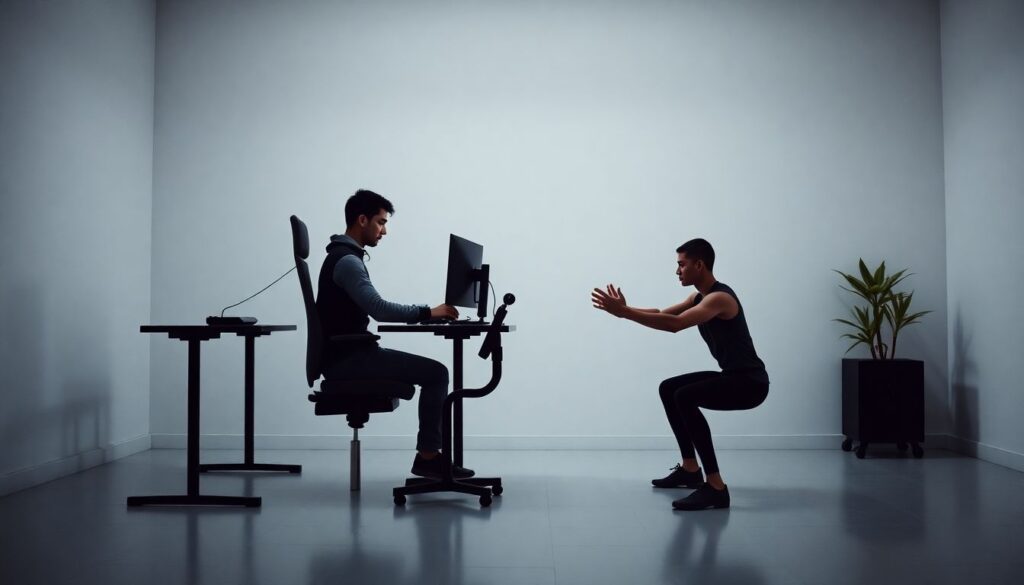
Use this checklist 2-3× per week to make sure your strength work actually supports long e-sports sessions and does not create extra fatigue.
- You can hold a neutral, tall seated posture for 10 minutes without neck or lower-back discomfort.
- You can perform 2-3 sets of 8-12 bodyweight squats with good knee tracking and no pain.
- You can perform 2-3 sets of 8-12 hip hinges (or Romanian deadlift with light weight) feeling muscles, not joints.
- You can hold a front plank for 30-45 seconds with steady breathing, 2-3 times.
- You can perform 2-3 sets of 12-15 band pull-aparts or rows without shoulder pinching.
- After a strength session, hands and forearms feel awake, not shaky or numb, within 30-60 minutes.
- Gaming posture during long queues is more upright, with shoulders relaxed and head not projected forward.
- DOMS (muscle soreness) stays mild to moderate and does not reduce fine motor control for mouse/keyboard.
- Across 4-6 weeks you notice less wrist, forearm or upper-back tightness at the end of competitive play.
Visual-Motor and Cognitive Load Training for Faster Decision-Making
These drills transfer especially well to games and should sit near the start of physical sessions or right before aim training. To get the most out of them, avoid these common mistakes:
- Doing visual-motor drills only when already very tired, which trains slow reactions instead of fast ones.
- Using too much complexity too soon (too many colors, numbers, or stimuli at once).
- Turning every drill into maximal effort, instead of staying just below failure with clean reactions.
- Skipping simple baselines (basic reaction tests) before introducing dual-task or cognitive-load layers.
- Ignoring posture: leaning forward with a tense neck and shrugged shoulders during all drills.
- Practicing only straight-ahead vision and never training peripheral awareness.
- Focusing only on flashy tools and apps, instead of consistent, repeatable routines.
- Not pairing drills with actual game scenarios or aim trainers, so progress does not carry into ranked play.
- Doing these drills every single day without at least 1-2 lighter days for recovery.
For most gamers 3-5 short blocks per week (5-10 minutes each) is enough to see benefits without mental burnout.
Periodization, Recovery and Nutritional Support for Tournaments
Even a simple 4-6 week microcycle benefits from planning and from a deload week before major events. Here are practical structures and alternatives depending on your schedule and support.
Standard 4-6 Week Microcycle for Competitive Gamers
- Weeks 1-2 (Build base): 3 training days/week
- Day A: warm-up + strength/posture + short intervals (8×20 s/40 s).
- Day B: warm-up + plyometrics + visual-motor drills.
- Day C: warm-up + strength/posture + light intervals or brisk 20-25 min walk.
- Weeks 3-4 (Intensify): 3-4 training days/week
- Increase intervals to 10-12 rounds; add 1 extra set to key strength moves.
- Keep at least 1 lighter day with only mobility + visual-motor work.
- Week 5 (Peak for scrims/tournaments):
- Maintain intensity, slightly reduce total volume (fewer sets and rounds).
- Do more game-specific intervals (wall sit + finger taps, aim sprints).
- Week 6 (Optional deload before big event):
- Cut strength and interval volume by ~40-50%.
- Focus on sleep, light mobility, easy walks and short visual-motor refreshers.
Alternative 1: Low-Volume Plan for Busy Schedules
- 2 sessions/week, 30-40 minutes each.
- Each session: 8-10 minute warm-up → 15-20 minute mixed strength + intervals circuit → 5-10 minutes visual-motor drills.
- Best if you are in exam periods or near major projects but still want maintenance.
Alternative 2: Technique-First Block with Minimal Conditioning
- Use when your mechanics or in-game role is changing and you need more time in VOD review and aim training.
- 1-2 strength/posture sessions/week (20-30 minutes) + walking on off-days.
- Very short (5-minute) reaction/visual drills before or after ranked queues.
Alternative 3: Guided Support with a Specialized Coach
- If available, work with a personal trainer especializado em e-sports e games competitivos for movement screening, load management and injury prevention.
- Ideal after injuries, when changing games, or during high-stress tournament seasons.
Typical Performance Problems and Rapid Solutions
I lose aim precision after 1-2 intense HIIT sessions. What should I change?
Reduce interval volume by half for 1-2 weeks and avoid hard sessions on days with important matches. Keep conditioning low-impact and schedule it at least 6-8 hours away from ranked play.
My wrists and forearms feel more tired since adding strength work. Is that normal?
Mild fatigue is normal, but burning pain, numbness or tingling is not. Remove or reduce gripping exercises, keep reps moderate, and prioritize posture, back and core work over heavy forearm loading.
How often should I train to improve both reflex and endurance?
Most intermediates progress well with 3-4 physical sessions per week. Combine 2 mixed strength + interval days with 1-2 shorter sessions focused on mobility and visual-motor drills.
Can I replace running with cycling or walking intervals?
Yes. Any mode that raises heart rate safely works: brisk walking, cycling, elliptical or low-impact step-ups. Choose the option that feels best for your joints and does not trigger pain.
How long before a tournament should I stop hard conditioning?
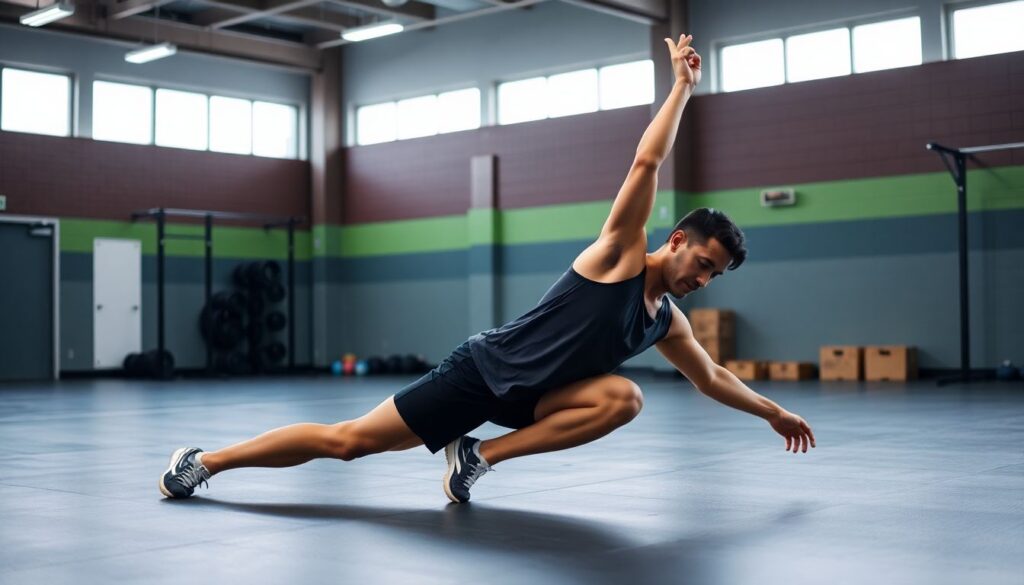
In the final 5-7 days before a key event, reduce intensity and volume. Keep light mobility, posture and short visual-motor drills, but avoid new exercises and heavy leg work that cause soreness.
Do I need equipment to see real benefits from this program?
No. You can build a solid programa de condicionamento físico para atletas de e-sports with bodyweight, walking, simple intervals and basic reaction drills. Bands, a light dumbbell, a bike or an aim trainer are useful but optional.
How do I know if my high-intensity work is too much?
If you see persistent drops in sleep quality, motivation, in-game decision speed or mood for more than 3-4 days, you are likely doing too much. Take a lighter week or use the deload structure described above.