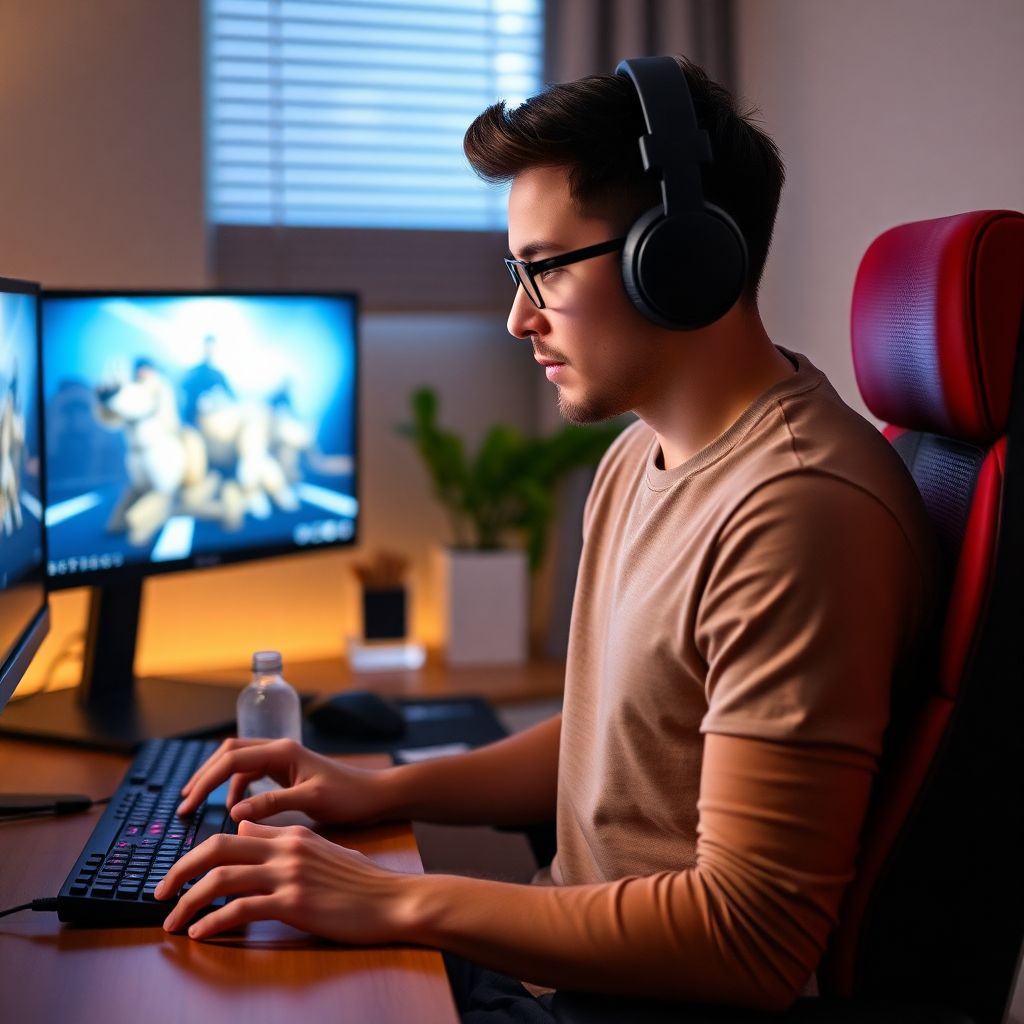
An e-sports-inspired health and fitness plan combines short, low‑impact workouts, posture and mobility drills, simple nutrition rules, and strict sleep hygiene around play sessions. The aim is safer, more consistent performance, not bodybuilding. Start with a basic health check, then layer micro‑workouts, ergonomic fixes, and recovery habits over 2-4 weeks.
Core principles for e-sports-style training
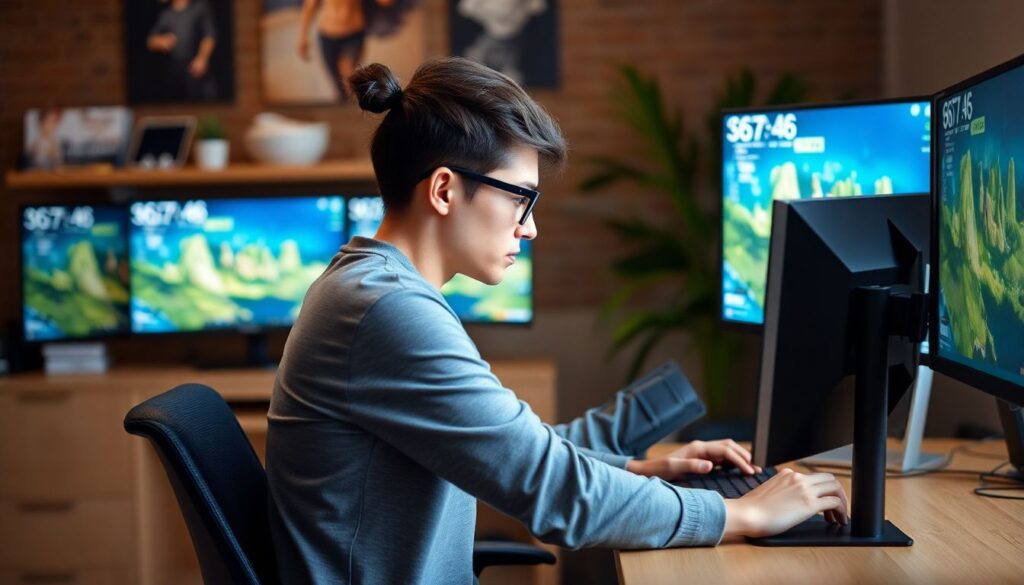
- Prioritize joint safety and posture over intensity; avoid pain, numbness or dizziness and stop if they appear.
- Use short, frequent micro‑workouts instead of long, exhausting sessions, especially on scrim or ranked days.
- Anchor habits to game routines: warm up before queue, mobility in breaks, cooldown after the last match.
- Track simple metrics: sitting time, daily steps, sleep hours, wrist/neck discomfort, reaction time tests.
- Adapt load to the competition calendar with lighter weeks before tournaments and heavier work in off‑season.
- Keep equipment minimal: chair, desk, water bottle, resistance band, mat, plus optional light weights.
Assessing the gamer’s physical and cognitive baseline
This framework works for most healthy adults and teens who play games regularly, from casual players to those following a treino de e-sports para condicionamento físico. It is not a replacement for medical care. Anyone with heart, joint, neurological, or serious mental health conditions should get medical clearance first.
Before deciding exactly como montar treinamento de saúde e fitness para gamers, run a quick self‑assessment over one week:
- Health red flags (stop and see a doctor) – Chest pain, unexplained shortness of breath, fainting, uncontrolled blood pressure, recent serious injury or surgery, or persistent pain when doing basic movements like squats or walking. If any show up, pause the plan and seek professional guidance.
- Gaming and sitting load – Log for 3-7 days:
- Average hours of gaming per day and longest continuous block without standing.
- Other sitting time (study, work, mobile).
- Use this to estimate when you can insert 3-10 minute active breaks.
- Simple physical benchmarks – Without forcing:
- How long you can hold a comfortable plank (max 60 seconds target for now).
- How many controlled body‑weight squats you can do without knee pain (stop if it hurts).
- Whether you can raise arms overhead without back or shoulder pain.
- Pain and discomfort map – Note 0-10 discomfort at start and end of a long session for:
- Neck, upper back, lower back.
- Wrists, fingers, forearms.
- Eyes (burning, headaches).
- Basic cognitive snapshot – Once per day, outside of tilt:
- Run a free online reaction time or aim trainer test, record your score.
- Rate perceived focus during ranked games from 1-5.
- Log sleep duration and wake‑up time.
This baseline will guide how aggressive or conservative your programa de exercícios para jogadores de e-sports should be in the first 2-4 weeks.
Designing micro-workouts for prolonged play sessions
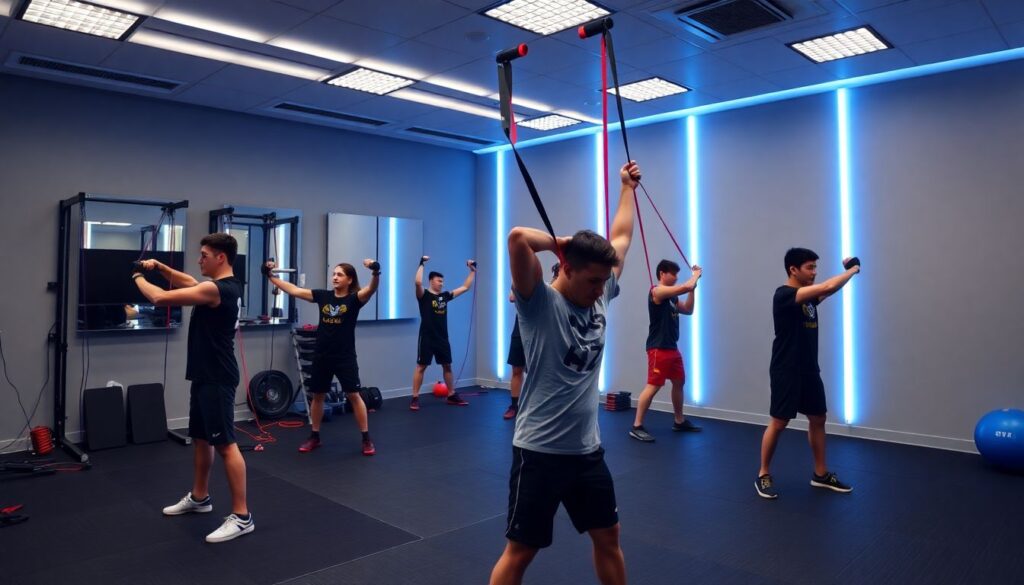
The goal is to build a plano de treino físico para jogadores profissionais de games that fits tight schedules and minimizes injury risk. Think in three blocks: pre‑game warm‑up, in‑session mobility breaks, and post‑game cooldown plus light conditioning. Most exercises use bodyweight and a resistance band.
Core tools and setup
- Stable chair with back support and an adjustable desk or keyboard tray.
- Resistance band (light to medium), floor mat or non‑slip rug, light dumbbells or filled water bottles (optional).
- Timer app or phone alarms every 45-60 minutes of gaming.
- Water bottle within arm’s reach and, ideally, a small space next to the setup for standing drills.
Pre‑game (5-8 minutes, before ranked or scrims)
- Neck and shoulder reset – 2-3 minutes of gentle neck tilts, slow head turns, and shoulder rolls.
- Wrist and finger prep – Open/close hands, wrist circles, light finger stretches; avoid aggressive bending.
- Posture activation – 1 set of 10-15 body‑weight squats and 20-30 seconds of wall push‑ups or incline push‑ups.
In‑session mobility (3-5 minutes every 45-60 minutes)
- Stand up, walk in the room, rotate shoulders and hips.
- Do 10-15 calf raises and 10 chair‑assisted squats.
- Finish with 30 seconds of gentle forearm stretching.
Post‑session conditioning (10-15 minutes, at least 3x/week)
- Day A – Core and posture: Planks, bird‑dogs, resistance band pull‑aparts, glute bridges.
- Day B – Legs and cardio: Squats or lunges, step‑ups on a low step, low‑impact jumping jacks or marching in place.
- Day C – Upper body and grip: Wall or incline push‑ups, band rows, gentle farmer’s carry with light weights.
If you want a more personalized plano de treino físico para jogadores profissionais de games or consultoria de treinamento fitness para gamers e e-sports, you can share this structure with a certified trainer so they adjust volume and difficulty safely.
Nutrition and hydration tailored to esports demands
This section gives a practical, low‑risk sequence to align food and fluids with gaming and training. It focuses on stable energy, hydration, and easy choices, not strict dieting.
- Set an eating schedule around your play blocks – Aim for regular meals instead of long fasting while gaming.
- Plan a main meal 1.5-3 hours before intense play, and a lighter snack 30-60 minutes before queue.
- Avoid very heavy, greasy meals immediately before ranked or competition; they can cause sleepiness or stomach discomfort.
- Build simple plates with stable energy – For main meals, combine:
- A source of protein (beans, eggs, fish, chicken, tofu, lean meats).
- A source of slow carbohydrates (rice, oats, whole‑grain bread, potatoes, beans).
- Some vegetables or fruit for fiber and micronutrients.
- Use small amounts of healthy fats (olive oil, nuts, seeds, avocado).
- Use gamer‑friendly snacks instead of junk grazing – Prepare options you can eat in 5 minutes between matches.
- Fruit, yogurt, small sandwiches, nuts or seeds, cut carrots or cucumbers.
- Limit ultra‑processed snacks that combine a lot of sugar and fat, especially late at night.
- Hydrate with a clear, simple rule – Keep a bottle at your desk and sip regularly.
- Drink a few gulps before you start, during each queue, and in every break.
- Prefer water; unsweetened tea is fine. Reserve energy drinks and sodas for occasional use, not as the main fluid.
- Time caffeine strategically and safely – Use it as a focus tool, not a constant drip.
- Avoid mixing multiple high‑caffeine products (coffee plus strong energy drinks) in a short period.
- Do not use caffeine to mask exhaustion; if you feel wired but mentally slow, reduce intake and increase sleep.
- Stop caffeine several hours before planned sleep to protect recovery.
- Prepare match‑day and tournament routines – For long sessions or LAN events:
- Pack stable snacks and a water bottle so you are not forced into random fast food.
- Eat familiar foods; do not experiment with extreme diets, new supplements, or very spicy meals on important days.
- If you feel nauseous, dizzy, or extremely weak, stop playing and seek medical help if symptoms persist.
Fast-track mode: 2-4 week starter routine
- Choose three reliable meals and three easy snacks you like and can afford; repeat them often to reduce decision fatigue.
- Place a full water bottle on your desk before each session and commit to finishing it by session end.
- Limit high‑sugar drinks and large fast‑food orders to set days, not every gaming night.
- Keep caffeine to one or two planned moments per day, avoiding late‑night use.
- Review weekly: note energy, focus, and sleep quality, then adjust meal timing and portions slightly, not drastically.
Ergonomics, mobility and targeted injury prevention
Use this checklist weekly to verify that your setup and habits are moving in the right direction. It aims to reduce common gamer issues like wrist pain, neck stiffness, and low back discomfort.
- Chair height allows feet flat on the floor (or on a stable support), with knees roughly at hip height, without cutting circulation.
- Monitor top is at or slightly below eye level, so you can look straight ahead without tilting your head sharply up or down.
- Keyboard and mouse are close enough that elbows stay near the body and shoulders remain relaxed, not lifted toward the ears.
- Forearms can rest lightly on the desk or armrests, without strong pressure on the wrists or bending them sharply.
- You stand up at least once every 45-60 minutes for 3-5 minutes of walking and light mobility on most gaming days.
- You perform 5-10 minutes of daily mobility for neck, shoulders, wrists, and hips, even on non‑gaming days.
- Any wrist, elbow, or shoulder discomfort decreases or stays low week to week; it does not increase in intensity or start earlier in the session.
- You can rotate your head left and right, tilt it gently, and raise arms overhead without sharp pain or strong restriction.
- Core exercises (planks, bird‑dogs, glute bridges) feel challenging but controlled; they do not cause back pain during or after.
- If pain, numbness, tingling, or weakness appear or worsen, you stop aggravating activities and seek medical or physiotherapy advice.
Cognitive resilience: sleep, recovery and stress strategies
Mental performance depends heavily on sleep, emotional regulation, and stress management. These are typical mistakes that reduce the effect of a structured treino de e-sports para condicionamento físico and can increase burnout risk.
- Playing or scrimming until complete exhaustion several days in a row instead of protecting a minimum nightly sleep window.
- Using caffeine, energy drinks, or sugary snacks late at night to push through fatigue, then struggling to fall asleep.
- Skipping short cooldown routines after intense games, going directly from high arousal to trying to sleep.
- Ignoring tilt and emotional spikes, forcing more matches when focus and decision‑making are clearly dropping.
- Never scheduling real off‑days or lighter days, assuming that constant grind is always better for improvement.
- Keeping screens and bright lights close to the face until the moment of sleep with no wind‑down period.
- Comparing performance constantly with others on social media instead of tracking your own simple metrics.
- Not communicating with team or coach when stress, anxiety, or mood symptoms start to affect daily life.
- Trying complex breathing or meditation apps only once, then abandoning them because they do not immediately feel natural.
- Neglecting non‑gaming social contact, movement outdoors, and hobbies that help reset the nervous system.
Periodization and progression for tournament peaks
Different competitive calendars and lifestyles demand different ways to progress your programa de exercícios para jogadores de e-sports. Here are safe alternatives and when they fit best.
- Simple 4‑week ramp‑up – Ideal for players preparing for a local tournament or a ranked push.
- Weeks 1-2: focus on daily mobility, pre‑game warm‑ups, and 10-15 minutes of post‑game conditioning 3x/week.
- Weeks 3-4: add one more conditioning day or a bit more volume, but reduce intensity slightly in the final days before the event.
- Maintenance template for long seasons – Suits teams or streamers with year‑round schedules.
- Two weekly conditioning sessions, daily micro‑breaks during streams, and consistent sleep and nutrition routines.
- Volume stays moderate; priority is staying pain‑free and mentally sharp rather than pushing max strength.
- Off‑season rebuild – Useful after a split or busy tournament period.
- Gradually increase overall physical work: longer walks, more strength sets, varied movements.
- Use this period to experiment with different exercises and refine ergonomics before heavy competition returns.
- Guided coaching model – When budget allows, combine this guide with consultoria de treinamento fitness para gamers e e-sports.
- A qualified coach uses your baseline and schedule to personalize progressions and coordinate with in‑game practice plans.
- This is recommended for high‑level competitors or players with previous injuries.
Common implementation challenges and quick fixes
How can I start if I already feel very deconditioned?
Begin with posture, breathing, and standing breaks only. Once you tolerate standing and walking every hour without excessive fatigue, add 5‑minute mobility blocks, then basic strength exercises with very low volume.
How do I avoid overtraining when adding workouts to long practice days?
Keep micro‑workouts short and easy on heavy scrim days, and reserve slightly longer conditioning sessions for lighter practice or off‑days. Monitor sleep quality, mood, and joint pain; if they worsen, reduce volume for a week.
What if I do not have any equipment at home?
Use body‑weight options like squats, wall push‑ups, planks, bridges, and step‑ups on stairs. A towel can replace some band work. Focus on consistency and good form before considering extra load.
How long until I notice benefits in game performance?
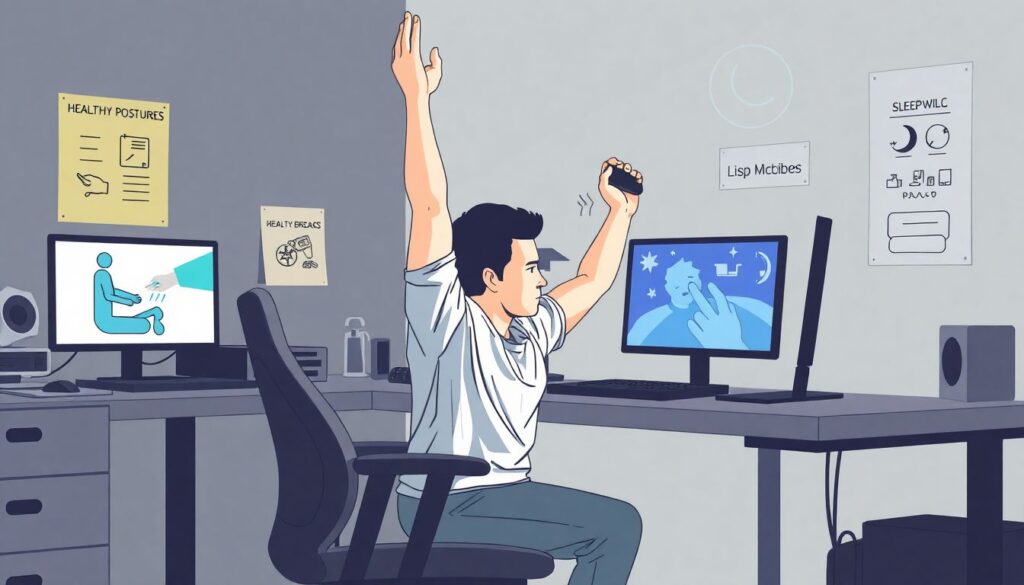
Many players report better comfort and focus within a few weeks of consistent breaks, posture work, and sleep improvements. Deeper physical changes take longer, but the key is maintaining small habits daily rather than chasing fast transformations.
How should I adjust training during exams, work crunch, or busy seasons?
Switch to maintenance: shorter sessions, more emphasis on sleep, and strict micro‑breaks. Once the busy period ends, gradually reintroduce higher‑volume conditioning instead of jumping straight to hard workouts.
What if pain increases after starting the exercises?
Stop the specific movement that aggravates symptoms and reduce overall intensity. If pain, numbness, or weakness persists or worsens, seek evaluation from a healthcare professional before restarting the program.
Can younger teens follow the same plan?
They can follow the general structure of breaks, mobility, and light strength, but intensity and volume should be lower. Parents or guardians should supervise and consult a pediatric professional for any medical concerns.