
Why AI isn’t “killing” scouting – it’s upgrading it
For a long time, scouting depended on notebooks, gut feeling and endless trips to obscure stadiums. That world is still alive, but now it’s layered with data, video and algorithms. When people talk about inteligência artificial no scouting de futebol, they often imagine robots picking players by themselves. Reality is way more interesting: AI is becoming an extra pair of eyes and a second brain for scouts, not a replacement. It helps filter information, highlight patterns and cut noise so humans can focus on what they do best: reading context, personality and potential under pressure.
From “he looks good” to measurable patterns
Traditionally, two scouts could watch the same game and leave with completely different opinions. AI doesn’t remove subjectivity, but it forces clubs to translate vague impressions into measurable criteria. Instead of “good positioning”, you start tracking how often a defender closes space, adjusts his body angle or anticipates a pass. Instead of “creative midfielder”, you look at progressive passes, reception under pressure and actions that break lines. With análise de desempenho de jogadores com inteligência artificial, you compare a player’s decision patterns in dozens of similar situations, not only in a highlight reel or a single match.
What AI sees that humans usually miss
Modern tracking systems follow every movement: speed, accelerations, distances between players, tactical distances between lines. AI models are trained to scan this ocean of data and detect recurring behaviours. For example, a winger who rarely receives the ball might still be crucial because his runs constantly drag defenders out of position. On video, that’s easy to underestimate; algorithms can flag these invisible contributions. The same happens with defensive midfielders who rarely appear in highlight clips but are always perfectly placed to cut passing lanes or slow transitions.
Practical ways scouts can plug into AI today
You don’t need a huge budget to start. Even modest clubs or agencies can use simple services that combine video and basic data. A realistic first step is to define what your club actually values and then configure your tools to search for those traits. If you like aggressive full-backs, you look at overlaps, sprints into the final third and pressing intensity. If your style is more conservative, you adjust the filters. AI helps by automatically tagging events in matches and creating short clips: all duels, all progressive passes, all defensive actions in the box. That shortens analysis time dramatically and lets scouts focus on context and nuance.
- Use event data filters to shortlist players who match your tactical profile.
- Rely on AI-generated clips to review specific situations (pressing, crossing, 1v1s).
- Cross-check data with live or video scouting to confirm if numbers match reality.
- Update your criteria regularly as your team’s style evolves.
AI in transfer analysis: reducing expensive mistakes

Buying players has always been risky. Form, injuries, adaptation, personality – there are many unknowns. A software de análise de transferências com IA can’t predict the future, but it can show scenarios and probabilities that were invisible before. Instead of asking “Is this striker good?”, you start asking, “How do players with a similar profile usually perform and age in our league, with our style of play?” That small shift in questions is where AI brings real value: it compares ranges of outcomes based on thousands of previous careers, not only intuition and reputation.
Projecting performance, not just current form
One of the strongest AI use cases is projecting whether a player will adapt to a new context. A winger dominating in a weaker league might look spectacular, but what happens when he has less space and faces stronger defenders? AI models combine metrics like physical intensity, decision speed, technical consistency and previous transitions from similar leagues. You get probabilities: chance of maintaining output, declining or even improving. That doesn’t decide the transfer alone, but it gives the sporting director a clear risk profile rather than a yes/no opinion.
Smart salary and resale planning
AI can also support contract and wage decisions. By matching the player’s profile with age curves and historical salary data, clubs estimate when performance is likely to peak and decline. That helps define contract length, bonuses and exit clauses without relying purely on negotiation instincts. If the model shows that similar players tend to drop physically after 30, you might offer a shorter deal but with performance-based incentives. Over multiple seasons, this discipline drastically reduces the number of heavy, unmovable contracts on the books.
- Use AI to compare the target to dozens of similar players at the same age.
- Simulate how the player’s stats could look in your league and tactical setup.
- Estimate resale potential by looking at historical transfer paths of similar profiles.
- Combine financial projections (wages, fees, bonuses) with performance scenarios.
Talent detection: going beyond obvious markets
The biggest revolution is happening in how clubs discover players in the first place. A plataforma de detecção de talentos com inteligência artificial can monitor thousands of competitions at once: youth leagues, regional tournaments, lower divisions and even amateur data where available. That breaks the old model where scouting was concentrated in traditional “hot” markets. Now, if a 17-year-old centre-back in a secondary league is winning aerial duels at an elite rate and showing unusual composure under pressure, he can be flagged even if no big club has set foot in that stadium yet.
Early signals of future potential
The hardest thing in scouting is seeing what a player can become, not only what he is today. AI helps by identifying early indicators that historically correlate with high ceilings. For example: volume of actions under pressure, decision quality in tight spaces, adaptability to different roles, and physical development curves. If a young midfielder consistently chooses high-value passes instead of safe sideways options, that’s a powerful sign. AI systems can spot that pattern across hundreds of matches, while human scouts might only see a couple of games and miss the trend.
Reducing bias in youth scouting
Human scouts, even the best ones, carry unconscious biases: favouring taller players, more mature physiques or kids from academies with bigger reputations. Ferramentas de recrutamento de jogadores baseadas em IA don’t care about jersey colour or social background; they evaluate behaviours and outputs. That doesn’t mean you ignore context, but it gives a counterweight to bias. If the algorithm keeps flagging a smaller striker because his movement, timing and finishing numbers are elite for his age group, that’s a clear signal to send someone to watch him live instead of discarding him for physical reasons alone.
- Track players longitudinally rather than relying on one or two tournaments.
- Pay attention to development speed, not just current level.
- Use AI alerts as a “radar” and then confirm on the ground with traditional scouting.
- Document why players are rejected to refine your models over time.
How to actually implement AI in a scouting department
Buying expensive tools without a process is a waste. The first step is deciding what questions you want AI to help answer. Do you need to widen your geographic reach? Cut transfer mistakes? Improve contract decisions? Once that’s clear, you choose tools that integrate with your existing workflows. For smaller clubs, even a simple inteligência artificial no scouting de futebol solution combined with video platforms can be a huge upgrade. Bigger clubs can build custom models that reflect their playing style, academy philosophy and budget constraints.
Blending analysts and scouts, not replacing them
The clubs getting the most from AI are those that build mixed teams: data analysts, video scouts and field scouts working together. Analysts translate football questions into data queries. Scouts bring nuance that data alone can’t catch: leadership, resilience, habits, family environment. The communication loop is constant: analysts flag unusual profiles, scouts confirm or reject with live impressions, and then the models are adjusted. Over time, everyone learns: the analyst understands football better, the scout becomes more comfortable with numbers and the organisation raises its hit rate.
Setting rules for decision-making
AI works best when the club has clear decision rules. For example, you might define that no transfer above a certain fee goes through without (1) positive AI-based projection, (2) at least two independent scout reports and (3) medical and psychological clearance. These rules don’t hand control to the algorithm; they create a structure where every tool has a role. When a transfer fails, you can trace what went wrong: did the model overrate the player? Did scouts ignore the signals? Did context change after the signing? That feedback is gold for improving the whole system.
Common mistakes and how to avoid them
One frequent error is treating AI like a magic box: you feed numbers and expect perfect answers. In reality, models reflect the data and assumptions behind them. If your database overrepresents certain leagues or ages, your conclusions will be skewed. Another trap is falling in love with “clean” dashboards while ignoring messy realities like injuries, family adaptation or language barriers. AI can’t see everything, and pretending it can leads to overconfidence. The goal is humble use: let the system highlight what deserves attention, not dictate your choices blindly.
Practical checkpoints to keep AI grounded
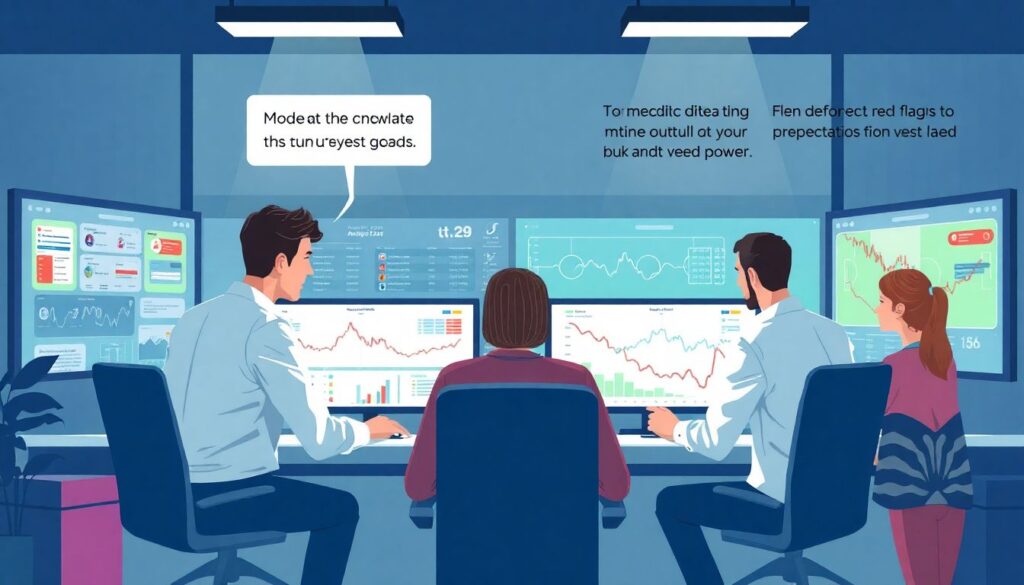
There are some simple safeguards any club can adopt. Always ask where the data comes from and how complete it is for your target leagues. Compare model outputs with intuitive expectations; big discrepancies require investigation, not blind trust. Keep human veto power for clear red flags: bad attitude, repeated disciplinary issues or behaviour that doesn’t fit the dressing room. Remember that models need time to learn: use them as decision support, gradually increasing their influence as you validate their predictions over multiple seasons.
What’s next: more context, less hype
In the near future, AI tools will become more contextual. Instead of generic player ratings, systems will say, “This full-back is ideal for high-pressing teams with wide overloads but will struggle in deep blocks.” Language models will help compress long reports, generate customised summaries for coaches and sporting directors, and even simulate how a player might fit into specific match plans. As models get better at integrating tracking data, video and text reports, the focus will move from raw stats to complete stories about a player’s behaviour, potential and risk.
How clubs and agents can prepare
For clubs, the priority is building a culture where data and human observation complement each other. That means training coaches and scouts to ask better questions and understand basic metrics, not turning them into programmers. For agents, understanding how clubs use AI becomes a competitive edge: presenting players with clear, data-backed narratives rather than vague promises. Whoever learns to speak both languages – football and data – will stay ahead. AI won’t decide titles alone, but it will quietly shape who gets discovered, signed and developed over the next decade.