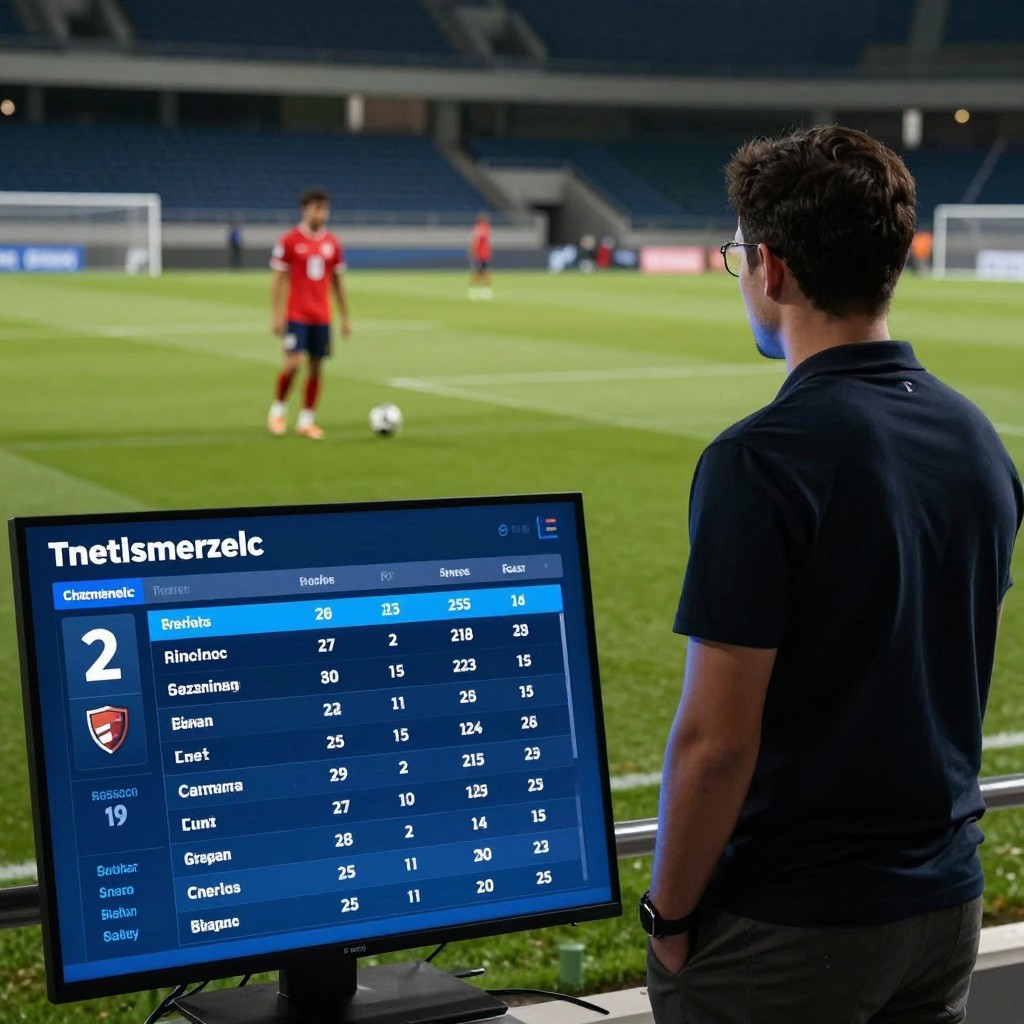
Algorithms can estimate whether a football transfer is likely to succeed by combining player performance, role fit, availability, cost, and historical comparisons. They cannot know the future: their output is a conditional probability, not a guarantee. Use a forecast to prioritize recruitment checks, then validate its assumptions with scouts, medical staff, and financial decision-makers.
The Signals That Make a Transfer Look Viable
- Define success in advance, such as playing time, contribution, or resale value.
- Use comparable performance data, adjusted for league, position, and minutes played.
- Check whether the player’s role and style match the team’s needs.
- Include transfer fee, wages, contract terms, and availability where reliable data exists.
- Treat the probability of a transfer succeeding as a guide for investigation, not an automatic decision.
Define What Success Means Before Building a Transfer Forecast
This approach suits recruitment teams, analysts, and informed fans who want to compare candidates consistently. It is useful when a club has a defined need and enough trustworthy data to assess players against it.
Do not build a forecast when the outcome is undefined, the data is too incomplete to interpret, or the decision depends on information the model cannot observe, such as a player’s private preferences. Forecasting can support a view of the mercado da bola hoje, but it cannot verify rumors de transferências de futebol or establish that a deal will happen.
Choose a measurable outcome and a time horizon before selecting data. For example, a club might assess whether a signing is likely to meet a specific playing-time or performance target during an agreed period. Keep sporting success, financial value, and the likelihood of completing the deal as separate questions.
Assemble the Data Behind a Player’s Transfer Readiness
Gather information that is relevant to the chosen outcome and comparable across candidates. Record the source, date, definition, and any known limitations for each field.
- Performance: minutes played, position, role, and role-relevant contributions, with competition and team context.
- Availability: appearances and known absences, without treating incomplete medical information as a confirmed risk assessment.
- Fit: the team’s tactical requirements and a documented assessment of how the player’s role may translate.
- Deal conditions: publicly available fee estimates, wages, contract situation, and registration constraints, marked clearly when uncertain.
- Comparable cases: past signings with similar positions, competition levels, roles, and costs.
- Tools and access: a spreadsheet or analysis environment, consistent player and competition records, and permission to use any licensed data.
Keep measured data separate from scouting judgments. For example, a recorded passing metric is not the same as an analyst’s assessment of whether a player can adapt to a new tactical role.
Turn Performance, Fit, and Cost Into Predictive Features
Before calculating a probability de transferência de jogadores, prepare the dataset and define what the score is intended to predict. Use this checklist to reduce avoidable errors:
- Write down the outcome and time horizon.
- Choose metrics that connect to that outcome.
- Check that candidate and historical data use consistent definitions.
- Mark estimates, missing fields, and subjective assessments.
- Set the target. Define the result the model should estimate, such as reaching a stated performance threshold after joining. Keep transfer completion probability separate from on-field outcome probability.
- Choose comparable features. Select a small set of relevant inputs, such as role-adjusted performance, playing time, age band, availability, and deal cost. Include only fields you can explain and obtain consistently.
- Normalize comparisons. Account for differences in minutes, position, competition, and team context where the data allows. Avoid comparing raw totals as though every player had the same opportunity and role.
- Encode team fit carefully. Convert tactical requirements into explicit criteria, such as role responsibilities or pressing demands. Treat scout ratings as judgments with a stated rubric, not as objective measurements.
- Choose and train a suitable model. Use a transparent baseline first, such as a simple scoring model or a basic statistical classifier, before testing more complex algorithms no futebol. Train on historical cases and keep later cases aside for evaluation.
- Calibrate and interpret the score. Check whether cases assigned similar probabilities have similar observed outcomes in the evaluation data. Present the estimate alongside its assumptions and data limitations rather than as a definitive verdict.
Compare the Forecast With Similar Past Transfers
Review the forecast against historical cases that resemble the candidate and the club’s circumstances. Use this checklist:
- Are comparisons similar in position, role, and competition context?
- Were playing time and performance measured using the same definitions?
- Does the historical sample include both successful and unsuccessful outcomes?
- Were the comparison cases known at the time of the original decision, or does the analysis accidentally use later information?
- Does the model perform reasonably on cases held out from training?
- Are predicted probabilities consistent with observed outcomes across probability ranges?
- Do results change substantially when a few comparison cases are removed?
Use a failed comparison to investigate the model, not to retrofit the definition of success after seeing the result. Document any change and evaluate it on separate cases.
Stress-Test the Model Against Missing Data and Changing Conditions
Common errors can make a forecast appear more certain than the evidence supports:
- Filling missing values with assumptions without recording them.
- Mixing estimated fees with confirmed figures as if they had equal reliability.
- Using performance totals without accounting for minutes or role.
- Training and evaluating on overlapping cases, which can make results look better than they are.
- Including information that would not have been available when the forecast was supposedly made.
- Assuming a player’s role, coach, or team system will remain unchanged.
- Treating rumors de transferências de futebol as verified deal information.
- Presenting a probability as certainty or as a substitute for medical, legal, or financial review.
Test how the score changes when uncertain inputs vary within plausible bounds. If small changes produce a large shift, flag the forecast as sensitive and request more evidence before acting.
Use Probability Scores to Guide the Next Recruitment Checks
A forecast is most useful when it directs the next investigation. Choose a response that matches the evidence and the decision at hand:
- Use a shortlist score when comparing several candidates against the same role and consistent data. It helps prioritize review, not automatically rank players for signing.
- Use scenario analysis when the result depends on uncertain conditions such as role, playing time, or deal cost. Compare clearly stated scenarios rather than hiding assumptions inside one score.
- Use expert review without a model when data is sparse, the role is unusual, or the decision relies heavily on context that is difficult to quantify.
- Pause for verification when key contract, availability, or registration details are uncertain. Gather reliable information before interpreting a probability as actionable.
Record the forecast, its data date, assumptions, and the checks still required. This makes later review more informative and prevents an estimate from being mistaken for a confirmed transfer outcome.
Practical Questions About Forecasting Transfer Outcomes
Can an algorithm predict whether a transfer will happen?
It can estimate the likelihood of a deal only if it is designed and trained for that outcome using relevant historical information. A model predicting on-field performance does not, by itself, predict whether negotiations will succeed.
What is the difference between transfer probability and transfer success?
Transfer probability concerns whether a move is completed. Transfer success concerns what happens after the move, such as meeting a defined sporting or financial target.
Can public data provide a reliable forecast?
Public data can support comparisons, but it may omit important details or use inconsistent definitions. Record its limitations and avoid presenting the result as more certain than the underlying information.
Should a club use one score to rank every player?
Only when the candidates are being assessed for comparable roles and the score reflects the same objective. Different positions or recruitment needs may require distinct criteria.
How should scouts use a model’s probability?
Use it to identify candidates and assumptions that deserve further review. Scouts should verify role fit and context that the available data cannot establish.
When should a forecast be rejected?
Do not rely on it when the target is unclear, key inputs are unreliable, or evaluation reveals unstable results. In those cases, collect better information or use a documented expert assessment.