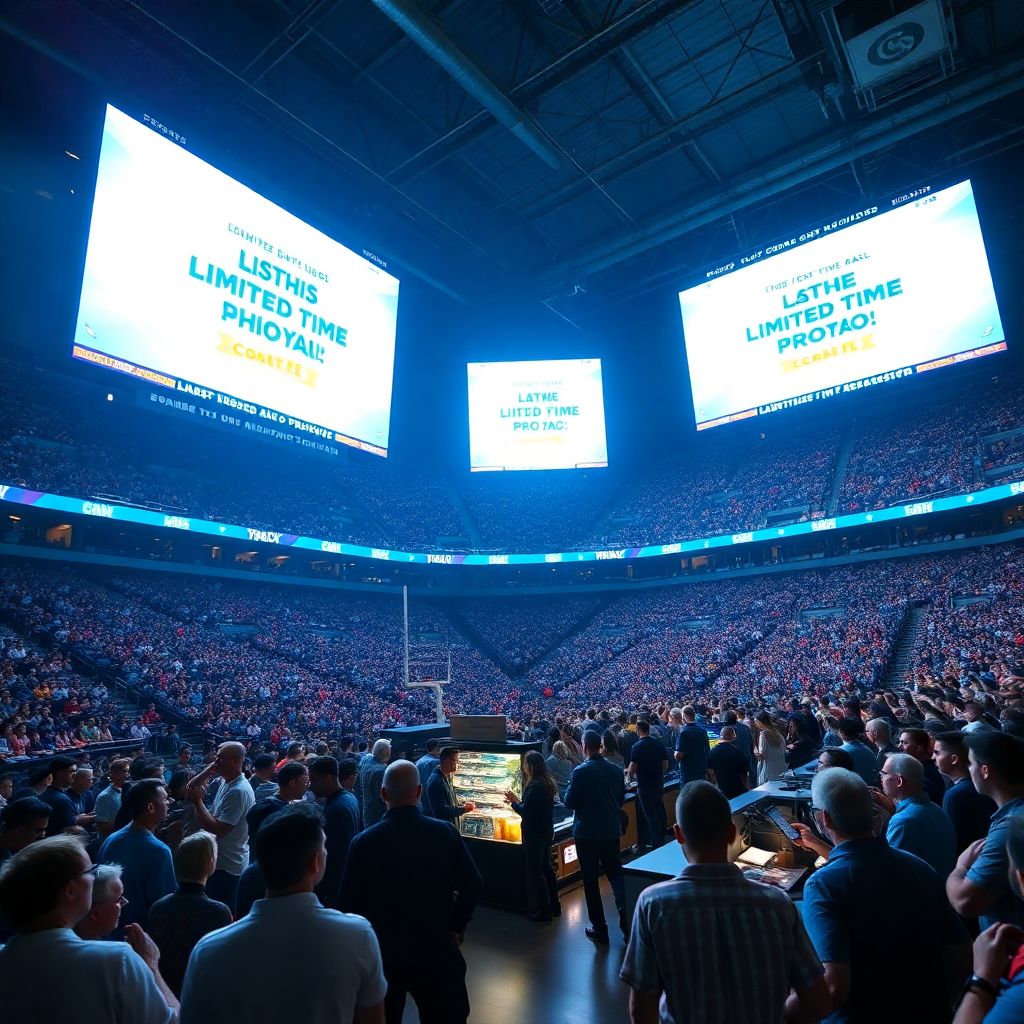
Flash promotions at live sports events work best when they are short, clearly communicated, and operationally simple. Define a single goal (sell out a product, drive app downloads, increase F&B ticket), use real-time channels (screens, app, POS), prepare staff, and monitor inventory and queues continuously to avoid service breakdowns and dissatisfied fans.
Core strategies for capitalizing on flash promotions at live sports events
- Limit each flash promotion to a simple offer and a short time window to trigger immediate action without confusing fans.
- Connect mobile, POS, and venue screens so every channel shows the same rules, timing, and remaining stock.
- Set guardrails for minimum margin, stock thresholds, and maximum discount before the event starts.
- Rehearse fulfillment with staff and run a dry run during a low-risk match or smaller crowd event.
- Track real-time KPIs like redemption volume, revenue per minute, and queue time to decide whether to extend or stop the promo.
- Log learnings by block of seats, time of match, and channel to improve the next campaign in the same stadium or arena.
Crafting urgency: offer formats and messaging that trigger immediate action
Prioritize simple, high-visibility offers that can be explained in one sentence and redeemed in one step. This is the safest way to use promoções relâmpago eventos esportivos without overwhelming operations or fans.
- Who should use flash promotions
- Clubs, arenas, and concessionaires with stable basic operations (POS working, staff trained, clear menu/pricing).
- Brands activating sponsorships that want a measurable spike in engagement or sales during the game.
- Ticketing and merchandising teams looking for como aumentar vendas em eventos esportivos com promoções in under 30 minutes.
- Offer formats that create urgency safely
- Time-bound: “Next 10 minutes only” for a specific product, with clear start and end announcements.
- Quantity-bound: “First 300 redemptions” with live countdown if your tools support it.
- Event-triggered: “If our team scores this half, 20% off combo X for 15 minutes.”
- Messaging guidelines that avoid confusion
- Use one core benefit, one condition, one deadline; if you need more, split into two different promos.
- Repeat the same wording on screens, app, PA system, and staff scripts.
- Always mention where to redeem (exact stands, blocks, or app section) and accepted payment methods.
- When you should NOT run flash promotions
- On opening day of a new stadium or when you are rolling out a new POS system.
- When staffing is below plan or there are known logistics bottlenecks (e.g., only one kitchen in operation).
- During high-risk matches where safety and policing already demand maximum attention.
- Illustrative case example
- For estratégias de marketing para promoções em jogos de futebol in Brazil, a club tests one simple halftime beer+snack combo in a low-profile match, then scales to derby games only after service times and queue impact are validated.
Real-time delivery channels: mobile, POS, and proximity marketing integration
Before launching, map every touchpoint you can control and decide what each one will do: inform, remind, or allow redemption. This avoids misalignment between marketing promises and what staff or systems can actually deliver.
Essential tools and access you will need
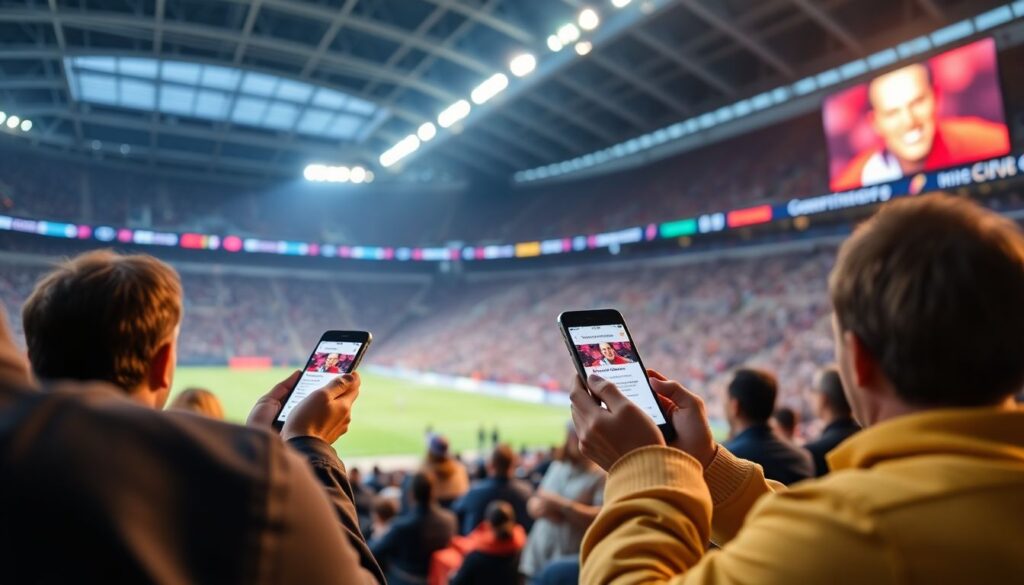
- Mobile and digital channels
- Club or arena app with push notification capability and basic segmentation (e.g., by ticket type or stand).
- SMS or WhatsApp Business lists, if permitted by consent and local regulations.
- Integration or manual workflow to publish banners in the app home or event screen.
- POS and payments infrastructure
- Ability to create promo SKUs or discount rules that can be toggled on/off by time or code.
- Dashboards showing real-time sales by product and by stand during the match.
- Staff logins or roles configured so only supervisors can change prices or activate special discounts.
- Proximity and in-venue media
- Scoreboard or ribbon boards for mass messages like “Flash promo now – Block B and C only.”
- Digital menu boards that can switch to promo visuals in seconds.
- Optional beacons or Wi‑Fi-based location triggers as ferramentas para criar promoções relâmpago em eventos ao vivo, if your tech stack supports them.
- Basic integration and coordination requirements
- A single control point (war room, operations desk) that approves and triggers promos.
- Simple runbooks describing how to synchronize the message across channels within 1-3 minutes.
- Slack/Teams or radio channels connecting marketing, IT, operations, and security during the event.
- Sample channel assignment checklist
- Announcement: PA system + scoreboard + app push.
- Details: app banner + QR at stands + staff verbal script.
- Redemption: POS discount rule + unique promo SKU + optional QR code scanner.
Dynamic pricing and inventory controls for sudden demand surges
Set clear pricing and stock rules in advance, then execute them through a small number of pre-approved scenarios. This minimizes the risk of margin erosion, stockouts, or staff improvising discounts on the fly.
Risk and limitation checks before you touch prices
- Confirm you are allowed by local regulation and contracts to change prices during the event.
- Avoid dynamic pricing for essential items like bottled water in hot conditions, to prevent reputational damage.
- Define a hard minimum margin per product below which no discount is allowed.
- Ensure inventory data is reliable enough; if not, limit promos to items with abundant visible stock.
- Plan a clear exit rule (time or stock) to automatically end the promo even if demand is still high.
- Define pricing guardrails and promo scenarios
Set minimum and maximum discount levels per category (e.g., snacks, soft drinks, merch) and no-go items. Pre-build 3-5 scenarios such as “slow start,” “rain game,” or “derby momentum” with matching discount levels.- Write down each scenario: trigger, products, discount, duration, and affected stands.
- Validate scenarios with finance and legal before the season starts.
- Map inventory and choose eligible products
Select items with robust stock, fast preparation, and low operational complexity. Exclude items with long prep times or fragile supply.- Confirm warehouse and on-stand stock at least twice: pre‑match and right before halftime.
- Tag promo-eligible SKUs in the POS so they can be tracked separately.
- Configure POS rules and test before gates open
Create time-based or code-based discount rules linked to your scenarios. Run test transactions to make sure taxes, receipts, and accounting entries behave as expected.- Test both activation and deactivation of the rule on at least two terminals.
- Print a sample receipt and verify the promo description is clear for customers.
- Set real-time monitoring thresholds
Decide in advance at what sales, margin, or queue length you will modify or stop a promo. The goal is to protect revenue while keeping the experience smooth.- Track items sold per minute, average ticket value, and stock remaining by stand.
- Assign one person to watch these dashboards continuously during active promos.
- Launch, communicate, and adjust carefully
When a trigger is met, activate the relevant scenario, then communicate simultaneously via screens, app, and staff. Make only one adjustment at a time (e.g., extend duration or change discount, not both) to avoid confusion.- Log the exact start and end times of each promo for later analysis.
- Inform staff immediately when the promo ends to prevent unauthorized extensions.
- Close out, reconcile, and document learnings
After the event, reconcile POS sales, stock movements, and any manual interventions. Document which scenarios worked, where bottlenecks appeared, and what needs to change before the next match.- Flag anomalies such as negative stock or unusual refund spikes for investigation.
- Refine discount levels or product selection based on actual response and margins.
Operations blueprint: staffing, fulfillment flow, and crowd management
Translate every promotion into an operational blueprint that covers people, product flow, and crowd movement. Use this checklist during planning and again 30-60 minutes before kickoff.
- Responsible lead for flash promotions is named, briefed, and reachable via radio or phone.
- Each stand involved knows which promo they participate in, with printed quick-reference sheets.
- Extra staff are allocated to the highest-risk stands (usually those closest to organized supporter groups).
- Queue design (barriers, entry/exit points) has been reviewed to prevent blocking corridors or exits.
- Kitchen or prep area capacity can handle at least the expected spike without extending waiting time excessively.
- Stock runners know which products to prioritize and which routes to take to avoid fan congestion.
- Security teams are informed about time windows and locations of the strongest promos.
- Contingency plan exists to pause or cancel promotions quickly if safety or system issues emerge.
- Waste and returns process is clear so staff do not give away extra items “to avoid throwing them out.”
- Post-match debrief with operations, security, and marketing is scheduled and has a simple agenda.
Measurement in motion: real-time KPIs, A/B checks, and post-event attribution
Define a small, stable set of metrics and experiments, then repeat them across matches. This is the safest way to learn what really works without overcomplicating reporting.
- Tracking only vanity metrics such as impressions on screens or push opens without linking them to actual redemptions or revenue.
- Changing multiple variables at once (product, price, channel, and timing) so you cannot tell what drove the result.
- Ignoring baseline performance and declaring success without comparing to similar matches or previous seasons.
- Running unsafe A/B tests that overload one stand or block without checking capacity constraints first.
- Not segmenting by seat area or ticket type, which hides the fact that some sections respond much better than others.
- Failing to capture operational incidents like POS downtime or stockouts, which distort KPI interpretation.
- Overreacting to a single match (especially derbies or finals) instead of looking at patterns across multiple events.
- Skipping post-event attribution for sponsor activations, making it harder to prove the value of flash promotions to partners.
Risk controls: fraud prevention, regulatory compliance, and brand protection
Build a conservative control layer around your campaigns so that even if a promo goes viral, it stays within legal, financial, and reputational limits. This is especially important when applying melhores práticas para promoções relâmpago em estádios e arenas with large, emotional crowds.
- Alternative 1: Limited-scope pilots
- Run flash promotions in a single stand, one side of the stadium, or a specific ticket category before scaling venue-wide.
- Suitable when you are still validating tech, staff readiness, or fan response.
- Alternative 2: Fixed discounts with capped redemptions
- Instead of dynamic pricing, use a fixed percentage off with a hard cap on redemptions or total budget.
- Works well when sponsor funding is limited or internal risk tolerance is low.
- Reduces exposure to errors in inventory data or POS configuration.
- Alternative 3: Non-price incentives
- Offer early-access lanes, seat upgrades, or digital collectibles instead of aggressive price cuts.
- Useful when regulations restrict alcohol or price promos, or when you want to protect premium brand positioning.
- Alternative 4: Pre-announced, schedule-based promos
- Publish promo times and conditions before match day, avoiding spur-of-the-moment decisions.
- Best for heavily regulated categories where you must document and pre-approve all offers.
Typical operator concerns and concise clarifications
How can I avoid overwhelming my staff during flash promotions?
Limit promos to a few simple offers and only some stands at a time, and brief staff with printed cheat sheets. Run a small pilot match to observe bottlenecks before expanding to the whole stadium.
What if the POS or network goes down in the middle of a promotion?
Prepare a manual fallback rule, such as honoring the promo price for queued customers only and recording transactions on paper. Communicate clearly when the promo is paused and avoid making new promises until systems stabilize.
How do I handle fans who miss the promo window and complain?
Use consistent messaging about strict time or stock limits, and empower supervisors to grant small, controlled exceptions. The key is to be firm on rules while offering polite alternatives for dissatisfied fans.
Are in-game dynamic price changes always allowed legally?
No, some jurisdictions or contracts restrict how and when you can change prices, especially for essentials or alcohol. Consult legal counsel and local regulations, and document all approved promo rules before using them.
How can I protect against staff abuse or fraud during promotions?
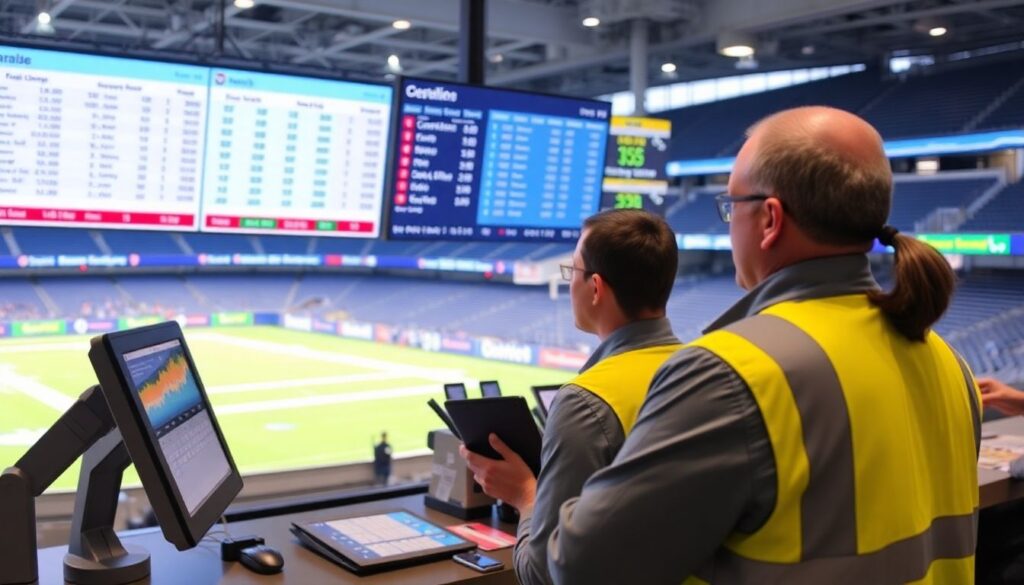
Restrict the ability to change prices or apply manual discounts to supervisors, and audit promo transactions after each match. Compare sales patterns between stands and investigate anomalies like unusually high manual overrides.
Do flash promotions risk damaging the club or sponsor brand?
They can, if overused or perceived as unfair. Use them sparingly, with clear conditions and a focus on fan value, and coordinate closely with brand teams to align tone and visual identity.
What is the safest way to start with flash promotions in a new venue?
Start with one or two low-complexity offers in a single area during a lower-demand match. Measure operational impact, collect feedback from staff and fans, and only then scale to more products or zones.