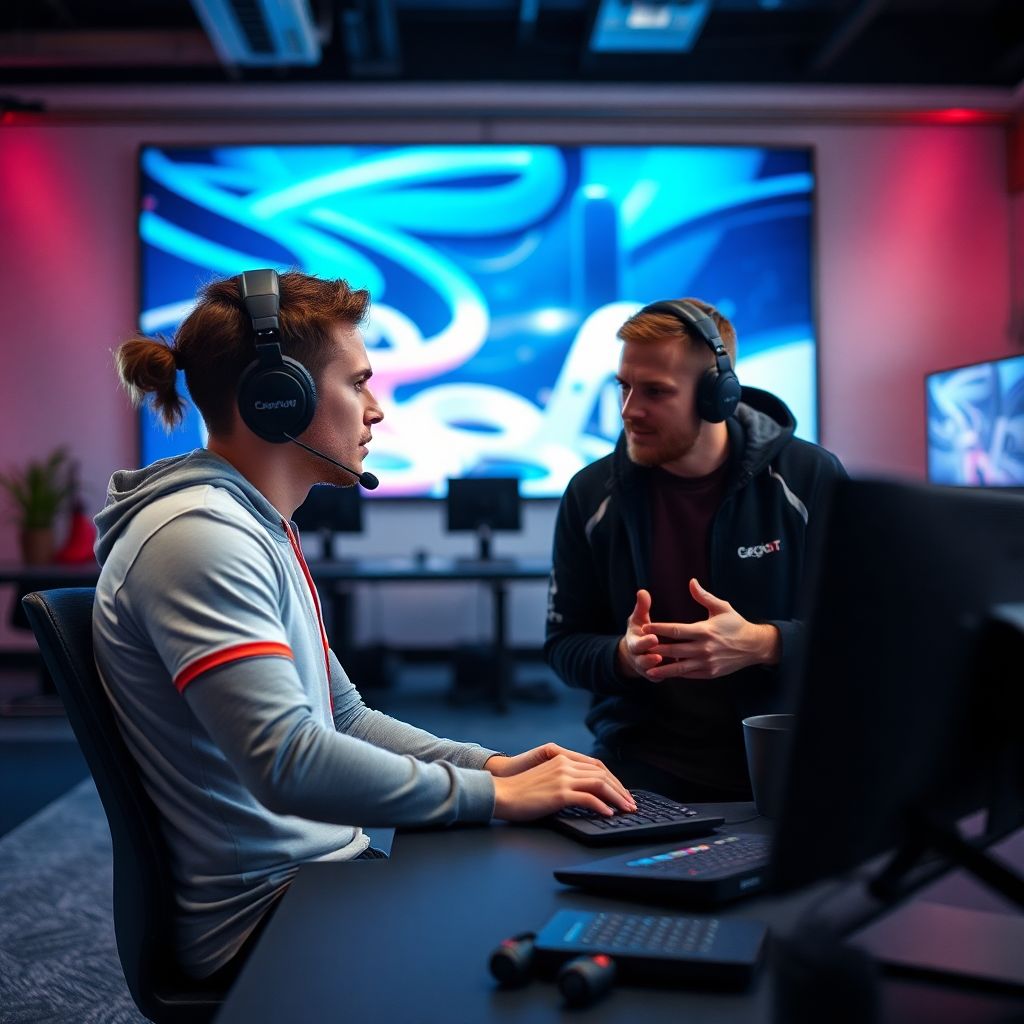
A champion mindset is built through repeatable routines: clear goals, controlled arousal, vivid visualization, resilience to setbacks, and clean communication with coaches and teammates. You can train these skills in short, daily blocks of 10-15 minutes, combining structured drills, reflection, and match-like simulations for both sports and e-sports.
Core Mental Skills for Peak Performance
- Consistent pre-competition routine that reliably switches you into performance mode.
- Goal hierarchy that links big results to daily process and effort objectives.
- Arousal control: ability to calm down or activate on command within a few breaths.
- Visualization habits that mentally rehearse pressure scenarios before they happen.
- Resilience protocols for tilt, mistakes, bad calls, and momentum swings.
- Simple, shared communication cues with staff and teammates for clarity under stress.
- Regular review cycles that connect training data, emotions, and tactical decisions.
Pre-Competition Routines: Building Reliable Triggers

Pre-competition routines are short, repeatable sequences you perform before every match, scrim, or key training block. They align body and mind so that your performance does not depend on mood or external conditions. For athletes in Brazil, this sits at the core of any treinamento mental para atletas de alta performance.
This approach suits:
- Professional and semi-pro players (traditional sports and e-sports) with fixed competition times.
- Amateur players who compete regularly in ranked queues, tournaments, or leagues.
- Coaches building a programa de mindset campeão para atletas e gamers for their teams.
Keep routines simple, stable, and short (5-15 minutes), combining three layers:
- Body activation: light dynamic warm-up, mobility, or hand/wrist exercises for gamers.
- Mental alignment: 1-3 minutes of breathing plus quick goal review.
- Focus trigger: a specific action (e.g., putting on headphones, touching the court line, adjusting mouse grip) paired with a cue phrase.
Example 10-minute pre-competition routine:
- 2 minutes: walk, joint circles, or light mobility (or hand/wrist rolls at the desk).
- 3 minutes: slow nasal breathing (4 in / 4 hold / 6 out) while silently repeating: “Calm body, sharp decisions.”
- 3 minutes: read your 3 process goals and 2 key tactical reminders for this match.
- 2 minutes: do one short visualization (first play, first duel, or first rotation) ending with your trigger action and cue word.
When not to use or when to modify:
- If you are injured or feeling unwell: remove intense physical elements; keep only gentle movement and breathing.
- If competition timing is highly unpredictable (e.g., ranked queues): use a “mini-routine” of 2-4 minutes that you can launch as soon as queue pops.
- If you notice obsessive perfectionism around the routine: keep the structure, but accept small variations; the goal is readiness, not ritual worship.
Goal Structuring: From Outcome to Process Objectives
Effective goal structuring converts vague dreams like “become pro” into daily controllable actions. To build this, you need just a notebook or digital notes, basic match data, and honest reflection. This is a core element in any curso de preparação mental para esportes e e-sports.
What you will need:
- Tracking tool: notebook, spreadsheet, or performance app to log sessions, ranked games, scrims, or competitions.
- Key metrics:
- For traditional sports: minutes played, basic stats (e.g., successful passes, unforced errors), perceived effort, and confidence level (1-10).
- For e-sports: role-specific stats (e.g., CS, K/D, damage, objective control), communication quality, tilt events.
- Weekly review slot: 15-20 minutes on a consistent day to analyze your logs.
Build your goal ladder in three levels:
- Outcome goals: long-term, not fully under your control (contract, main roster, rank, title). Write 1-3 max.
- Performance goals: medium-term targets based on numbers or consistent behaviors (e.g., “reduce unforced errors,” “improve first-blood participation,” “top 30% in position statistics”).
- Process goals: daily / per-session actions (e.g., “3 VOD clips reviewed,” “5 minutes of breathing pre-queue,” “clear call on every rotation”).
Simple protocol to link these levels:
- Write one outcome goal you care about in the next season.
- List 3-5 performance indicators that usually predict that outcome for your role or sport.
- For each indicator, assign 1-3 process goals you can execute today, independent of opponent or team.
For example, if your outcome is to join a bigger organization, your performance goals might include consistent scrim ratings and strong mental game. Process goals then include daily mental drills and a weekly session with a coach mental para jogadores profissionais online or local sports psychologist.
Keep goals visible (phone wallpaper, desk note, warm-up book) and adjust monthly, not daily. Consistency beats constant re-writing.
Arousal Control: Breathwork, Activation and Downshift
Arousal control is your ability to shift your state: from sleepy to sharp, or from overhyped to calm. This is essential in tournaments, ranked grinds, and pressure moments, and is a core service in consultoria de psicologia esportiva para pro players.
- Identify your baseline state. Notice your usual pattern before competition: too tense, too low energy, or balanced. Rate energy and tension from 1-10 to guide which technique to use.
- Learn the calming breath (downshift). Use this when anxious, tilted, or over-activated.
- Inhale through the nose for 4 seconds.
- Hold for 2-4 seconds.
- Exhale slowly through the mouth for 6-8 seconds.
- Repeat for 10-15 cycles (about 2-4 minutes).
- Learn the activation breath (upshift). Use this when sleepy, unfocused, or flat.
- Do 2 short inhales through the nose (sniff-sniff), 1 longer exhale through the mouth.
- Keep breaths quick and sharp for 20-40 seconds.
- Stop, feel your body, and repeat only once if needed.
- Add a physical micro-activation. Safe, brief movements raise focus without fatigue:
- Sports: 20-30 seconds of fast footwork, shadow movements, or skipping.
- E-sports: 20-30 seconds of posture reset, shoulder rolls, and fast finger taps on desk or controller.
- Pair breath with a mental cue. Choose a short phrase like “Steady and precise” or “Full focus now.” Repeat it silently during the last 3-5 breaths.
- Build a 3-minute arousal reset. Between maps, sets, or halves, use:
- 1 minute of calming or activation breaths (whichever you need).
- 1 minute of posture correction and small movement.
- 1 minute of cue phrase plus one clear objective for the next segment.
Fast-track mode: 60-90 second reset
- 10-15 calming or activation breaths, depending on whether you feel too hyped or too flat.
- 20-30 seconds of posture reset and quick movement (stand up if possible).
- Repeat your cue phrase 5-10 times while mentally seeing your next play done correctly.
- Commit to one simple focus for the next round: “Play percentage,” “Win info,” or “Clean mechanics.”
Visualization and Mental Rehearsal: Micro‑Simulation Techniques
Visualization is mental training where you rehearse plays, maps, or phases of a match in your mind, using all senses. Micro-simulations are short, focused clips of 20-60 seconds each. They are a staple of any solid treinamento mental para atletas de alta performance and can be easily integrated into a programa de mindset campeão para atletas e gamers.
Use this checklist to verify if your visualization is effective:
- You keep sessions short: 3-5 minutes total, divided into 3-6 micro-scenes, instead of long, blurry movies.
- You visualize from your own eyes (first-person), not like watching yourself on TV, at least for key plays.
- You include real environment details: arena, keyboard, controller, ball, crowd noise, or in-game sounds.
- You rehearse specific situations you actually face: pistol round, penalty kick, clutch, retake, side out, or comeback.
- You feel your body reacting slightly (breath, heart rate, tension) but stay in control and can calm yourself.
- You always end scenes with a successful execution and composed emotional state, even if you include small mistakes inside the scenario.
- You run at least one scene where things go wrong (bad start, early death, missed shot) and you respond calmly and strategically.
- You pair visualization with your pre-competition routine, not randomly; it has a fixed time and place.
- You regularly update scenes according to new maps, metas, tactics, or feedback from staff.
- You finish each session with one sentence: “I’ve already been here,” so that real matches feel familiar, not new.
Resilience Training: Coping with Tilt, Setbacks and Momentum Loss
Resilience is the trained ability to recover fast from mistakes, bad luck, or unfair situations without collapsing mentally. It is central in every consultoria de psicologia esportiva para pro players because even the best athletes and gamers tilt.
Common mistakes that slow down resilience development:
- Confusing emotions with weakness: believing that feeling anger, frustration, or fear means you are not “pro enough,” instead of learning to process these signals.
- All-or-nothing self-talk: going from “I misplayed this” to “I am garbage” after one error or one bad game.
- Attachment to the scoreboard: letting current score or rank fully define your effort and decisions in real time.
- Replaying errors endlessly: mentally looping past mistakes for several rounds or plays instead of resetting after a brief review.
- Lack of reset routines: having no fixed action (breath, phrase, gesture) to mark the end of a mistake and the start of the next play.
- Avoiding responsibility: blaming teammates, referees, ping, or patch notes for everything, which kills learning and control.
- Overtraining as punishment: adding huge extra loads after a bad performance instead of targeted, focused corrections.
- Ignoring sleep and basic recovery: trying to “out-grind” tilt with more ranked matches late at night instead of stopping and resetting the body.
- Zero post-game structure: finishing sessions without a simple debrief (what worked, what didn’t, what to try next).
- Training resilience only in theory: reading or talking about mental toughness but never practicing it in scrims or ranked with clear protocols.
Replace these errors with small, repeatable drills: one-breath resets between rounds, short written debriefs, and practicing comebacks intentionally in training (starting sets or maps from a losing score).
Team and Coach Communication: Mental Cues and Shared Intent
Clean, concise communication supports a champion mindset by reducing confusion and emotional spikes. This matters in traditional teams and in e-sports lines working with a coach mental para jogadores profissionais online or local staff.
Direct mental-performance coaching is ideal, but there are alternative approaches that still build strong communication habits:
- Peer-led cue system. One experienced player leads creation of standard short calls, emotional check-ins, and reset codes (e.g., “New round,” “Calm comms”). Use this when you lack formal staff but have at least one disciplined player.
- Asynchronous remote guidance. Use recorded VOD reviews with mental notes, voice messages, or shared documents to align on language and cues. Works well when you have access to coach mental para jogadores profissionais online but time zones or budgets limit live sessions.
- Hybrid staff structure. Technical coach runs tactics; a remote mental coach runs monthly workshops plus occasional 1:1s. This is common in structured curso de preparação mental para esportes e e-sports programs.
- Self-coaching playbook. When you have no coach, create a simple team handbook:
- 3-5 allowed emotional phrases (“I’m tilted, need a reset after this round”).
- 3-5 banned phrases (blame, sarcasm, personal attacks).
- 2-3 reset protocols (short timeout, breathing, tactical timeout in-game).
Whichever alternative you choose, keep communication rules visible, rehearse them in scrims, and review them after tournaments to refine, just like any other tactic in a serious programa de mindset campeão para atletas e gamers.
Rapid Fixes for Common Performance Blocks
How do I stop shaking or heart racing before a big match?
Use the calming breath protocol: 10-20 slow breaths (4 in / 4 hold / 6-8 out) while relaxing shoulders and jaw. Combine it with a short phrase like “Steady body, clear mind” and focus only on your first action, not the whole match.
What can I do mid-game when I start to tilt?
Between rounds or breaks, stand up if possible, take 5-10 calming breaths, and name what happened in one neutral sentence (“I over-peeked”). Then state one adjustment (“Play safer angle”) and commit to it for the next round only.
How often should I practice mental training each week?
Integrate 10-15 minutes into your normal sessions most days instead of long, rare blocks. For example: 5 minutes of breathing + 5 minutes of visualization before queues or practice, plus a 5-10 minute weekly review of goals and notes.
Can I train a champion mindset without a psychologist or mental coach?
Yes, you can start with simple routines, breathing, and visualization on your own. Still, working with a specialist or joining a structured online program for mental training can speed progress, especially under high pressure or if you struggle with strong emotions.
What should I write in a post-game review?
Keep it simple: 3 things that worked, 3 things that hurt performance, and 1-2 experiments for the next session. Focus on decisions and habits, not just stats or final results, so that every match becomes useful data.
How do I adapt these techniques for a busy schedule?

Use micro-sessions: 2-3 minutes of breathing in transport, 3 minutes of visualization before sleep, and a 5-minute weekly goal check. Short, consistent repetitions are enough to build strong mental habits over time.
Are these methods safe for everyone?
Breathing, light movement, and visualization are generally safe if you are healthy; stop if you feel dizziness or discomfort. If you have medical or mental health conditions, talk to a qualified professional before adding new training routines.