
Data analytics in football uses structured metrics and models to price players, time deals and design smarter contracts. Clubs mix event data, tracking data and financial modeling to translate performance into transfer fees. Even with limited budgets, smaller Brazilian clubs can apply basic spreadsheets and public stats to negotiate better.
Essential insights on how analytics drive transfer fees
- Transfer fees increasingly reflect data-based projections of future performance, not just past highlights or reputation.
- Performance metrics are translated into economic value through benchmarks, aging curves and tactical fit models.
- Predictive analytics guide when to buy or sell, estimating return on investment over the contract horizon.
- Data-driven scouting helps find undervalued players who fit a club’s game model and budget constraints.
- Financial models link amortization, wages, bonuses and resale clauses to quantified sporting and market risks.
- Tracking and wearable data refine assessments of intensity, injury risk and suitability to different leagues.
- Clubs with fewer resources can still use public stats, simple xG models and targeted video to reduce mistakes.
How performance metrics determine player market value
Performance metrics are numbers that describe what a player does on the pitch: actions, efficiency and impact on results. In modern transfer markets, these metrics form the analytical backbone for estimating market value, alongside age, position, contract length and league competitiveness.
Typically a plataforma de análise de desempenho de jogadores de futebol aggregates touch-by-touch event data (passes, shots, pressures, duels) and produces rate stats (per 90 minutes) and impact stats (for example, contribution to expected goals). Clubs then compare a player’s metrics to positional peers in target leagues to see if he sits in bottom, middle or top ranges.
Value modeling often follows a simple idea: higher and more sustainable impact metrics, at a younger age and in a stronger league, justify higher transfer fees and wages. For example, for attackers, a basic valuation skeleton could be: Fee ≈ f(non‑penalty goals + assists per 90, xG, xA, shot quality, pressing intensity, age, years left on contract).
For clubs in Brazil with less budget, full big-data infrastructure is not required. An análise de dados no futebol para scouting de jogadores can start with free or low-cost stats sites, manual coding in spreadsheets and basic rate stats (per 90, possession-adjusted defensive actions). The key is consistency: same definitions, same filters, same peer groups.
- Define core metrics per position (e.g., chance creation for attackers, progression for midfielders, duel success for defenders).
- Normalize stats (per 90, per possession) to compare across players and leagues.
- Benchmark against league medians and top-tier profiles to set realistic value bands.
- Adjust for age, contract length and league strength before translating into fees.
- For low-resource clubs, build simple Excel dashboards instead of costly enterprise tools.
Predictive modeling for transfer timing and return on investment
Predictive modeling in transfers uses historical data to estimate how a player’s performance and market value will evolve and what financial return a club might get from signing or selling him now versus later. It helps answer “when” questions, not only “how good is he today”.
In practice, clubs and agencies use models to estimate future minutes, contribution to team performance, probability of injuries and resale potential. Even a basic spreadsheet model that projects scenarios (best case, base case, worst case) already gives an advantage in como usar data analytics em transferências de jogadores de futebol, particularly in volatile South American markets.
- Define the evaluation horizon
Set how many seasons you want to model (usually equal to planned contract length or until typical peak age for that position). - Project playing time and role
Estimate minutes per season and whether the player is likely to be starter, rotation or backup using age, injury history and tactical fit. - Model performance curves
Use aging curves and past trends to project key metrics (e.g., expected goals, progressive passes, defensive actions) over each season. - Attach financial flows
Link each season’s projection to wages, bonuses, amortized transfer fee and potential performance bonuses from competitions. - Estimate resale scenarios
Define potential exit years, expected fee ranges and probabilities of sale to calculate expected resale value. - Compute expected ROI
Summarize net cash flows: (sporting value + resale income) − (fees + wages + commissions) for each scenario. - Test timing options
Compare “buy now”, “wait one season” and “alternative target” scenarios to choose the best timing for a deal.
- Clarify your decision horizon (contract length and target resale year).
- Build simple scenario sheets (best/base/worst) even if you lack advanced modeling tools.
- Include wages, taxes, bonuses and commissions, not only the transfer fee.
- Compare “buy now” vs “wait” vs “sell now” using projected net cash flows.
- Update models regularly as new performances and market signals arrive.
Data-driven scouting: combining stats, video and context

Data-driven scouting integrates numbers, video analysis and contextual knowledge (tactics, personality, culture) to identify and validate targets. It is not about replacing scouts but about filtering the global market and reducing bias before committing to expensive transfers.
A software de estatísticas esportivas para clubes de futebol or an external provider allows clubs to screen thousands of players using filters: age, position, minutes played, and key metrics like chance creation, ball progression or pressing output. Scouting departments generate shortlists, then use video and in-person assessments to judge decision-making, body orientation, communication and adaptability.
For clubs with limited resources, a lightweight approach is possible: use free data sources, simple rating systems and targeted video samples. Combine this with local knowledge of the Brazilian and South American market to find value where bigger clubs are not looking, using basic ferramentas de big data para análise de mercado da bola only when cost-effective.
- Initial market scan
Use data filters (age, position, minutes, key stats) to cut the global pool into a manageable set of candidates. - Role-specific metric profiling
Construct ideal metric profiles per role (e.g., aggressive high-pressing full-back, deep playmaker) and score players by similarity. - Video verification
Watch sequences that link directly to metrics (pressing clips, progressive passes, box arrivals) to confirm whether numbers reflect repeatable behaviors. - Context and character assessment
Check league style, language, climate, travel demands and personality fit with your dressing room and staff. - Final on-site check
For top targets, live scouting confirms off-ball behaviors, communication and reaction to adversity.
- Use data first to filter and rank, then use video and live scouting to validate.
- Design role-specific metric templates instead of generic “good player” profiles.
- Leverage public stats and shared subscriptions if budgets are tight.
- Always interpret numbers in light of tactics, league style and teammates.
- Document each step so decision-makers see how a shortlist was built.
Financial modeling: amortization, risk and contract design
Financial modeling in transfers translates sporting expectations into structured contracts, balancing risk and reward between buying and selling clubs, agents and players. Amortization spreads the cost of a transfer over the contract life, while clauses and bonuses align incentives with performance and resale prospects.
Well-designed models link projected sporting impact with cost structures: transfer fee, wages, performance bonuses, signing-on fees and future sell-on clauses. This is where como usar data analytics em transferências de jogadores de futebol becomes concrete finance: each extra goal, assist or clean sheet can be connected to prize money, ticket sales and future transfer value.
Advantages of analytical financial modeling
- Better visibility of total cost of ownership across the contract, not only headline fees.
- Capacity to simulate different contract lengths and clause structures before making offers.
- Alignment of bonuses with measurable, objective performance indicators.
- More rational comparison between targets with different fee/wage profiles.
- For smaller clubs, protection through sell-on percentages and appearance-based payments.
Limitations and practical constraints
- Uncertainty in future performance, injuries and macroeconomic shifts.
- Negotiation power imbalances, especially when competing with richer European clubs.
- Data quality issues in lower divisions or emerging markets.
- Overcomplicated models that decision-makers do not understand or trust.
- Regulatory constraints on certain bonus types and third-party involvement.
- Model total deal cost including taxes, commissions and bonuses, not only fees.
- Test multiple contract lengths and clause sets using scenario analysis.
- Choose a few clear, measurable KPIs to tie performance bonuses to.
- Keep models simple enough that executives and coaches can interpret them.
- Prioritize protective clauses (sell-on, appearance triggers) if you are a selling club.
Anatomy of headline deals: analytics behind multimillion transfers
High-profile transfers often look irrational, but many are backed by detailed analytical work. Clubs estimate not only sporting impact but also brand exposure, shirt sales, social media growth and long-term squad planning, especially when targeting stars who can transform both performance and revenues.
Still, several recurring mistakes and myths distort how numbers are used around multimillion deals, particularly when external pressure and political interests enter the process. Understanding these patterns helps clubs with smaller budgets avoid copying the wrong aspects of big transfers and instead apply data in a grounded way.
- Myth: more data automatically means better decisions
Problem: clubs collect massive datasets but lack clear questions or decision frameworks, leading to analysis paralysis.
Reality: a focused set of metrics aligned with a defined game model is more powerful than huge dashboards without context. - Myth: headline fees are purely performance-based
Problem: people assume every big fee reflects superior ability.
Reality: fees also include scarcity, branding, political pressure, agent leverage and timing. Analytics may show overpayment but clubs proceed for off-field reasons. - Myth: analytics can precisely predict future superstars
Problem: expectation that models can “guarantee” hits.
Reality: models estimate probabilities. Many headline deals are probabilistic bets under uncertainty, even with sophisticated ferramentas de big data para análise de mercado da bola. - Error: ignoring tactical and cultural fit
Problem: focusing on metrics in isolation from playing style or environment.
Reality: the same player can look like a bargain or a flop depending on usage, teammates and adaptation support. - Error: underestimating downside risk
Problem: attention on best-case projections and commercial upside.
Reality: injury and underperformance scenarios must be priced into contract design and insurance strategies.
- Clarify which questions analytics must answer before starting any multimillion evaluation.
- Separate pure performance valuation from branding and political considerations.
- Use probabilistic language (ranges and probabilities), not single “magic” numbers.
- Always test tactical fit and adaptation support alongside performance metrics.
- Quantify downside scenarios and include protections in contract clauses.
Operationalizing tracking and wearable data in recruitment
Tracking and wearable data (GPS, accelerometers, heart-rate monitors) measure movement, intensity and physical load. When integrated into recruitment, they help judge whether a player’s physical outputs match the demands of your league and game model, and they refine injury risk assessments.
Even without owning full optical tracking systems, Brazilian clubs can access partial datasets from competitions, partner universities or shared services inside a plataforma de análise de desempenho de jogadores de futebol. Smaller clubs can also collect consistent GPS data in training and simple match reports to build internal physical benchmarks and then compare potential signings to those standards.
Example pseudo-workflow for a high-pressing team evaluating a winger:
- Define target intensity: high-speed runs and total distance per 90 based on current starters.
- Collect candidate data: GPS metrics from matches or estimate via event/tracking providers.
- Compare against benchmarks: check if candidate consistently reaches or exceeds target bands.
- Blend with technical-tactical metrics: pressing actions, ball recoveries, turnovers forced.
- Overlay injury and availability history to see if intensity is sustainable.
- Decide which physical metrics are critical for your style (e.g., high-speed running, accelerations).
- Build internal benchmarks from your own squad before judging external targets.
- Seek partnerships (universities, federations) if you cannot afford full tracking systems.
- Combine physical data with technical and tactical indicators, not as a separate silo.
- Monitor players post-transfer to check if recruitment assumptions were realistic.
Self-audit checklist for data-driven transfer decisions
- Have you defined position-specific metric profiles that match your coach’s game model?
- Do your scouting workflows combine data filters, structured video review and contextual reports?
- Are transfer and wage decisions modeled over the full contract horizon with scenarios?
- Do you use realistic benchmarks and internal baselines instead of copying big-club practices blindly?
- Can decision-makers clearly explain why a target is chosen and what the numbers actually support?
Practical clarifications on analytics in transfer negotiations
How can small Brazilian clubs use data without expensive tools?
Start with public stats, spreadsheets and clear positional profiles. Use simple per‑90 metrics, manual video tagging and shared subscriptions instead of bespoke enterprise systems. Focus on a few leagues and roles to keep workloads realistic and still benefit from structured analysis.
What is the minimum data needed to support a transfer decision?
At least: consistent minutes data, core performance metrics per position, basic physical information and context about league strength. For key signings, complement this with video clips tied to those metrics and a short scenario analysis of cost versus potential resale and sporting impact.
How do analytics and traditional scouting work together in practice?
Analytics narrow the pool and highlight questions; scouts answer those questions through video and live observation. Clubs that integrate both typically start with data-based shortlists, then use qualitative reports to confirm behaviors, mentality and off-ball contributions not visible in numbers alone.
Can data analytics prevent transfer flops completely?
No. Analytics reduce risk and make assumptions explicit but cannot eliminate uncertainty around injuries, adaptation or personal issues. The goal is not perfection; it is to increase the proportion of successful signings and reduce the cost and frequency of major mistakes.
Which roles or positions benefit most from data-driven evaluation?
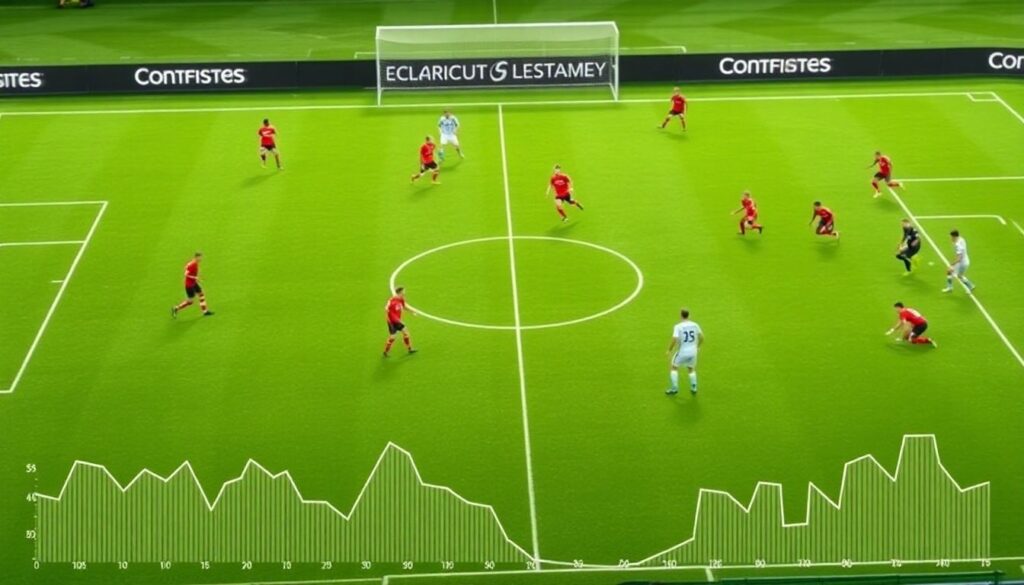
Roles with many repeatable actions, such as wingers, full-backs, central midfielders and center-forwards, often show clearer statistical patterns. For goalkeepers and center-backs, data are still useful but must be interpreted more carefully with video, as context and team tactics heavily shape observed metrics.
How often should transfer-related models and benchmarks be updated?
Benchmarks and projections should be refreshed each season and revisited after major tactical shifts or league changes. For active targets, update key metrics and scenario sheets regularly during the season so negotiation strategies reflect the latest performance and market signals.
Are big data tools essential for effective transfer negotiations?
They help at scale but are not strictly essential. A disciplined process using modest software de estatísticas esportivas para clubes de futebol, clear definitions and consistent tracking already creates an edge. Big systems mainly provide speed, wider coverage and automation when dealing with huge player pools.