
New on‑field reality: VAR, smart balls and live data
Video review, ball‑tracking and biometric monitoring have moved from sci‑fi to standard matchday tools. Modern tecnologia var no futebol combines high‑speed cameras, replay servers and dedicated refereeing booths to audit key episodes within seconds. At the same time, balls with embedded IMUs and UWB chips stream position and acceleration at millisecond resolution, while wearables capture players’ load and fatigue in real time. Together, these streams feed coaches, analysts and officials, reshaping decision‑making and even training microcycles. The challenge is no longer getting data, but orchestrating infrastructure, protocols and staff so that technology raises fairness without killing the game’s flow.
Necessary tools and infrastructure
To deploy a full ecosystem of systems of arbitragem eletrônica esportes and performance tracking, clubs and leagues need a robust technical backbone. Stadiums require fiber networking, redundant power, well‑placed camera platforms and electromagnetic scans to avoid interference with radio‑based chips. Central control rooms aggregate feeds from broadcast cameras, off‑axis tactical cameras and goal‑line units, synchronizing them via PTP or GPS timecodes. On top of this, secure servers host replay software, data pipelines and machine‑learning models. Without rigorous planning of bandwidth, latency budgets and failover procedures, sophisticated tools quickly degrade into unreliable gadgets that undermine trust from referees, athletes and fans.
VAR stack: hardware and software
A functional VAR room depends on tightly integrated hardware and software. Typically, 8–12 cameras run at high frame rates, covering different angles of the pitch and penalty area. SDI or IP feeds enter a replay server farm where operators can scrub, zoom and synchronize angles. The core logic engine tags incidents, creating bookmarks for potential fouls, handballs or offsides. Overlay tools let officials draw calibrated offside lines using the pitch’s 3D model. Modern tecnologia var no futebol often adds semi‑automated offside using limb‑tracking and skeletal models, but human referees still validate every decision. Latency budgets are strict: from incident to final ruling ideally stays below 60–90 seconds.
Smart ball: chips and pricing reality
Smart balls embed inertial sensors and ultra‑wideband tags inside the bladder, connected to receivers around the stadium. They emit position data dozens of times per second, allowing precise detection of contact moments, out‑of‑bounds events and even spin rate. In Qatar 2022, this tech helped detect micro‑touches on the ball for offside and handball analysis, complementing VAR footage. When clubs ask about chip na bola futebol preço, providers rarely quote a single number: beyond the unit cost of each ball, leagues must budget for calibration beacons, receivers, licensing fees, maintenance and staff training. Total cost of ownership can reach six or seven figures per season for top divisions.
Wearables and performance sensors
Beyond officiating, sensores de desempenho para atletas form the backbone of modern load management. GPS vests, IMUs, heart‑rate straps and sometimes smart insoles measure distance, high‑intensity efforts, impacts and physiological strain. These devices stream to pitch‑side base stations, then into cloud platforms where analysts monitor metrics like sprint counts, accelerations and “player load.” Integrated equipamentos de análise de performance esportiva correlate physical data with technical events from tracking and event feeds, highlighting how fatigue impacts pressing efficiency or finishing accuracy. Regulatory bodies usually limit live biometric display to staff for privacy, but approved systems can still integrate threshold alarms to prevent overexertion.
- High‑speed cameras (broadcast + tactical)
- Replay servers, storage arrays and VAR consoles
- Smart balls, UWB anchors and calibration kits
- Wearables: GPS/IMU vests, HR straps, base stations
- Secure network, time‑sync system and monitoring tools
Step‑by‑step process on match day
On match day, the technology workflow starts hours before kick‑off. Technical crews first power up all cameras and verify signals in a central monitoring wall, checking frame rates, color and synchronization markers. Next, VAR operators run a simulated incident, confirming that every angle can be replayed instantly and that communication with the on‑field referee is crystal clear over dedicated radio channels. Smart ball systems undergo calibration routines: technicians walk the ball along reference lines and perform test kicks to validate positional accuracy. Performance staff distribute wearables, ensuring firmware versions, battery levels and athlete IDs are aligned in the central database.
Live VAR workflow during a match
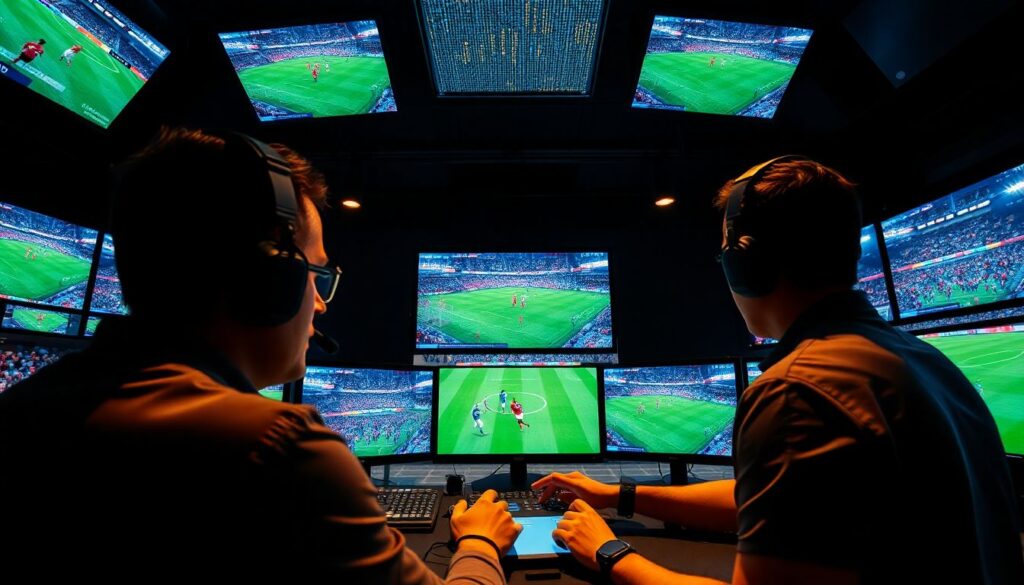
During play, a dedicated VAR team continuously tags situations: potential fouls, offsides, handballs and mistaken identity. When a clear incident occurs, they follow a structured loop. First, they select the cleanest camera angles, free from obstructions and crowd movement. Second, they scrub to the contact frame, sometimes down to individual fields for high‑frame‑rate feeds. Third, they talk the referee through what they see, recommending either “check complete” or an on‑field review at the pitch‑side monitor. In high‑profile cases like the 2018 World Cup final penalty review, this process was visible: the referee watched multiple slow‑mos, then confirmed the decision with the VAR team before signaling to the stadium.
Integrating smart ball data in decisions
Where smart balls are available, their data adds another evidence layer. In semi‑automated offside systems, the chip pinpoints the exact timestamp when the ball leaves the passer’s foot, while tracking cameras localize all players’ limbs. Algorithms fuse both streams, instantly flagging offsides and rendering 3D visualizations. A practical case came at the 2022 World Cup, where contentious offside goals were resolved within seconds using ball‑touch time and skeletal tracking, then displayed on broadcast graphics. For controversial “ball out of play” episodes, high‑frequency position data can prove whether any part of the ball still hovered over the line, supplementing or even overruling deceptive TV angles.
Using wearables to steer in‑game decisions
Performance data is usually analyzed post‑match, but top clubs increasingly consult it live. Analysts monitor dashboards showing total distance, high‑speed running and heart‑rate trends against pre‑defined thresholds. If a winger exceeds expected sprint count early due to an intense pressing scheme, staff might flag this to the head coach, who can adjust tactics or plan an earlier substitution. A well‑known practical example is how elite teams in the Premier League and La Liga reduced soft‑tissue injuries after correlating live micro‑sprint spikes with later hamstring issues. Over time, this real‑time feedback loop reshapes substitution patterns, training loads and even squad rotation for congested fixture lists.
- Pre‑match: system boot, calibration, communication tests
- In‑play: continuous tagging, live checks, smart‑ball events
- Post‑match: data consolidation, performance and refereeing audits
Case studies from real practice
In Germany’s Bundesliga, centralized VAR hubs serve multiple stadiums, showing how scale can reduce costs and improve consistency. All matches route their camera feeds to a single facility near Cologne, where trained operators follow standard protocols and share best practices. This centralization helped stabilize VAR accuracy and decision times after early criticism. On the smart ball front, the 2022 World Cup showcased how integrated systems can support spectacular, high‑stakes events without major outages. Ball‑tracking combined with limb‑tracking allowed semi‑automated offside calls that were both faster and more transparent, with FIFA later releasing explainers of specific goals to reinforce public confidence.
Club‑level adoption of wearables
At club level, a common pattern is starting with simple GPS vests before moving to full‑stack analytics. A mid‑table Brazilian side, for instance, began by tracking only total distance and high‑speed running in training. After observing that some players regularly under‑performed during congested weeks, staff layered in heart‑rate and recovery metrics. Within two seasons, they reported fewer muscle injuries and more consistent second‑half intensities, attributing this to individualized training loads and earlier squad rotation. Similar trajectories appear in MLS and smaller European leagues, where budget‑conscious clubs prioritize a core wearable system, then later integrate it with event data and tactical video.
From experiment to routine practice
The path from pilot to day‑to‑day routine typically involves cultural change as much as hardware. Initially, coaches may distrust dashboards, preferring intuition. Over time, clear correlations—like decreased injury days after adjusting sprint workloads, or fairer results after consistent VAR checks—shift attitudes. Referees who once feared losing authority often find technology protects them from high‑profile errors, as seen when retrospective analyses show that VAR overturned clearly wrong on‑field calls. As a result, the debate moves from “do we want technology?” to “how do we govern it?” with discussions focusing on transparency, fan communication and preserving the emotional rhythm that makes sport compelling.
Troubleshooting and optimization
Even mature setups face glitches, so robust troubleshooting workflows are vital. For VAR, the biggest risks are signal loss, desynchronization between angles and audio issues with referee communication. To mitigate them, engineers implement health checks that monitor bitrates, timestamps and packet loss in real time, triggering alerts before incidents occur. When a camera feed fails mid‑match, operators fall back to redundant angles or deploy mobile units. Clear incident logs—recording which tools were available for each decision—are vital for post‑match audits. Leagues like the Premier League now publish detailed refereeing reports, using this data to refine training and protocols each season.
Smart ball and wearable failure modes
Smart balls can suffer from battery degradation, sensor drift or RF interference from stadium infrastructure. Pre‑match, technicians test multiple balls, checking that positional errors stay within tolerance and that beacons read IDs correctly around the pitch. If anomalies appear during play—like abrupt jumps in trajectory—they swap the ball and flag the dataset as partially unreliable for that segment. Wearables introduce their own issues: loose straps, misassigned player profiles or dropped packets due to congested RF environments. Standard operating procedures mandate quick visual checks when players adjust vests, plus automated validation scripts that detect impossible values and prompt manual review.
Continuous improvement loop
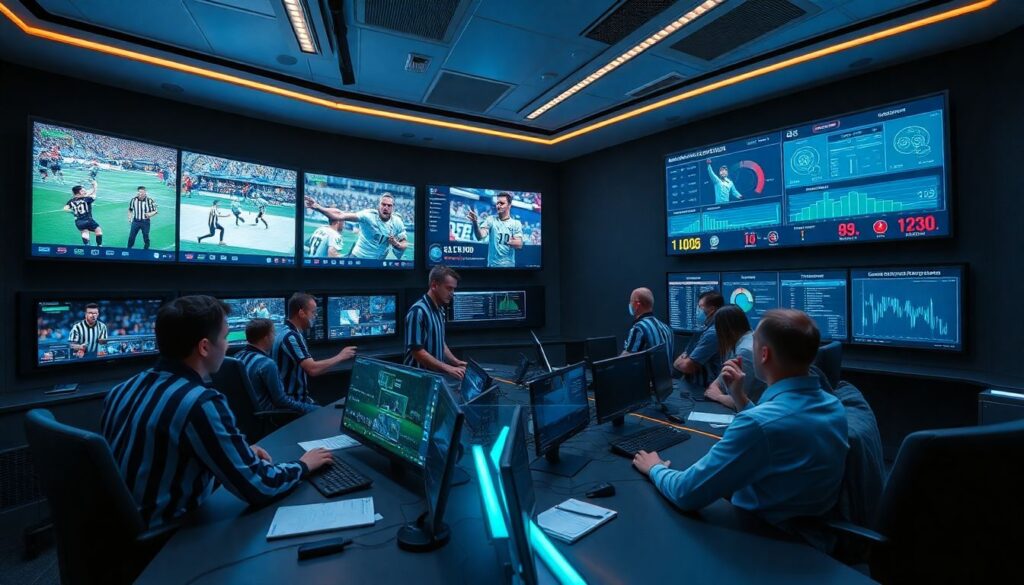
To keep systems of arbitragem eletrônica esportes and performance analytics aligned with evolving demands, organizations run continuous improvement cycles. After each match, technical and refereeing teams review contentious incidents, latency statistics and hardware logs, then derive concrete actions: relocating antennas, refining camera presets, or updating software. Clubs perform similar reviews on performance data, experimenting with new metrics before integrating them into decision‑making. Over seasons, this iterative approach transforms what began as experimental gadgets into mission‑critical infrastructure. When done well, players, coaches and fans notice fewer disruptions, more consistent decisions and richer insights—while the complex machinery enabling it all quietly hums in the background.